



Edwardian Cabriole Leg Stool
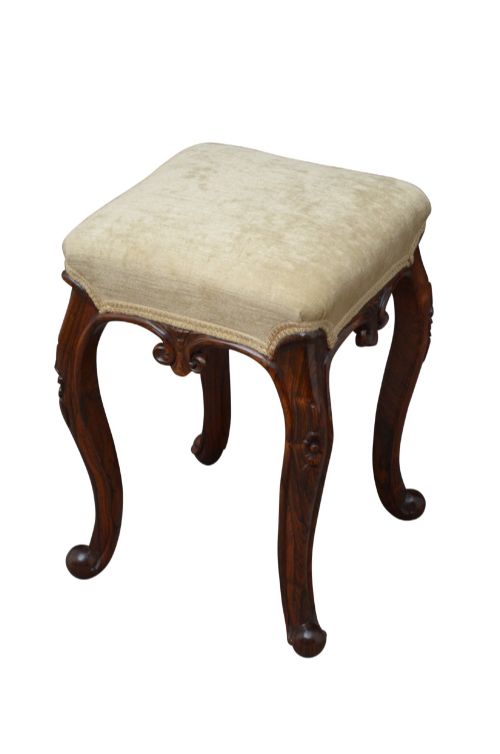
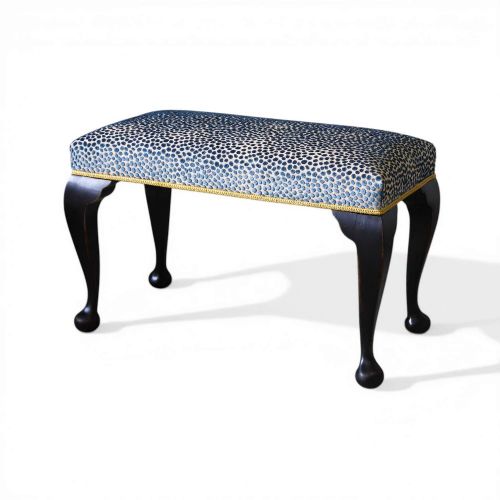
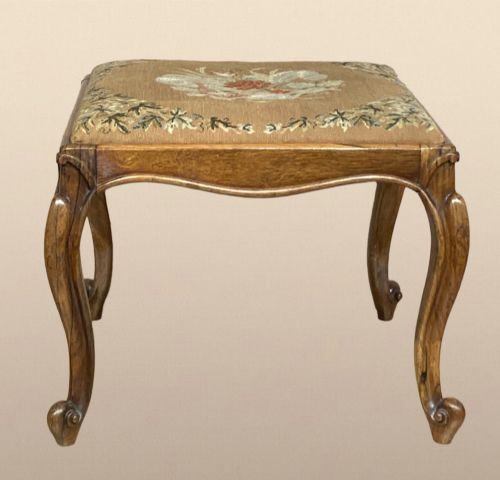
These edwardian cabriole leg stool examples combine curved wooden supports with upholstered seating, offering practical low seating rooted in historical revivals.
Edwardian Cabriole Leg Stool
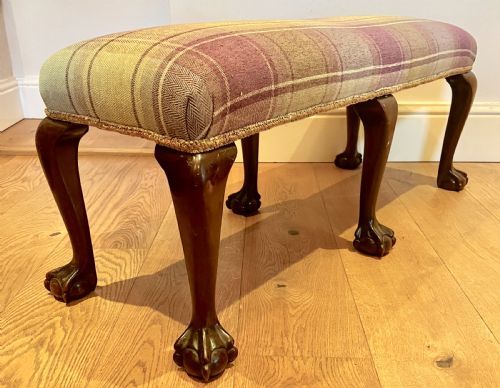
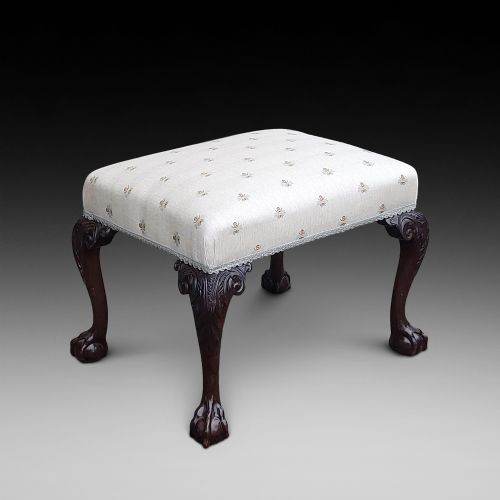
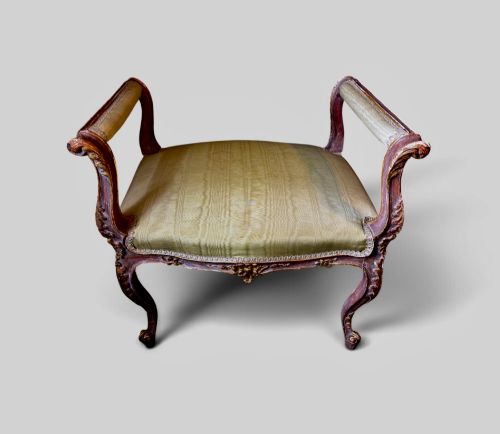
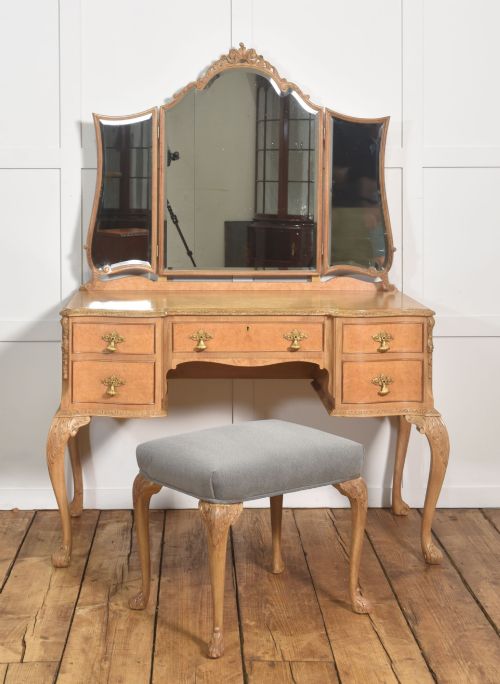
An edwardian cabriole leg stool combines the serpentine wooden supports popular in revival design with compact low seating, often taking the form of piano stools, dressing table seats or window benches. The evidence shows these pieces appearing across the Edwardian period alongside nineteenth century and later revival examples.
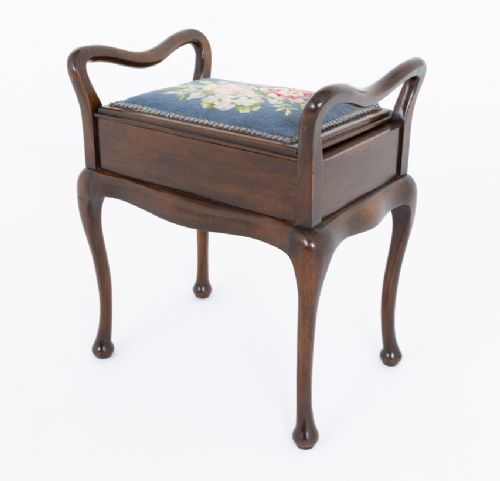
Buyers encounter various timber frames, most commonly mahogany and walnut, paired with upholstered top surfaces. Forms range from simple single seats to duet piano stools with lift-up mechanisms and rectangular salon benches.
Design influences draw heavily on earlier periods, with Queen Anne style, Chippendale revival and Louis XV elements frequently shaping the wooden frames. The cabriole leg curves outward at the knee and tapers inward to the foot, defining the silhouette of these functional household items.
Materials and construction methods
Cabinet makers utilised dense hardwoods such as mahogany and walnut to shape the curved frames, sometimes employing ebonised finishes, rosewood or giltwood. Timber sections were joined to support the downward pressure of daily use while maintaining slender lines at the knee and ankle of the leg.
Upholstery forms an essential part of the construction, utilising fabrics, wool, velvet, tapestry and buttoned leather over padded seat foundations. Music and piano variants often incorporated functional internal compartments beneath hinged lift-up lids operated by brass hinges.
Edwardian Cabriole Leg Stool Retail Price Guide 2026
Typical asking prices for edwardian cabriole leg stool among the pieces listed under this phrase on Sellingantiques today, from the lower quarter to the upper quarter. They describe what is for sale here now, not the wider market.
Piano stools frequently double as hidden sheet music archives, concealing decades of forgotten nocturnes beneath their lift-up seats.
Distinguishing quality in construction
The fineness of hand-carved detail on the wooden knees and feet distinguishes more ambitious pieces from simpler utility seating. Crisp lines in the timber profiling and balanced proportions indicate superior workshop standards.
The choice of covering material and the density of the underlying upholstery padding reflect the original cost and status of the piece. Superior examples integrate quality textiles or needlework that complement the finished timber frame.
The Edwardian Cabriole Leg Stool Glossary
- Cabriole leg
- A furniture support shaped with a double curve, bulging outward at the knee and tapering inward toward the foot. This design originates from ancient times and experienced major revivals during the eighteenth and nineteenth centuries.
- Duet stool
- An elongated seat designed to accommodate two people side by side, frequently utilised at a piano. These often feature hinged seats opening to reveal sheet music storage.
- Giltwood
- Timber coated with a thin layer of gold leaf or gilt preparation. This finish appears on decorative window seats and salon furniture.
- Needlework
- Hand-stitched textile used for upholstery, often created in wool or silk on a canvas ground. Such panels frequently survive on nineteenth century footstools and salon seats.
- Ebonised
- Wood finished with a dark stain or pigment to imitate ebony. This treatment provides a stark, formal appearance on Edwardian frames.
Edwardian Cabriole Leg Stool: Frequently Asked Questions
What is an edwardian cabriole leg stool used for?
These low seats served multiple domestic functions in period interiors, appearing beside dressing tables, pianos and in music rooms. Many were built specifically to assist musicians or provide secondary seating in salons and bedrooms.
Today, buyers utilise them in similar ways throughout the home as occasional seating or dressing furniture. Their compact dimensions allow them to fit easily into smaller spaces.
How do you date an edwardian cabriole leg stool?
Dating relies on examining the timber species, construction joints, secondary woods and the style of upholstery used beneath the top cover. Edwardian pieces often display machine-assisted precision alongside traditional hand-finishing.
Comparing the decorative carving to established revival periods helps separate pieces made around nineteen hundred from earlier nineteenth century prototypes. The specific curve of the leg and choice of wood provide further chronological clues.
Are these stools comfortable to sit on?
Most examples were designed with padded upholstery supported by webbing or springs, offering a firm seat suitable for short periods at a dressing table or piano. The comfort level depends on the original padding depth and whether the internal springs retain their tension.
Revival pieces vary in firmness according to their intended function. Salon benches and piano seats prioritise a stable, supportive surface over deep lounge comfort.
What woods were used for these stools?
Makers relied predominantly on mahogany and walnut for quality frames, though rosewood, goncalo Alves and ebonised timbers also appear in the record. These dense hardwoods provided the structural strength required to support curved legs without snapping.
Secondary timbers inside the frames often included pine or other native softwoods. Selection depended on the workshop's location and the desired finish of the visible exterior.