
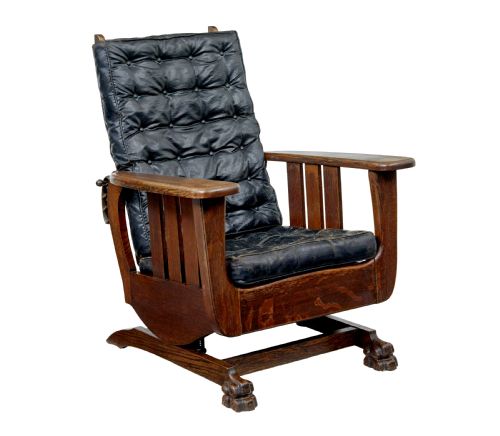
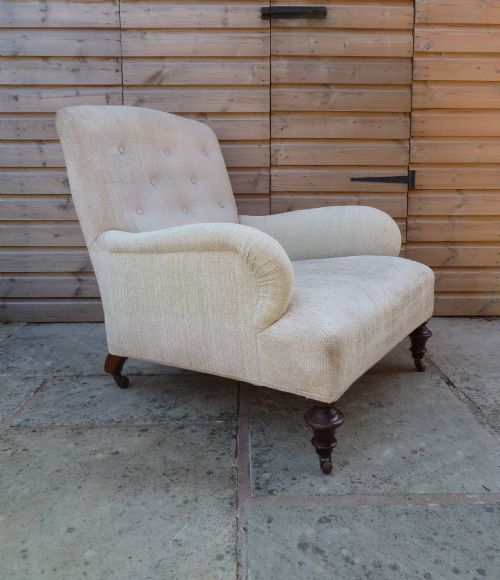
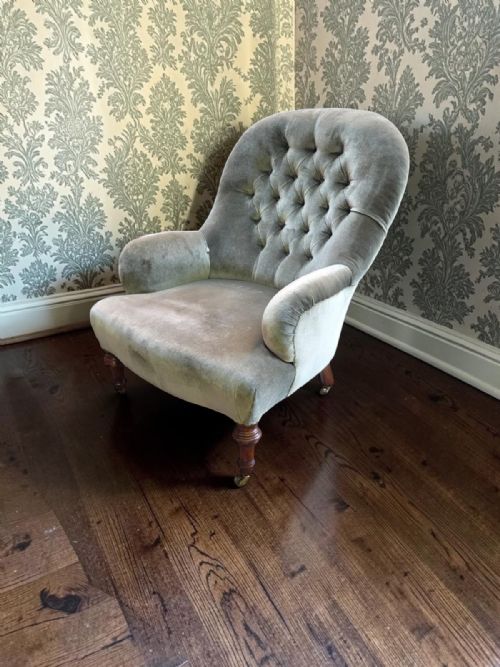
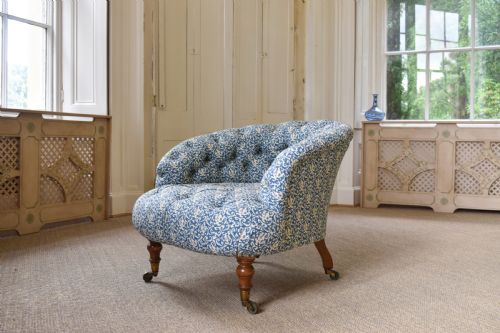

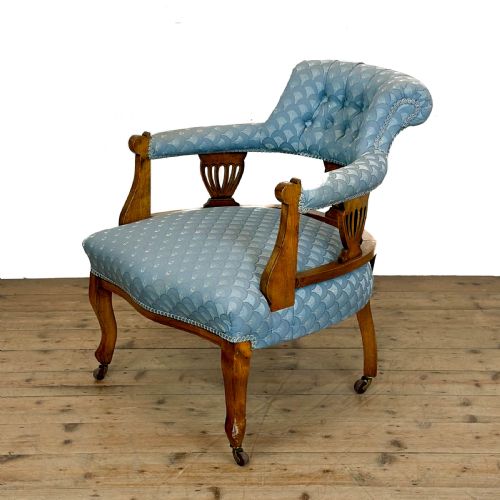


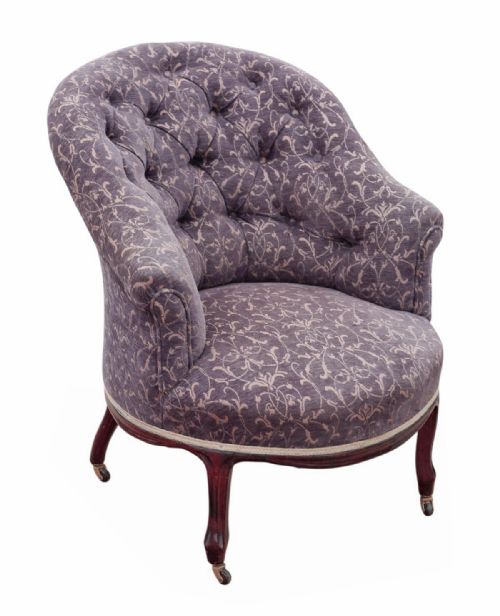
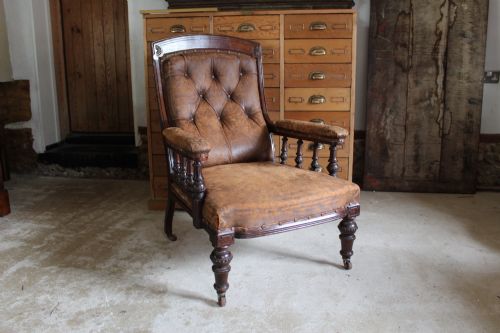

Edwardian Button Back Armchair
An edwardian button back armchair brings sprung comfort and tailored upholstery together in a low-slung fireside seat designed for relaxed sitting.
Edwardian Button Back Armchair
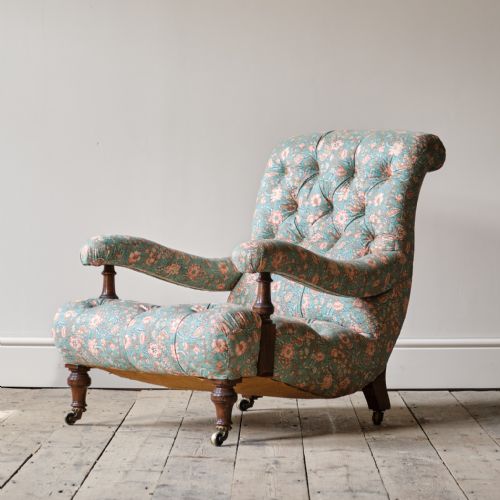
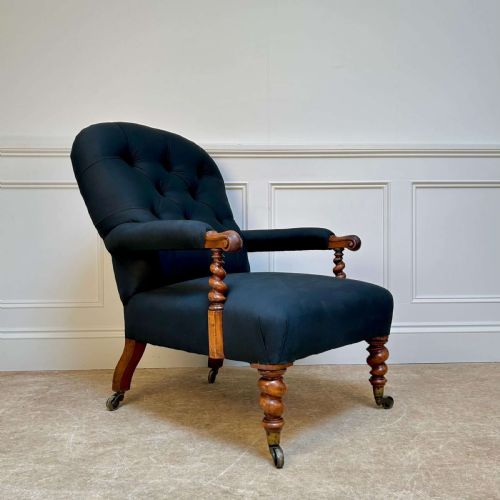
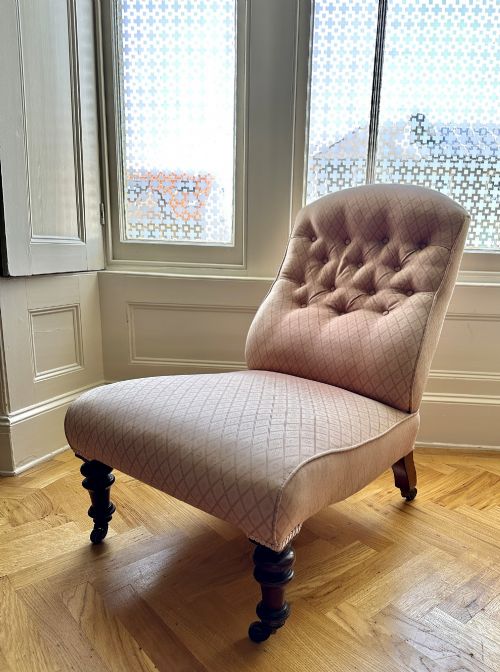
An edwardian button back armchair centres on deep tufting pulled tight through a padded backrest to create a grid of soft diamond shapes. These upholstered seats draw on late nineteenth century parlour traditions, appearing most often in Edwardian forms alongside earlier Victorian iterations.
The silhouettes range from compact slipper chairs and low tub seats to upright fireside chairs with scrolled wings. Walnut and mahogany frames provide the structural support beneath coverings of velvet, leather, or patterned fabric.
How they were made
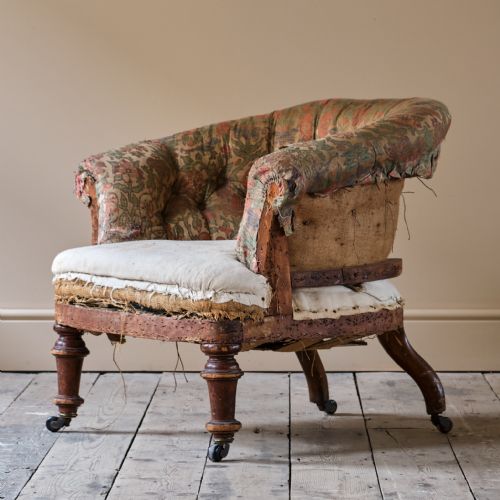
Makers constructed the internal frames using dense hardwoods like mahogany and walnut, shaping cabriole or turned legs to carry the load. Iron reinforcement occasionally appeared in country house examples to strengthen the backrest.
Upholsterers secured coil springs across webbing before applying layers of stuffing and tensioning the outer cover through buttoning. This technique distributed pressure evenly and held the deep tufted pattern in place across the curved back.
Some nineteenth century reading chairs included built-in revolving book rests for dedicated scholars.
What varies in quality
The integrity of the internal wooden frame and the tautness of the buttoning dictate the standard of the piece. Firm, resilient springs and tightly anchored tufts separate solid parlour seating from looser, softer builds.
Timber selection and secondary carving on the show wood frame reveal the maker's hand. Crisp turning on the legs and carefully matched fabric grain elevate the overall execution.
Howard and Sons·Holland and Sons·Hindley and Sons·Gillows·Sopwith·Minter
The Edwardian Button Back Armchair Glossary
- Button back
- An upholstery technique where twine is pulled through the padding and secured to the frame with buttons, forming distinct indentations. This method keeps internal stuffing from shifting during use.
- Tub chair
- A curved seating form where the backrest wraps continuously around to form low arms. It offers an enclosed, supportive shape suited to fireside placement.
- Bergère
- An enclosed armchair with stuffed upholstery set within an exposed wooden frame, often featuring cane panels on the sides or back. The style originated in France before influencing British seating.
- Slipper chair
- A low-set bedroom chair built without arms to allow easier dressing. The shortened legs place the seat closer to the floor.
- Cabriole leg
- A furniture leg shaped with a double curve, swelling outward at the knee and tapering inward toward the foot. This design derives from classical animal leg motifs.
Edwardian Button Back Armchair: Frequently Asked Questions
How do I clean the buttoned upholstery?
Dust settles deeply into the diamond tufts over time, requiring gentle vacuuming with a soft brush attachment to lift debris without pulling the retaining twine.
Heavier marks on fabric or leather need specialist attention suited to the specific covering material rather than standard household washing methods.
Can these armchairs be recovered?
Many examples are suitable for reupholstery when the internal webbing and padding require renewal. Traditional stuffing materials and coil springs can be rebuilt by hand.
Retaining the original buttoning layout preserves the intended shape of the curved backrest during the recovering process.
Where should I place this chair?
The compact proportions of a low fireside seat suit corners of living rooms, bedrooms, or studies where deep seating is desired without a heavy visual footprint.
Positioning the chair away from direct sunlight protects vulnerable velvet or leather finishes from fading over time.
How do I tell Edwardian from Victorian?
Edwardian examples tend to show lighter wood tones, simpler frames, and more restrained carving compared to heavier, darker Victorian counterparts.
Victorian pieces frequently employ dense walnut or mahogany with pronounced turned elements and heavier proportions.