
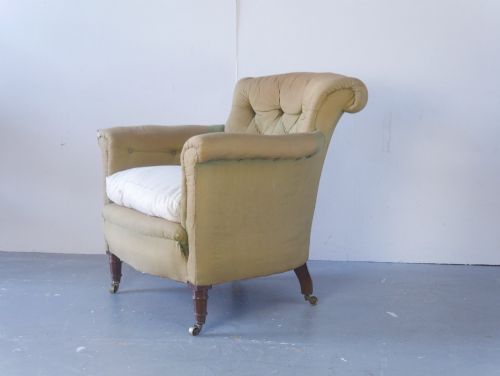
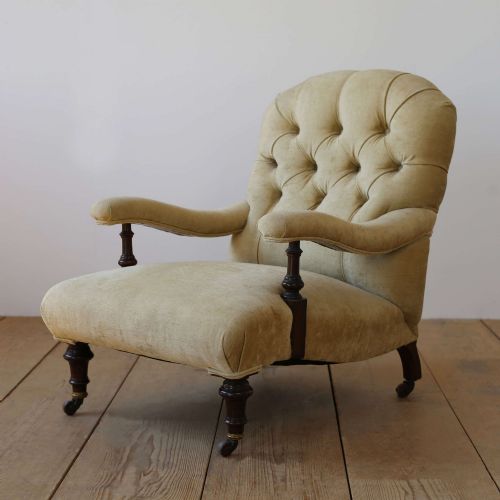
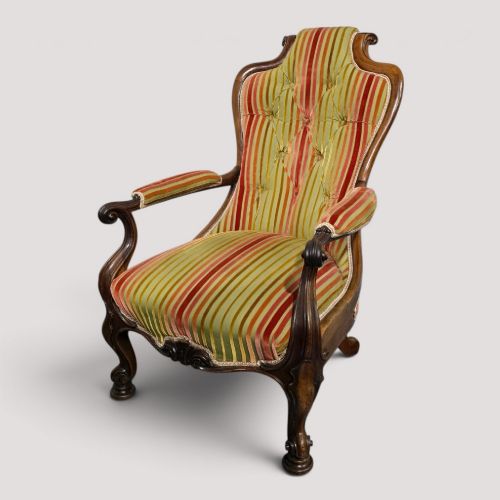
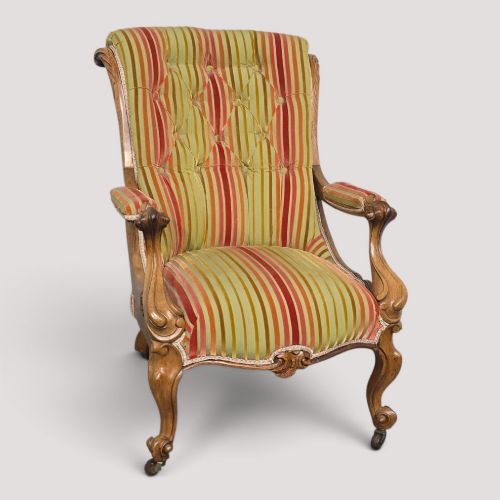
Velvet Button Back Armchair
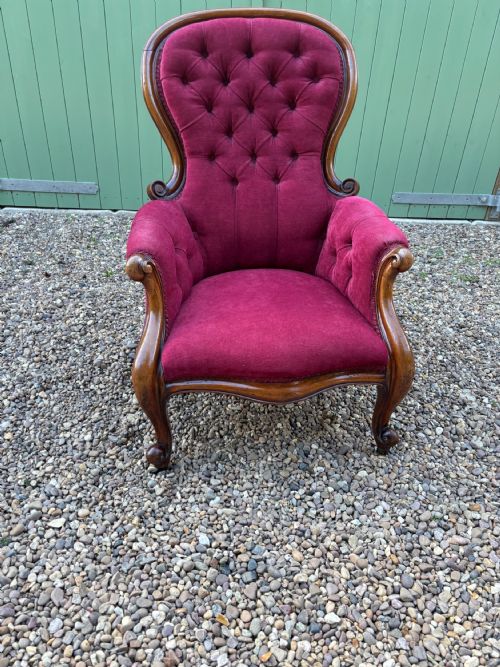
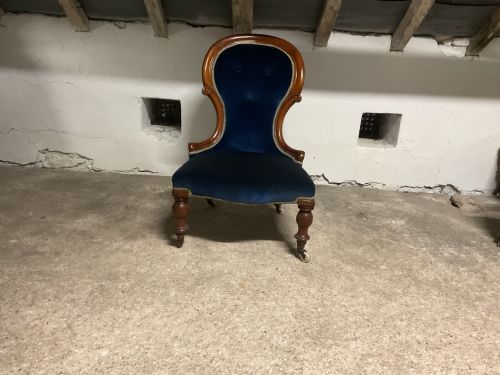
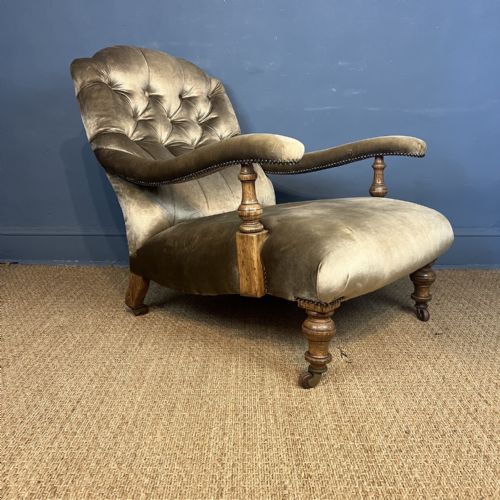
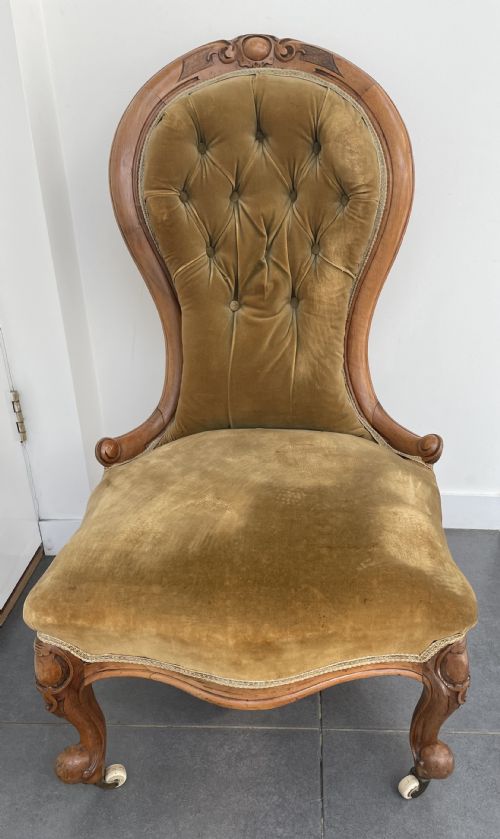
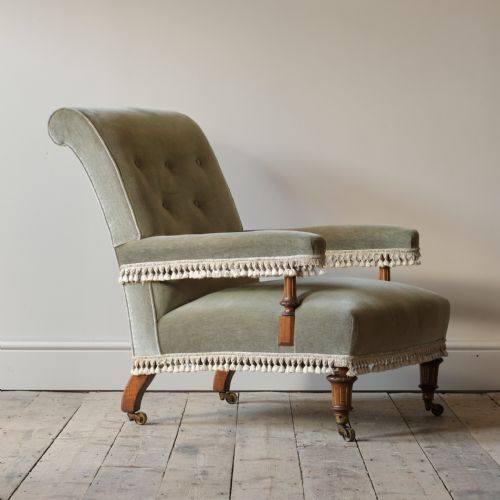
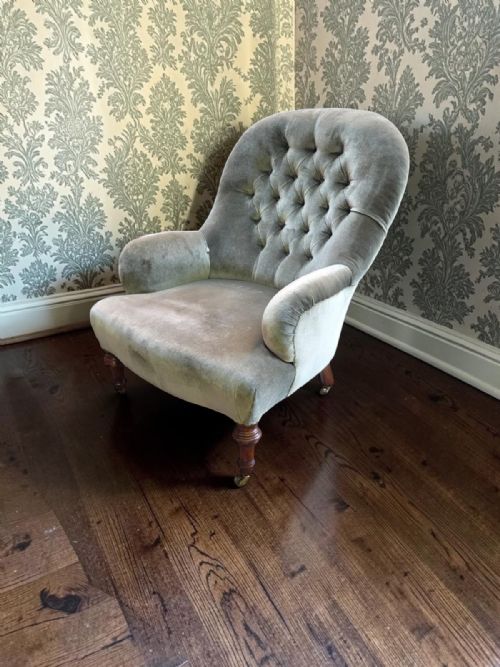
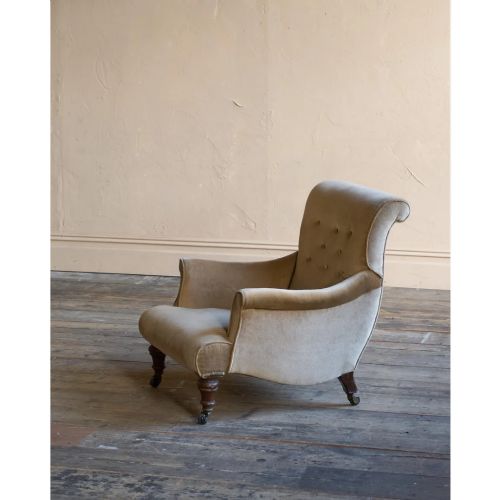
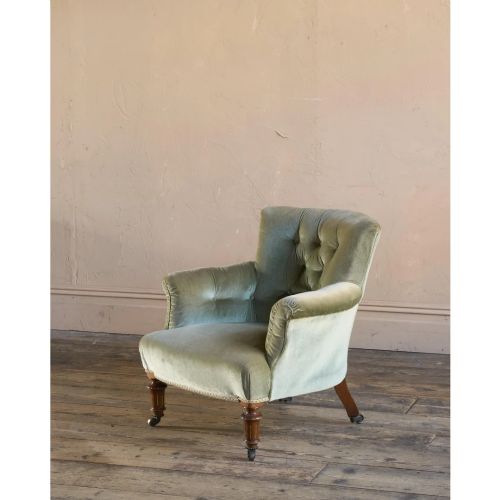
A velvet button back armchair brings deep texture and sprung comfort to a room, drawing the eye with its tightly pulled tufts.
Velvet Button Back Armchair
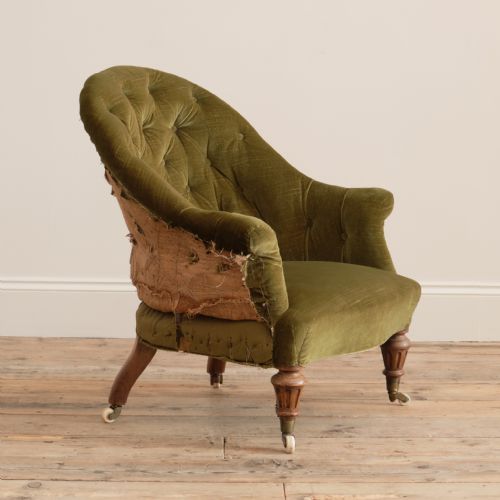
When you search for a velvet button back armchair, you encounter seating designed for the parlour, library, or bedroom across the nineteenth and early twentieth centuries. These forms include nursing chairs, slipper chairs, and library armchairs constructed during the Victorian, Edwardian, and Regency periods.
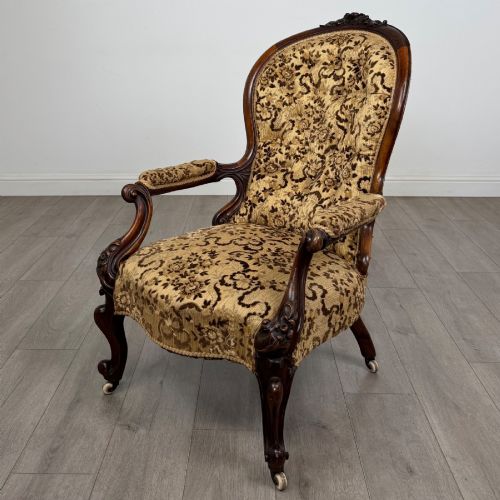
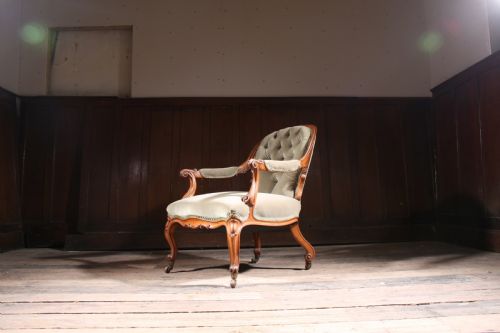
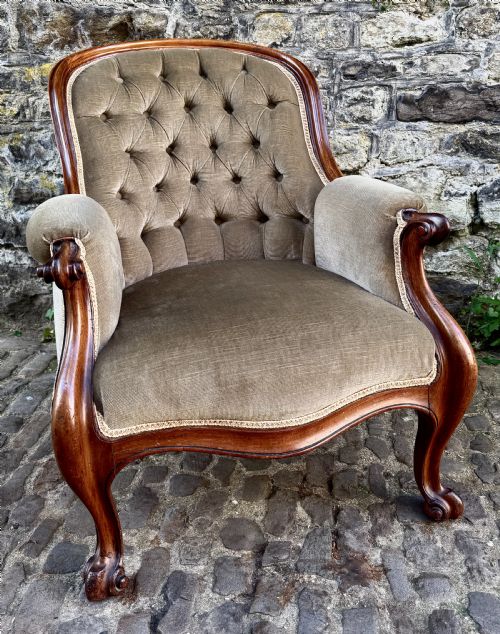
The version most frequently met on this page is the Victorian walnut or mahogany framed armchair upholstered in velvet, often featuring a low seat and a curved or spoon back. These pieces combine heavy timber frames with soft piled fabric and deep buttoning.
Makers such as Gillows, Cornelius V Smith, C. Hindley & Sons, and Holland and Sons produced notable examples during the nineteenth century. Alongside English workshops, French styles like Napoleon III and Louis XV Revival appear regularly in walnut, mahogany, and rosewood.
How they were made
Frames rely on hardwoods including mahogany, walnut, oak, and rosewood, carved and turned by hand to form the arms, legs, and crest rails. Iron and brass components support the structural integrity of specific Victorian and Regency forms, while ceramic or brass castors finish the feet.
Upholstery involves dense horsehair or wool stuffing held by webbing and steel springs, secured beneath pile fabrics like velvet. Deep buttoning requires upholsterers to pull twine tightly through the padding to anchor the tufts in a uniform diamond pattern.
Listings feature woods including mahogany, walnut, rosewood, and oak, paired with velvet and brass castors across the Victorian and Regency periods.
What varies in quality
The distinction between a standard piece and a superior example rests in the crispness of the timber carving and the architectural balance of the frame. Higher quality chairs display refined proportions, well-defined scrollwork, and sturdy joinery that resists movement.
Material selection and execution of the upholstery dictate the longevity and feel of the piece. Premium examples retain well-tensioned buttoning and dense internal stuffing that maintains its form under daily use.
Gillows·Cornelius V Smith·C. Hindley & Sons·Holland and Sons·Shoolbred
The Velvet Button Back Armchair Glossary
- Buttoning
- A method of upholstery where twine is pulled through the padding and tied to secure deep tufts in the fabric. This technique creates the characteristic diamond pattern seen on nineteenth-century chair backs.
- Spoon back
- An upholstered chair back shaped in a concave oval resembling the bowl of a spoon. This design emerged during the Victorian era to fit the human spine.
- Bergère
- An enclosed armchair with upholstered sides and a exposed wooden frame. These pieces often incorporate cane panels or tight upholstery.
- Castor
- A small wheel attached to the foot of a chair to ease movement across carpets and flooring. They are commonly fashioned from brass or ceramic.
- Fauteuil
- An open-armed French chair with an exposed wooden frame, typically carved and gilded or polished. The style reflects continental aesthetics from the eighteenth and nineteenth centuries.
Velvet Button Back Armchair: Frequently Asked Questions
How do I clean velvet upholstery?
Velvet requires gentle brushing with a soft-bristled brush to maintain the direction of the pile and lift surface dust. Professional dry cleaning is recommended for deep stains to avoid damaging the delicate pile.
Avoid using water or standard household cleaning agents directly on antique fabric. Testing a small, hidden area first prevents unexpected discolouration.
Were these chairs used in bedrooms?
Many nineteenth-century examples functioned as nursing chairs or bedroom armchairs, built with lower seats to accommodate women dressing or tending to infants. Their compact dimensions made them suitable for private chambers rather than large public rooms.
Today, these versatile forms sit comfortably in studies, dressing rooms, and living spaces as accent seating.
How can I date a Victorian armchair?
Dating relies on examining the timber frame, turning styles, and construction techniques visible beneath the upholstery. Early Victorian pieces often feature heavier mahogany frames, while later decades introduced slender walnut and iron internal structures.
Maker stamps or stamps on brass castors provide concrete evidence of the workshop and manufacturing decade.
What is a slipper chair?
A slipper chair is an armless, low-slung seat historically kept in bedrooms for ladies putting on shoes and slippers. The absence of arms allowed heavy skirts and dresses to drape freely over the sides.
These pieces share the deep buttoning and velvet upholstery characteristic of larger parlour armchairs.