


Edwardian Butler Table
An edwardian butler table combines portable utility with refined woodwork, offering a versatile surface suited for serving or display.
Edwardian Butler Table
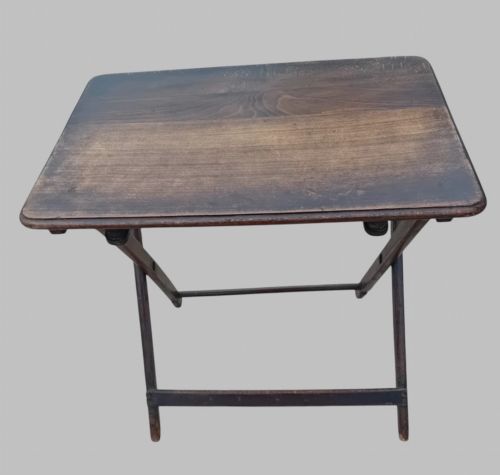
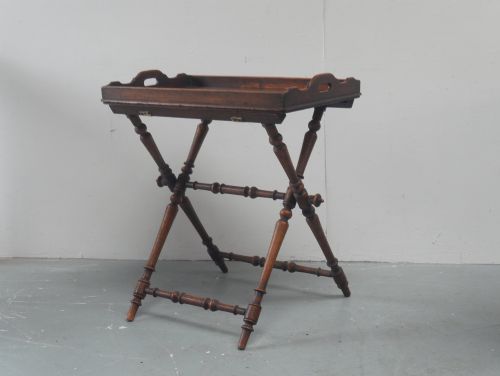
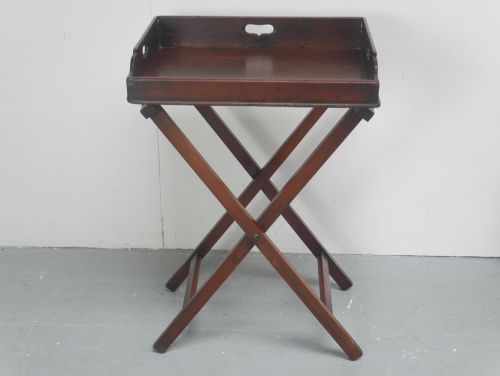
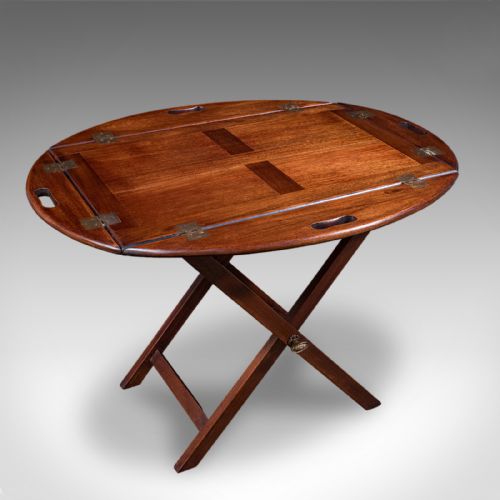
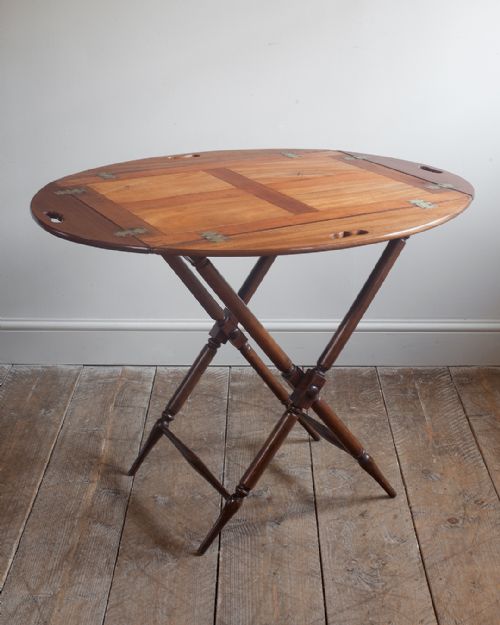
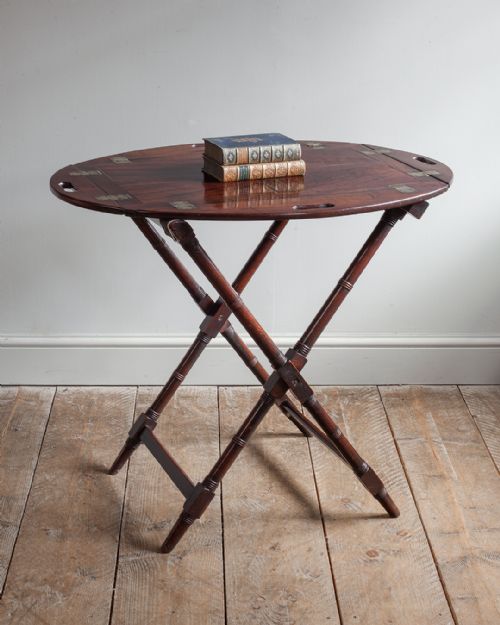
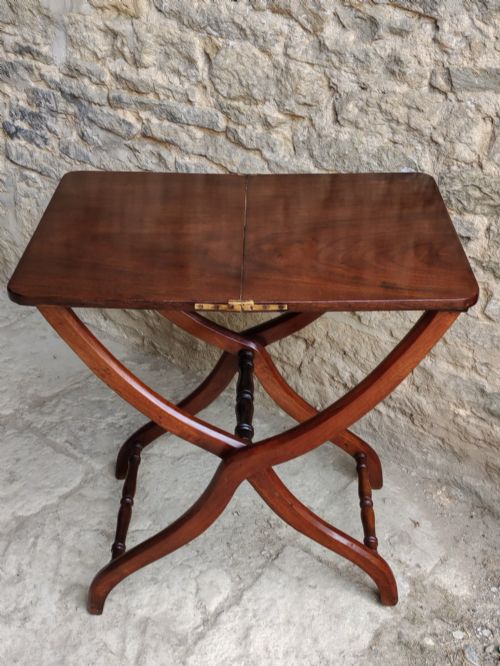
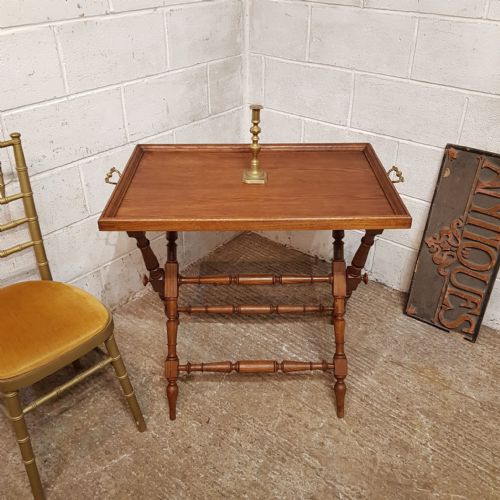
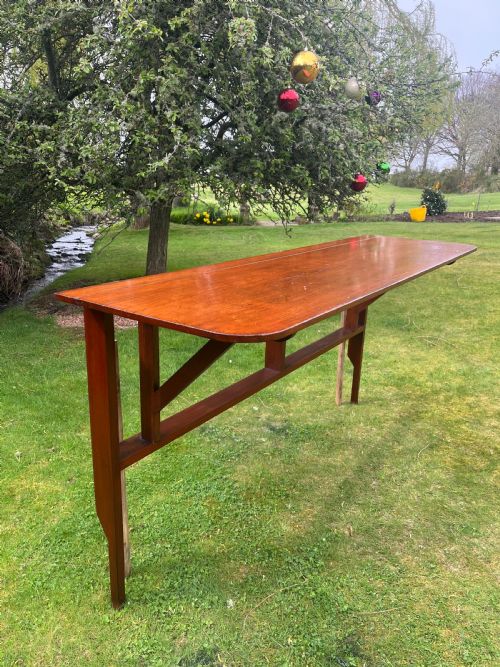
The edwardian butler table typically comprises a removable tray resting upon a folding or fixed wooden stand, designed originally for domestic service in large households. You will frequently meet mahogany and oak examples dating from the Edwardian period and the late nineteenth century, often exhibiting campaign influences in their collapsible frames.
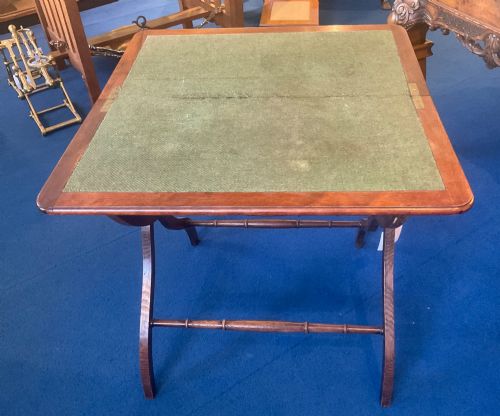
Variations include tray top occasional tables, drop-flap serving stands, and kidney shaped serving trays equipped with stands. These pieces transition easily between living spaces, functioning as side tables, coffee tables, or drinks trays depending on the specific configuration of the tray rim and stand.
Materials and Construction
Cabinet makers utilised dense hardwoods such as mahogany, oak, and walnut to construct the sturdy folding stands and heavy trays required for daily service. Satinwood and beech also appear frequently, complemented by brass hinges, carrying handles, and occasionally glass inserts.
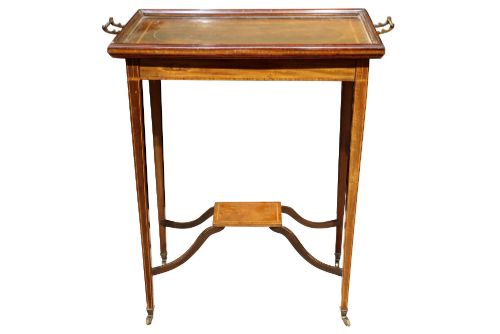
Inlaid decoration, marquetry, and Sheraton Revival motifs distinguish finer examples, utilising contrasting timber veneers and delicate stringing to ornament the tray surfaces. Joinery techniques prioritize stability and portability, employing folding X-frames and secure gallery edges to prevent items from sliding during transit.
Cartographic serving trays present European maps beneath glass, proving that even a butler needed help finding the port.
Judging Quality
Quality rests upon the crispness of the woodwork, the integration of the tray with its matching stand, and the retention of original brass hardware. Finely figured mahogany or detailed marquetry inlay elevates a piece above utilitarian oak or beech versions intended purely for staff utility.
The proportional balance between the depth of the tray and the height of the supporting stand determines visual success, alongside the tightness of the folding joints in campaign iterations.
Butler
The Edwardian Butler Table Glossary
- Butler tray
- A portable wooden tray featuring raised sides or hinged flaps, designed to lift off its support frame for carrying service items.
- Coaching table
- A collapsible wooden stand utilising a folding X-frame mechanism, designed for easy storage and transport during travel or military campaigns.
- Tray top
- A furniture surface surrounded by a raised moulded rim or gallery designed to prevent tableware from sliding off.
- Marquetry
- The art of applying pieces of veneer to a structure to form decorative patterns, often utilising contrasting timbers like satinwood and mahogany.
- Campaign style
- Furniture constructed for portability, typically featuring folding frames, recessed brass handles, and robust joints.
Edwardian Butler Table: Frequently Asked Questions
How were butler tables originally used?
Domestic staff utilised these pieces to transport food, tea, and drinks from the kitchens to the drawing rooms of large country houses.
The removable tray allowed servants to clear entire courses at once, placing the tray back onto its folding stand when reaching the entertaining space.
Can I fold the stand away easily?
Most stands employ a folding X-frame mechanism derived from campaign furniture, allowing the entire support structure to collapse flat.
This folding design made storage straightforward when the furniture was not required for active service in the household.
How do I distinguish Edwardian from Victorian examples?
Victorian versions lean toward heavy oak or dark mahogany construction with utilitarian folding frames intended strictly for household service.
Edwardian pieces frequently introduce lighter satinwood, delicate marquetry inlay, and refined occasional table aesthetics suitable for display in public rooms.
Are the trays permanently fixed to the stands?
Traditional designs feature a loose tray that simply rests upon the support frame with wooden cleats or gravity keeping it aligned.
This separation was essential for the original function of carrying food and drinks independently of the folding base.