
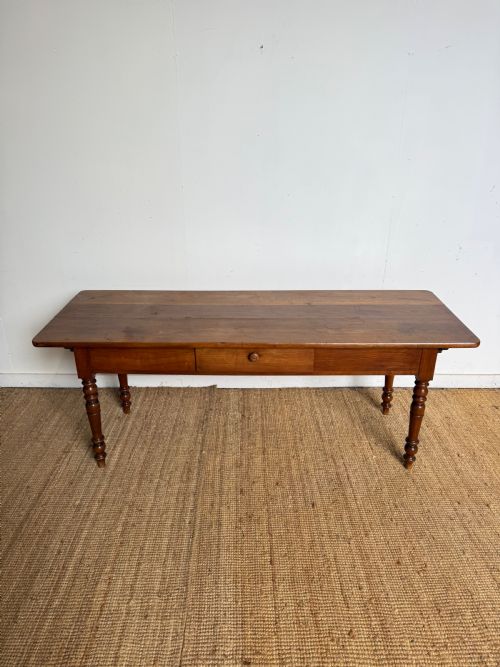
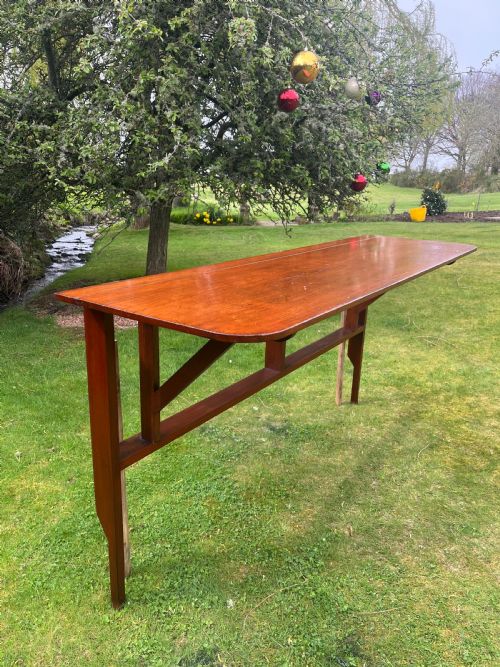


Warm Wood Console Table
These warm wood console table pieces span centuries of regional craftsmanship, offering practical surfaces in rich timbers like mahogany, cherrywood, and oak for any hallway or reception room.
Warm Wood Console Table
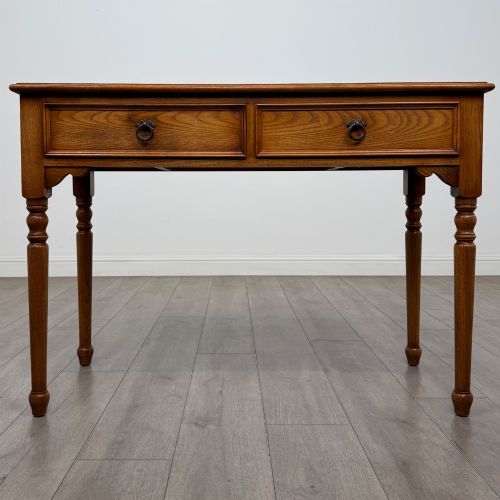
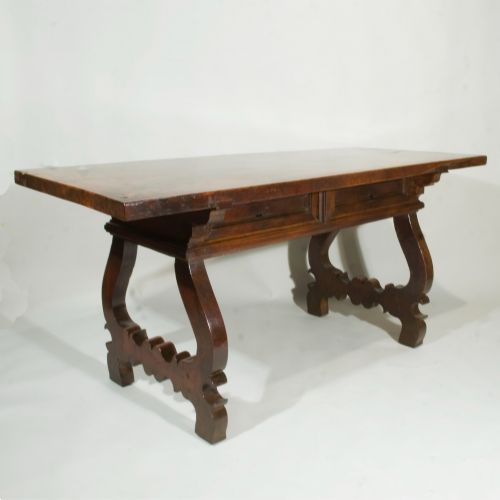
When you search for a warm wood console table, you are looking at narrow hallway, serving, and side tables designed to stand against a wall. The selection ranges from 17th-century Spanish walnut to Edwardian oak writing desks and 19th-century French cherrywood pieces.
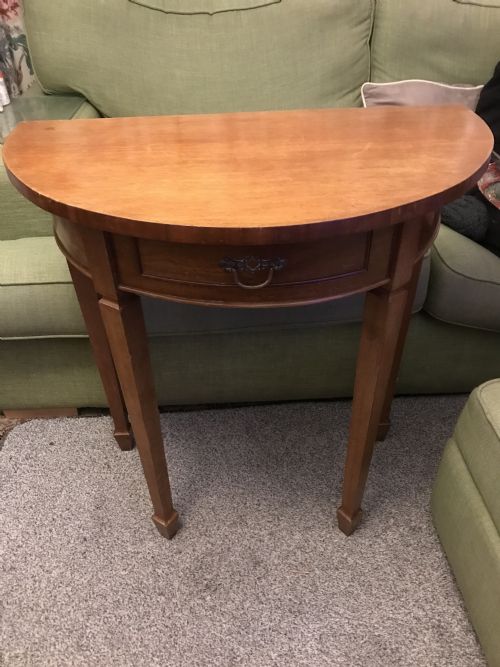
The forms encompass demi-lune shapes, lowboys, and long farmhouse serving tables. These versatile pieces served various domestic functions in country houses, manors, and town residences, often featuring single or multiple drawers for storage.
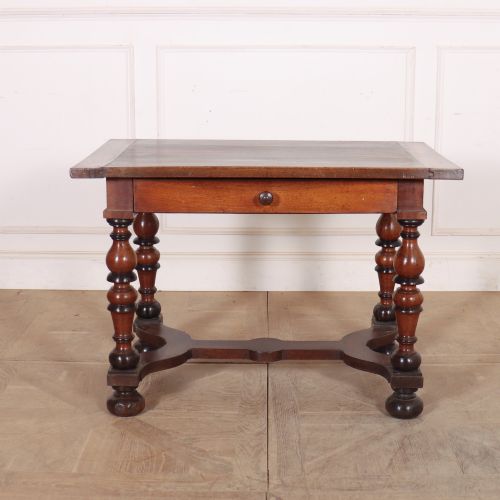
You will encounter regional European styles, particularly French provincial and country interpretations alongside English Georgian and Victorian examples. Their warm timber tones provide both utilitarian surface space and distinct period character.
Materials and construction
The construction relies heavily on solid hardwoods and figured veneers, utilising timbers such as mahogany, cherrywood, walnut, fruitwood, oak, pine, and satinwood. Specific additions like stone tops appear on occasional French pieces, whilst brass hardware often furnishes the drawer fittings.
Joinery techniques span several periods, from early hand-cut framing on 17th-century examples to later 19th and 20th-century drawer construction. Surfaces display the natural grain of the wood, enhanced through historical polishing methods rather than modern synthetic finishes.
Some French cherrywood occasional tables come equipped with stone tops, ready for whatever rustic kitchen prep you throw at them.
Distinguishing quality
Quality rests in the selection of the timber, where figured grain, rich patination, and substantial thickness set superior examples apart from standard utility furniture. The choice of woods like figured elm, yew, or rosewood indicates a higher grade of craftsmanship.
Construction integrity and proportion also dictate standing. Pieces with well-executed details such as spade feet, finely fitted drawers, and harmonious scale represent the more accomplished end of the range compared to plain vernacular items.
The Warm Wood Console Table Glossary
- Demi-lune
- A half-moon shape used for tables designed to fit flat against a wall. This profile became particularly popular for serving and side tables during the Edwardian period and earlier.
- Lowboy
- A small oak, walnut, or cherrywood table with one or more drawers, originating in the 18th century. They were commonly used as dressing tables or side tables.
- Sofa table
- A type of table traditionally placed in front of a sofa, generally featuring drop leaves on either end. Examples from the Regency period often showcase highly figured timbers.
- Spade foot
- A rectangular foot that tapers slightly toward the base, resembling the shape of a spade. This detail frequently appears on Edwardian and Georgian leg designs.
- Patina
- The deep, lustrous surface sheen developed on timber over decades and centuries of handling and polishing. It serves as an indicator of age and genuine use.
Warm Wood Console Table: Frequently Asked Questions
Where should I place a console table?
These tables fit naturally in entrance halls, corridors, or behind sofas where surface space is needed without blocking traffic.
Their narrow depth allows them to sit flush against walls while displaying decorative objects or lighting.
How do I care for antique wood?
Keep wooden furniture away from direct sunlight and heat sources to prevent the timber from drying out or splitting.
Apply traditional beeswax periodically and buff gently with a soft cloth to maintain the natural sheen of the grain.
Can I use a lowboy as a desk?
Lowboys offer a flat surface and integrated drawers suitable for light writing tasks or correspondence.
Check the kneehole clearance underneath to ensure comfortable seating if you plan to use it regularly for work.
What is the difference between a console and a side table?
Console tables are specifically designed to stand against a wall, often featuring decorative front legs and simpler rear supports.
Side tables are generally freestanding items that can be moved around a room and viewed from all angles.