


Edwardian Brass Lock
An edwardian brass lock brings secure mechanism and period metalwork together in trunks, doors and boxes.
Edwardian Brass Lock
When searching for an edwardian brass lock, buyers encounter functional hardware and locking mechanisms integrated into period items from the late nineteenth and early twentieth centuries. These pieces span utility and security, appearing on door hardware, padlocks, safety plaques, and storage trunks.
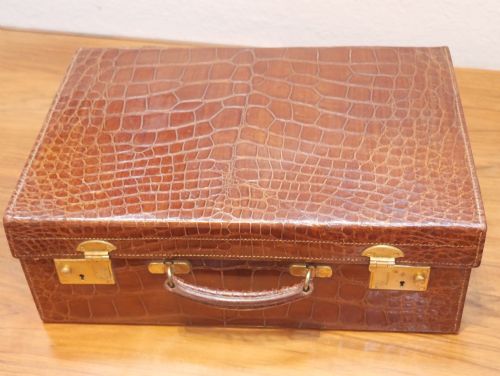
The material appears across multiple forms in the evidence, securing luggage, travel cases, and cabinets alongside standalone rim-locks and door knobs. While standalone locks exist, many pieces incorporate brass mechanisms within oak, mahogany, leather, and burr walnut containers.
Origins stretch across English workshops and railway lines, alongside French carriage clocks and domestic fittings from the Edwardian era and surrounding decades. The pieces reflect a period when mechanical security met domestic and travel utility.
Assessing quality in period brass and locks
Quality separates through the weight and crispness of the cast brass, the precision of the locking mechanism, and the integrity of the surrounding wood or leather housing. Finer items exhibit clean casting lines, smooth action in the turn of a key or knob, and secure mounting plates.
The standard of secondary materials influences overall execution, from the thickness of oak or walnut used in cabinets and tantalus frames to the quality of stitching on leather travel cases and Gladstone bags.
Materials across these listings combine brass and steel with oak, leather, mahogany, and burr walnut.
Collinson and Lock London·Milners Safe·JH Browne of The Waldorf Hotel·Bernard Freres
The Edwardian Brass Lock Glossary
- Rim-lock
- A mechanical lock mounted onto the surface of a door rather than mortised inside it. These units typically feature visible brass casing and operate with a matching set of door knobs.
- Tantalus
- A locking wooden frame holding glass bottles to prevent unauthorised access to the contents. They incorporate a brass locking bar secured by a key.
- Champlevé
- An enamelling technique where troughs are carved into a metal surface and filled with vitreous enamel before firing. This ornamentation appears on clock faces and decorative brasswork.
- Padlock
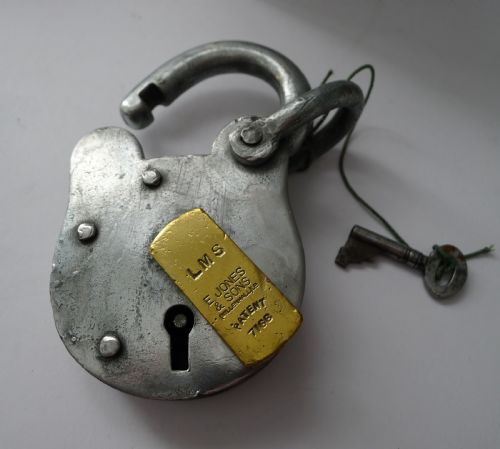
- A portable lock with a shackle that can be opened or closed, often stamped with railway or institutional company ciphers.
- Bracket clock
- A portable table clock housed in a wooden case, frequently accented with brass dial plates, spandrels, and carrying handles.
Edwardian Brass Lock: Frequently Asked Questions
What items feature an edwardian brass lock?
These mechanisms secure travel trunks, Gladstone bags, stationery cabinets, and residential doors. They provide both utility and decorative contrast against wood and leather surfaces.
Hardware ranges from heavy door rim-locks and night chains to small padlocks and security plaques from firms like Tann's Defiance.
How do I identify an edwardian piece?
Dating relies on stylistic markers such as Arts and Crafts influences, Art Nouveau curves, and Edwardian cabinet proportions. Materials like burr walnut and specific brass casting styles help align pieces with the early twentieth century.
Makers' marks, railway ciphers, and associated patents offer further chronological context for individual locks and cases.
Were these locks used for travel?
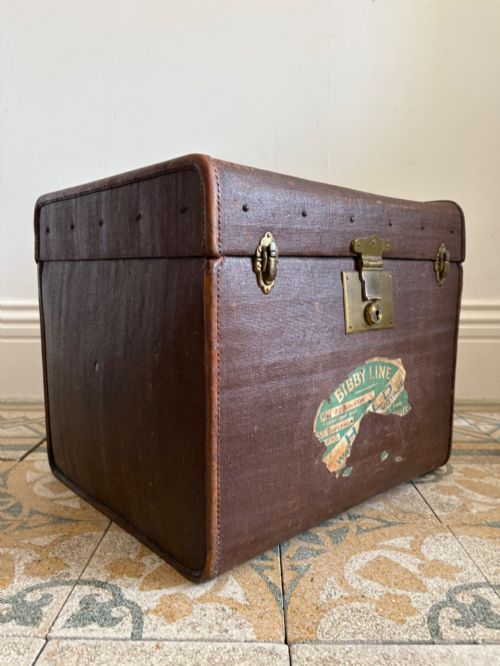
Many brass-secured items were built for transit, including canvas luggage trunks, crocodile suitcases, and doctor's bags. Sturdy locks protected personal belongings during railway and steamship journeys.
Stationery boxes and tantalus sets served domestic or office environments, keeping private documents and spirits secure.
How should I care for brass hardware?
Brass components benefit from gentle dusting and occasional cleaning with appropriate metal care products to maintain the surface. Avoiding harsh abrasives preserves the original patination accumulated over a century.
Wooden housings require standard furniture maintenance with suitable wax to protect oak, mahogany, and walnut surfaces from drying.