


Edwardian Brass Kerosene Lamp
An edwardian brass kerosene lamp brings domestic warmth and period weight to a room through heavy metalwork and tinted glass.
Edwardian Brass Kerosene Lamp
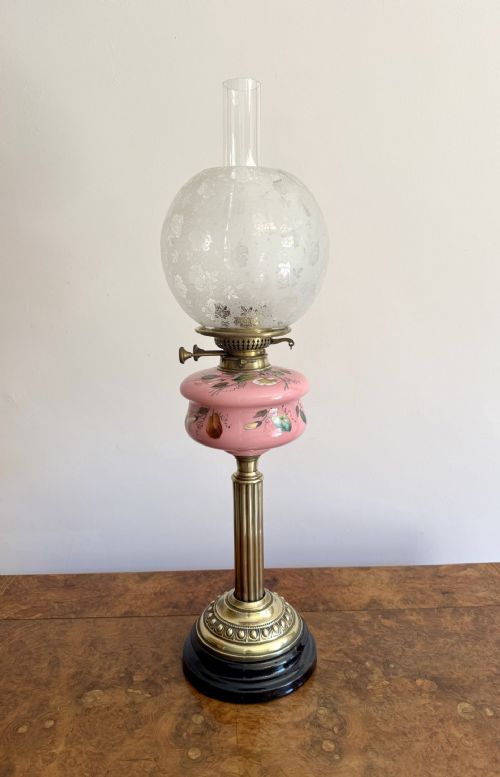
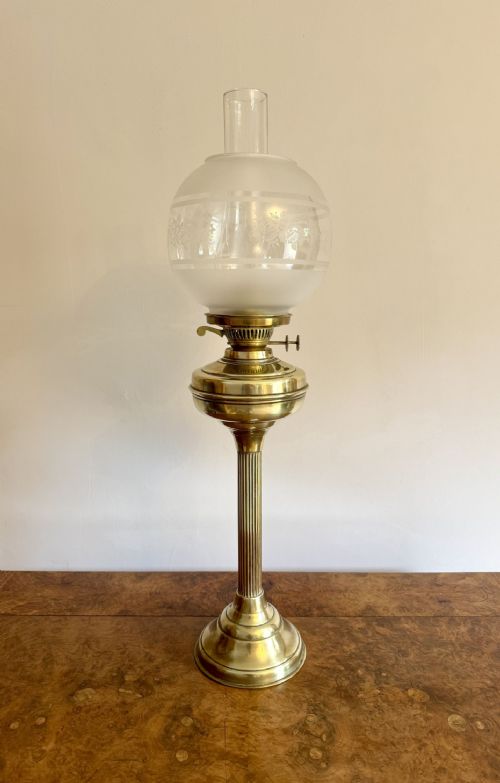
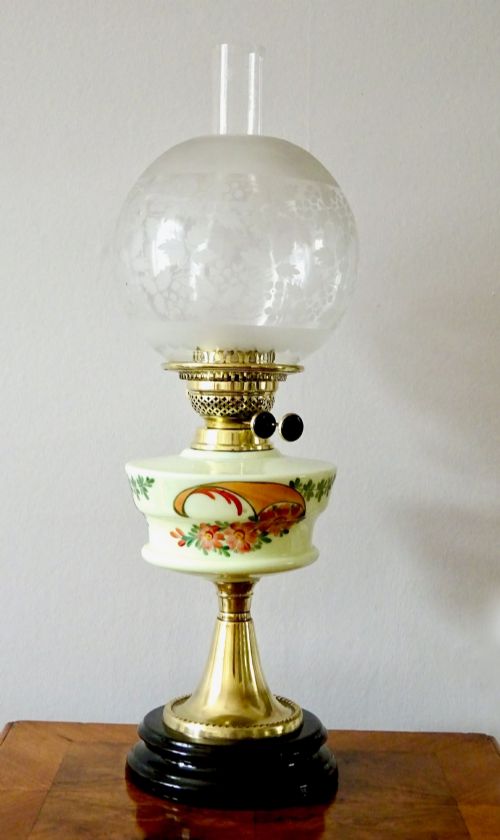
An edwardian brass kerosene lamp is a domestic lighting fixture designed to burn paraffin or oil, combining a metal reservoir with a decorative glass shade. These pieces draw on styles spanning the Victorian, Edwardian, Art Nouveau, and Arts and Crafts periods.
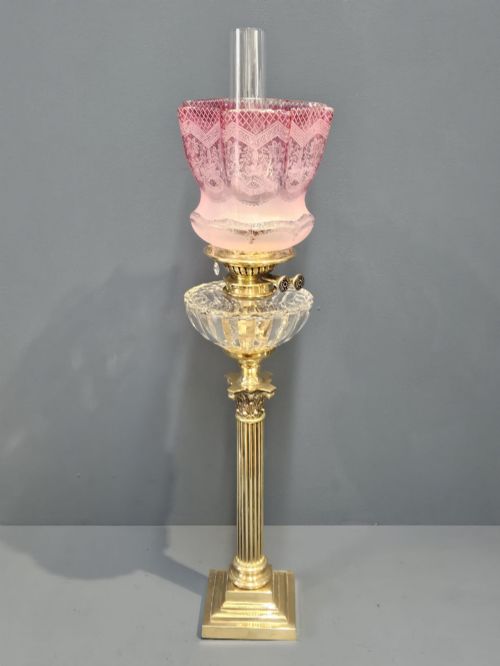
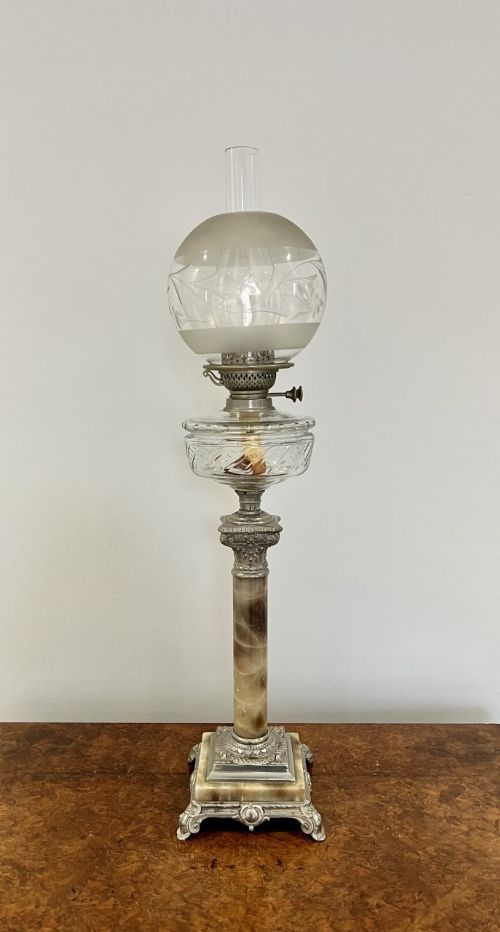
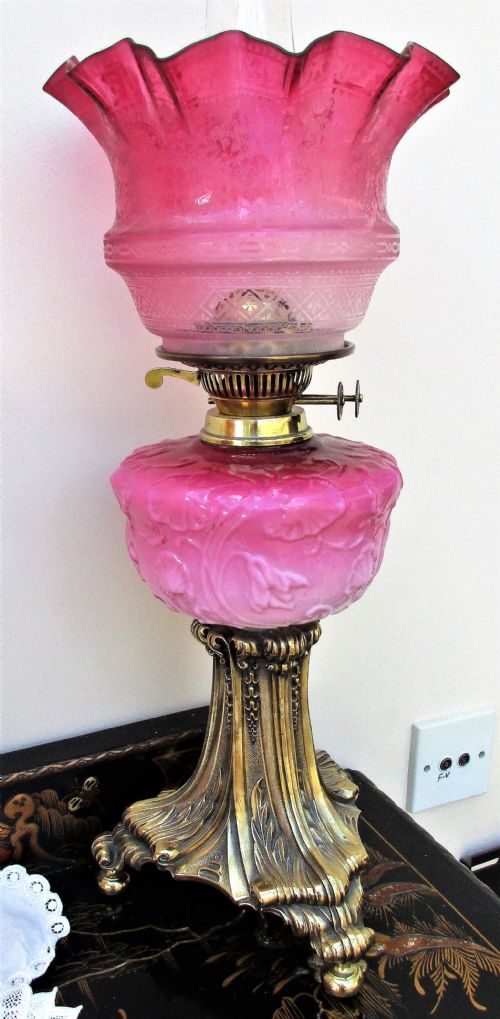
Buyers will most frequently encounter brass table lamps paired with cranberry, opaline, or etched glass shades, standing on heavy metal or occasionally onyx bases. The selection also includes Corinthian column forms and examples utilising copper or bronze alongside brass.
Originating from the late nineteenth and early twentieth centuries, these objects survive either in their original form or converted for modern electrical use. They offer a tangible connection to period interior lighting before the widespread adoption of electricity.
How they were made
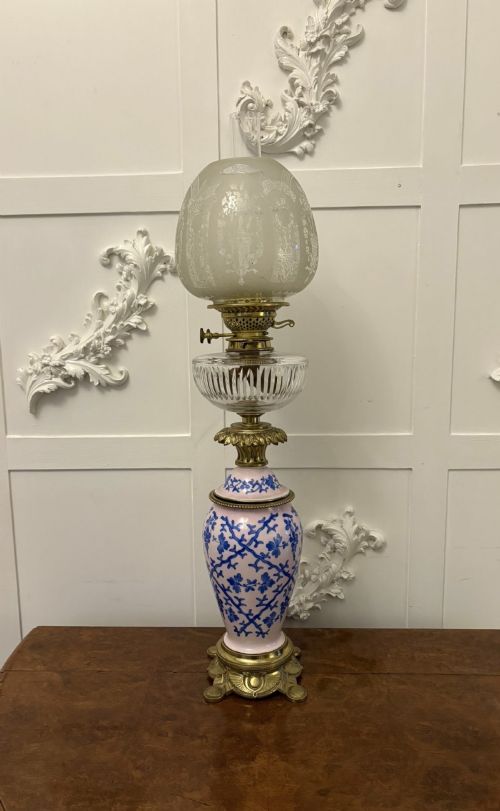
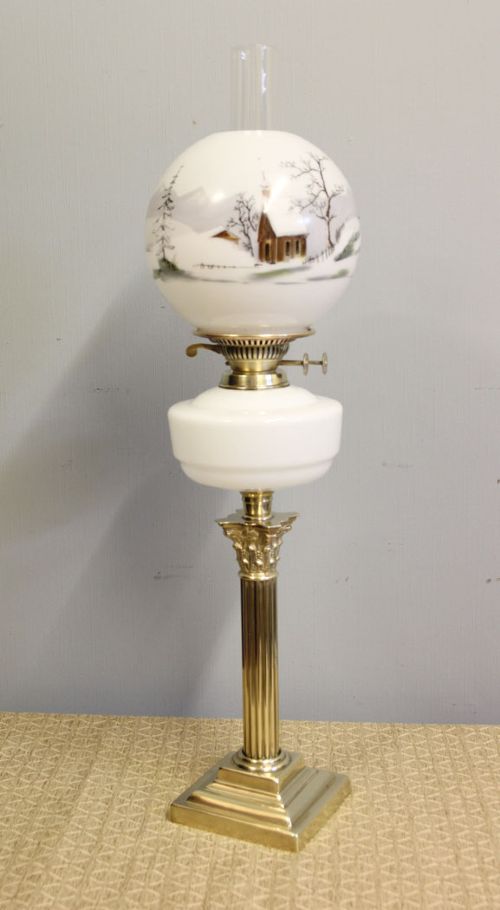
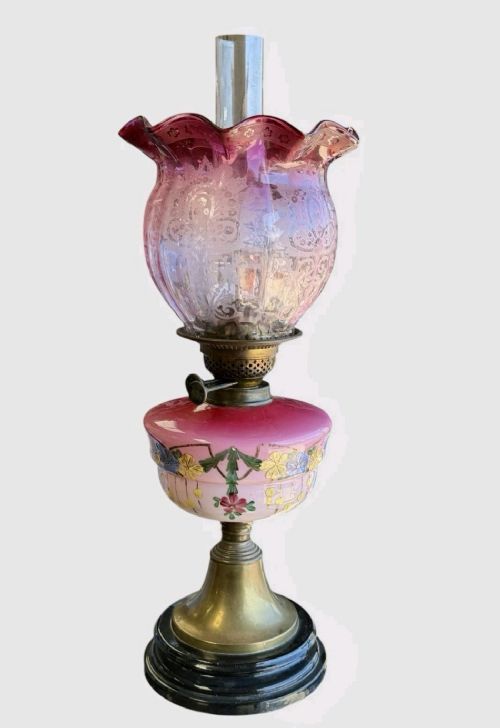
The construction relies heavily on cast and turned brass, often formed into heavy columns or reservoirs to provide stability for the tall glass shades above. Makers combined this metalwork with blown, cut, opaline, or cranberry glass fonts and shades, sometimes incorporating hand-painted decoration or etched winter scenes.
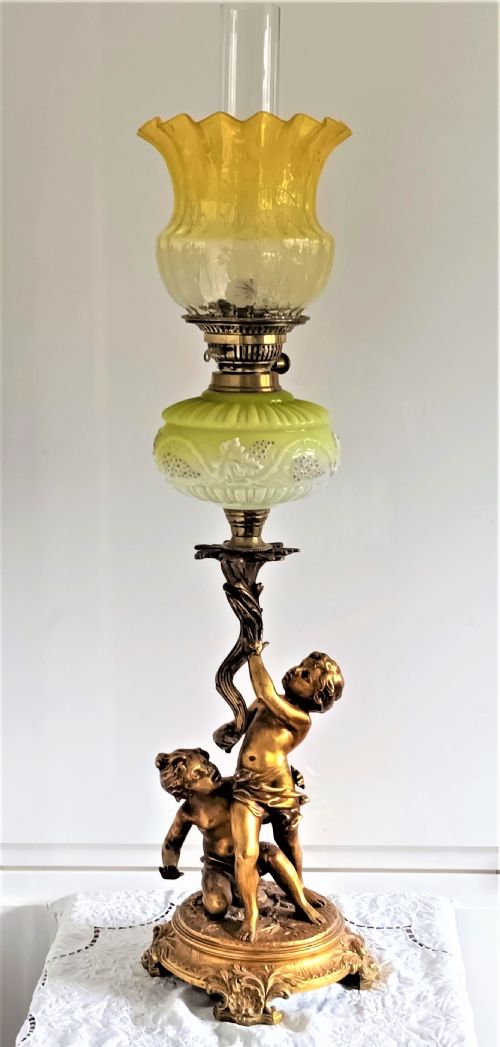
Individual pieces integrate materials such as copper, bronze, ceramic, and onyx to vary the visual weight and texture of the body. Metal components were joined through mechanical fittings or casting, while glass elements required skilled blowing and surface cutting.
Design styles span Victorian, Edwardian, Art Nouveau, French Chateau, and Arts and Crafts periods.
What varies in quality
Quality rests in the substantial weight of the brass and the precision of the casting, particularly in architectural details like Corinthian columns. Superior examples demonstrate heavier gauge metalwork and more complex forms that remain stable despite the height of the shade.
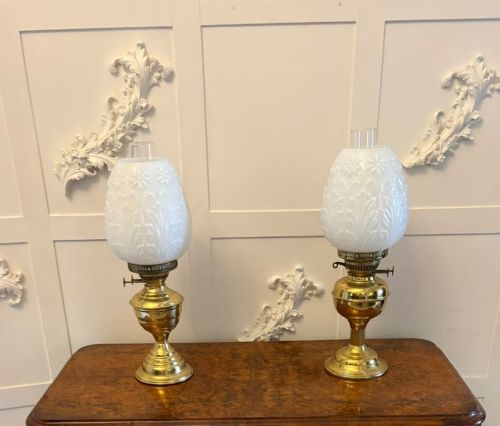
The glass component significantly dictates the character of the piece, with deep cranberry coloration, intricate hand-painted motifs, or crisp cut glass separating standard production from finer work. The integration of complementary materials like onyx or copper further distinguishes individual pieces.
The Edwardian Brass Kerosene Lamp Glossary
- Font
- The reservoir that holds the kerosene or paraffin oil beneath the burner. It is frequently made of glass, brass, or ceramic.
- Opaline glass
- A milky, translucent glass often tinted in soft shades, used to diffuse light softly through the shade.
- Cranberry glass
- A rich red-pink glass created by adding gold to the molten batch, highly prized for period lamp shades.
- Corinthian column
- An architectural column style featuring ornate, leaf-carved capitals adapted for the stems of heavy table lamps.
- Art Nouveau
- A decorative style characterised by flowing, organic lines and natural motifs, appearing on converted lamp bases from around nineteen hundred.
Edwardian Brass Kerosene Lamp: Frequently Asked Questions
What is an edwardian brass kerosene lamp?
An edwardian brass kerosene lamp is a period lighting piece featuring a metal base and a decorative glass shade designed for burning fuel.
These items date predominantly from the late nineteenth and early twentieth centuries, reflecting the design movements of the era.
How were these lamps used?
They provided domestic illumination on tables and surfaces before electric lighting became standard in homes.
Fuel stored in the lower bowl fed a wick beneath a glass chimney, while the decorative shade directed and softened the light.
How do I live with one today?
Many of these lamps are found converted to electricity, allowing them to function safely as decorative table lamps.
Their substantial brass and glass construction suits placement on heavy sideboards or desks where they add period character.
How do I tell periods apart?
Victorian examples often favour ornate cast brass and deep cranberry or hand-painted glass, while Edwardian pieces lean towards simpler brass work or opaline shades.
Art Nouveau and Arts and Crafts variants display characteristic organic styling or copper and bronze construction.