




Edwardian Brass Gong
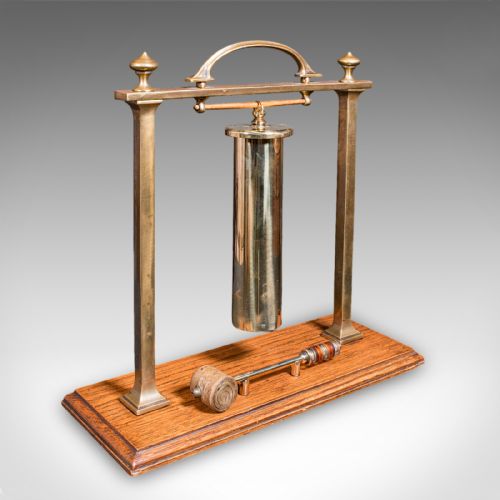
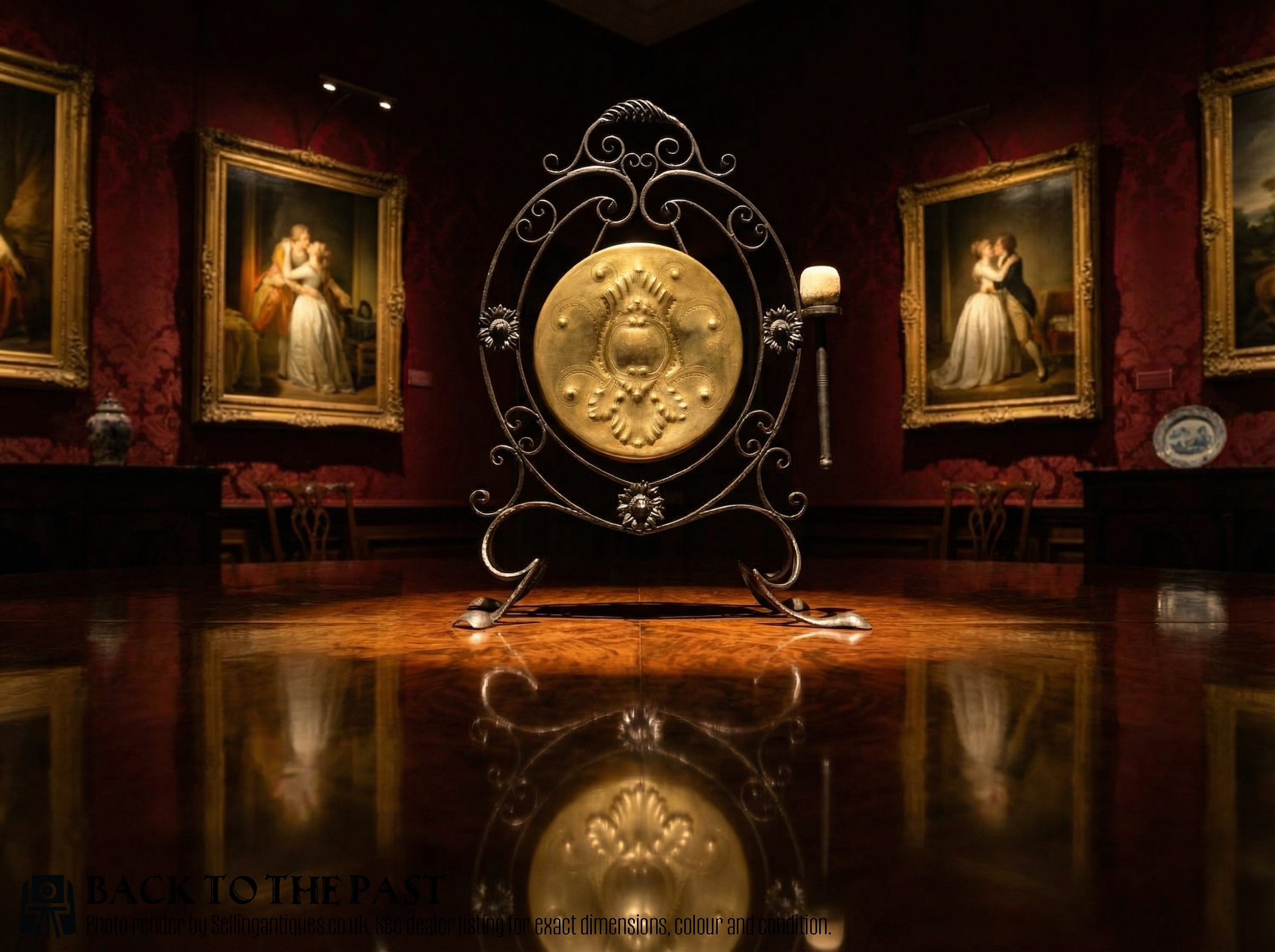
An edwardian brass gong brings resonant country house theatre to the hallway, summoning guests to the table with a rich, lingering tone.
Edwardian Brass Gong
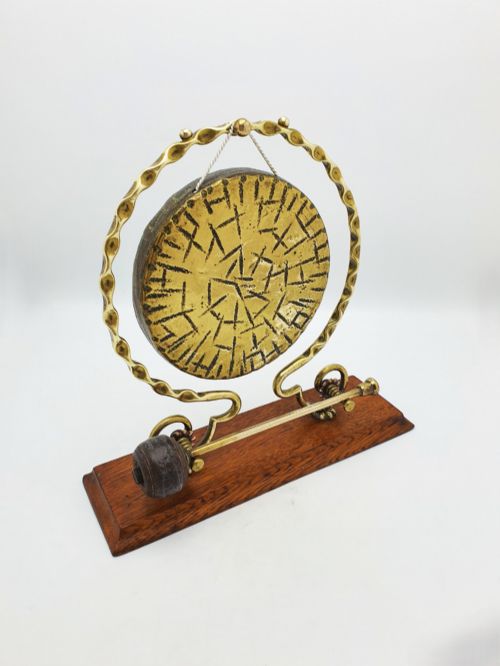
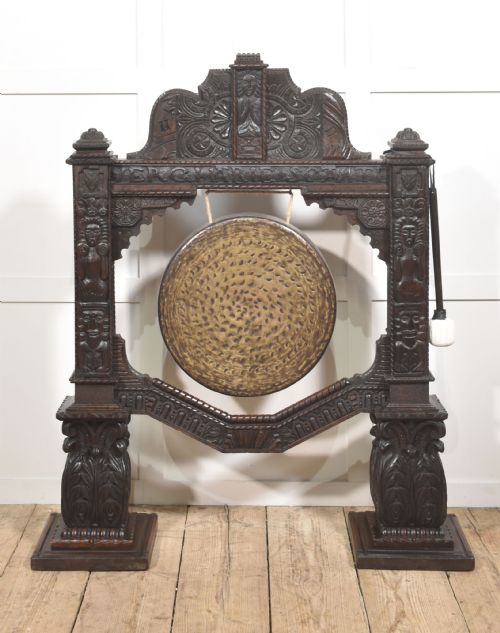
An edwardian brass gong takes the form of a suspended metal disc or bell paired with a wooden frame and a handheld striker, designed for domestic use in the hall or dining room. The version met most often on this page pairs a polished brass gong with a sturdy oak stand, frequently dating from the early decades of the twentieth century. These pieces reflect a period of domestic ritual where household announcements relied on acoustic resonance rather than electricity.
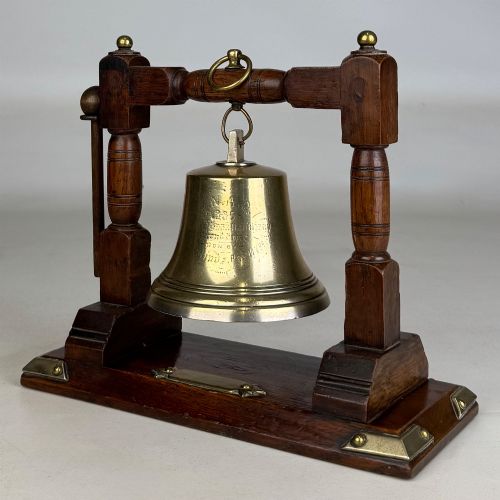
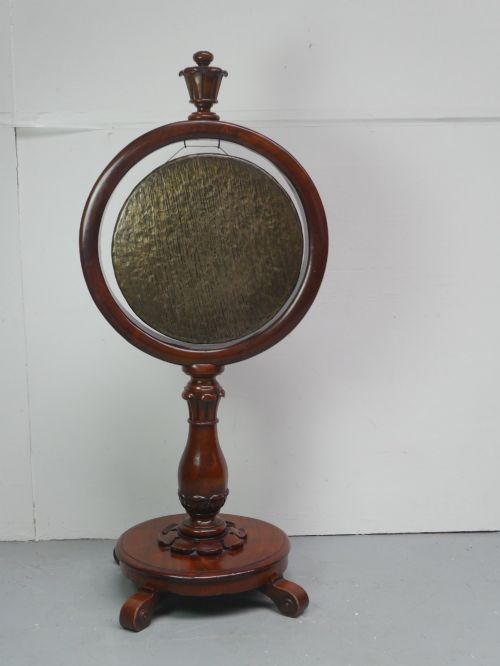
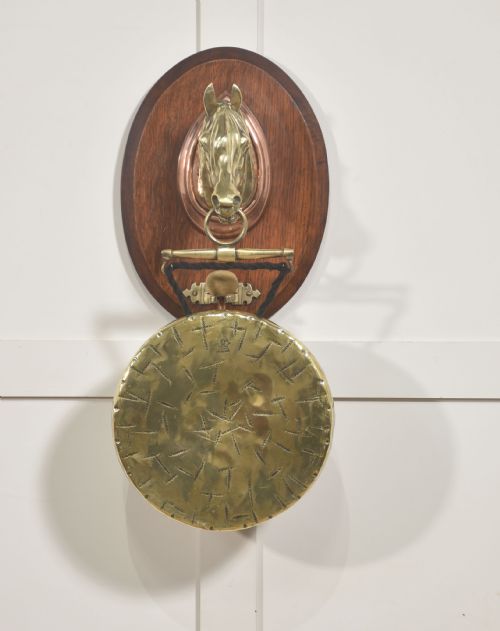
The selection extends beyond standard table models to include wall-hanging varieties, table bells, and architectural pairings incorporating carved timber mounts. While Edwardian examples dominate, related pieces emerge from the nineteenth century and the Victorian era, showing stylistic influences spanning Gothic Revival, Art Nouveau, and Arts and Crafts movements. Regional country house pieces sit alongside items featuring oriental motifs such as Japanese bronze or Chinoiserie details.
Materials and Construction
The primary construction relies on cast or hammered brass and bronze for the striking element, suspended by cord from a supportive frame. Timber forms the structural foundation, with oak and mahogany appearing most frequently alongside walnut and wrought iron. Selected examples incorporate decorative animal elements, utilising cattle horn, horse head mounts, or elephant figures at the base.
Framing techniques range from simple turned wooden supports to heavily carved oak panels and architectural Gothic Revival arches. Metal components combine cast iron, silver plate, and polished brass, while suspension cords provide the flexible hanging necessary for optimal acoustic vibration.
Edwardian Brass Gong Retail Price Guide 2026
Typical asking prices for edwardian brass gong among the pieces listed under this phrase on Sellingantiques today, from the lower quarter to the upper quarter. They describe what is for sale here now, not the wider market.
Listings feature oak, mahogany, walnut, and wrought iron frames paired with brass, bronze, and silver-plated hanging elements.
Quality and Resonance
Quality in an edwardian brass gong rests primarily on the purity and sustain of the metal tone when struck, which depends on the alloy composition and thickness of the disc. Finer examples offer a deep, resonant hum that decays slowly, whereas lesser pieces produce a flat, tinny sound with immediate dampening.
The standard of cabinetwork in the wooden frame separates basic production from superior craftsmanship. Heavy carved oak, detailed joinery, and well-balanced proportions elevate a piece from a simple utility item to a focal point of interior decoration.
The Edwardian Brass Gong Glossary
- Dinner Gong
- A resonant metal disc or bell suspended in a frame and struck with a mallet to announce meals. They were staples of large country houses during the late nineteenth and early twentieth centuries.
- Striker
- The handheld mallet or beater used to hit the gong, typically featuring a wooden handle and a padded or solid head. The material of the head alters the sharpness of the initial impact sound.
- Gothic Revival
- An architectural and decorative style drawing on medieval forms, frequently seen in the pointed arches and heavy carved tracery of Victorian and Edwardian wooden frames.
- Art Nouveau
- A decorative movement characterised by flowing, organic lines and stylised plant motifs, visible in the sweeping metalwork of select contemporary table gongs.
- Japonisme
- The nineteenth-century European fascination with Japanese art and aesthetics, influencing the casting motifs and decorative elements found on imported bronze and brass gongs.
Edwardian Brass Gong: Frequently Asked Questions
How do I clean the brass?
Dust regularly with a dry microfibre cloth to prevent grime accumulation on the metal and wood surfaces.
Avoid harsh chemical polishes that strip historical patina, opting instead for gentle cleaning agents only when tarnish obscures surface detail.
Where were these placed originally?
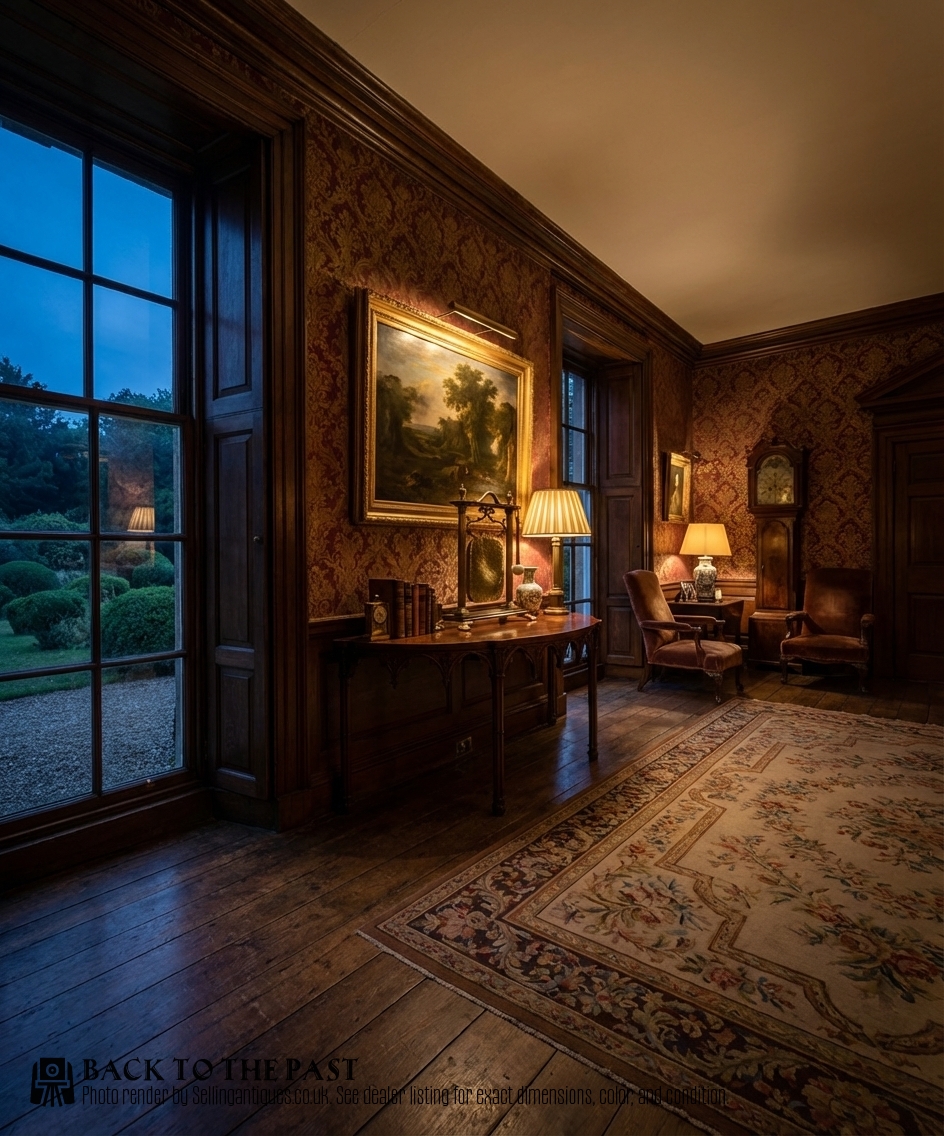
These pieces typically stood in entrance halls, landing corridors, or outside dining rooms where sound could carry effectively through the domestic quarters.
Servants used them to signal the serving of afternoon tea or formal dinner to residents scattered across large houses.
How do I date an Edwardian piece?
Examine the construction methods, fastener types, and timber finish to distinguish early twentieth-century production from later reproductions.
Edwardian examples often display characteristic quarter-sawn oak figuring combined with brass work influenced by Arts and Crafts simplicity.
Can I hang a wall gong safely?
Wall-hanging examples require secure anchorage into solid masonry or direct wall studs to support the combined weight of the timber mount and heavy metal disc.
Check that the suspension cord or metal hooks show no signs of fraying or fatigue before hanging the piece permanently.