
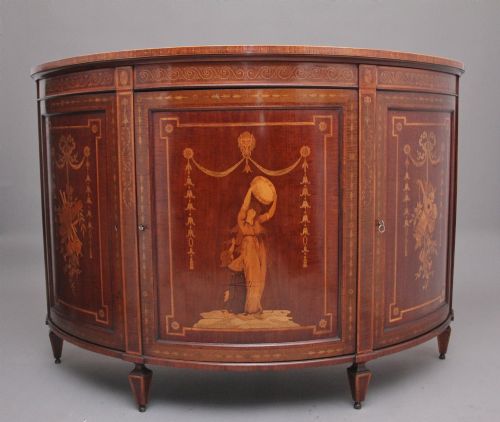
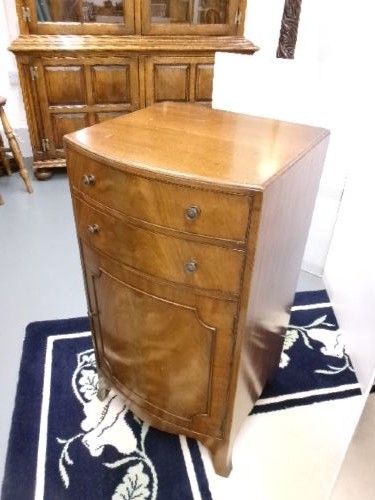
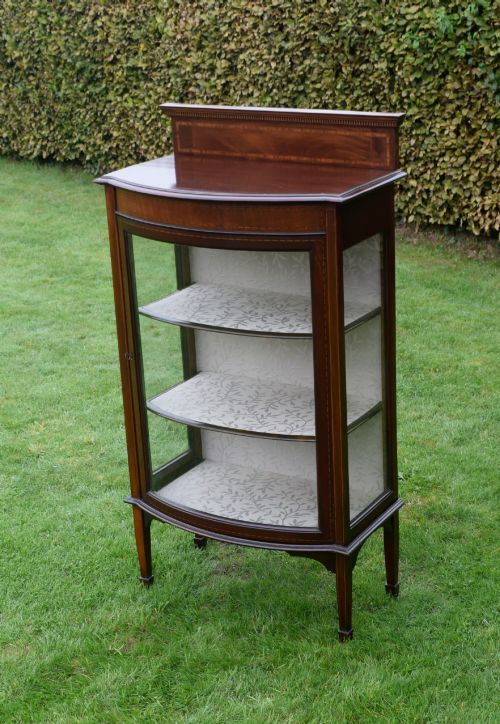
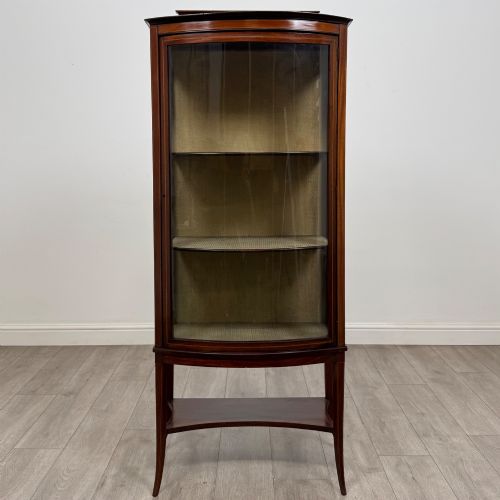
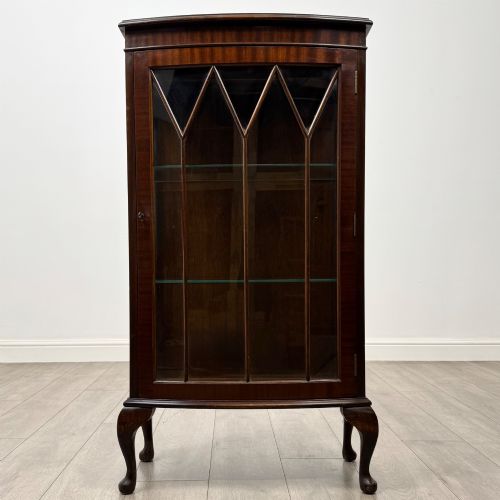
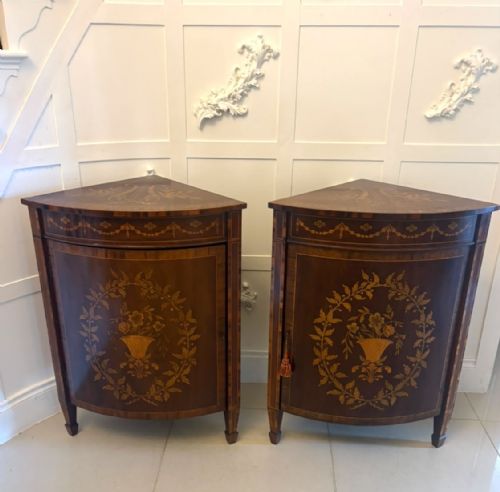
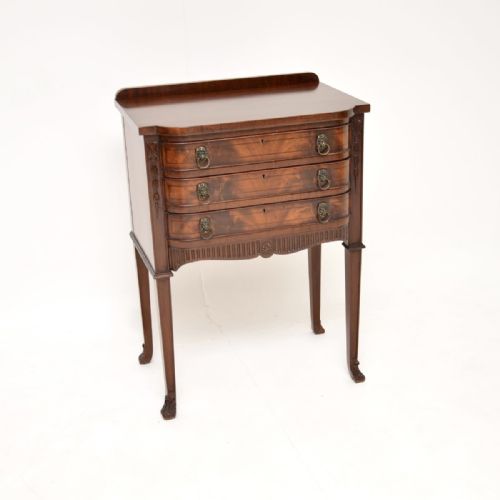
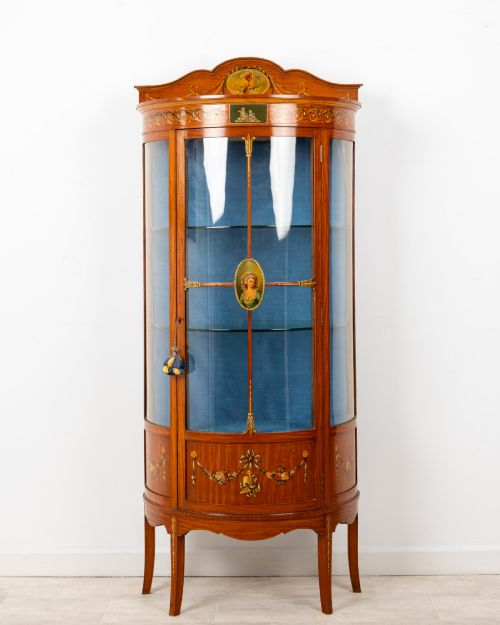

Edwardian Bowfront Cupboard
An edwardian bowfront cupboard brings curved front lines and warm timber tones into a room, offering practical storage with refined proportions.
Edwardian Bowfront Cupboard
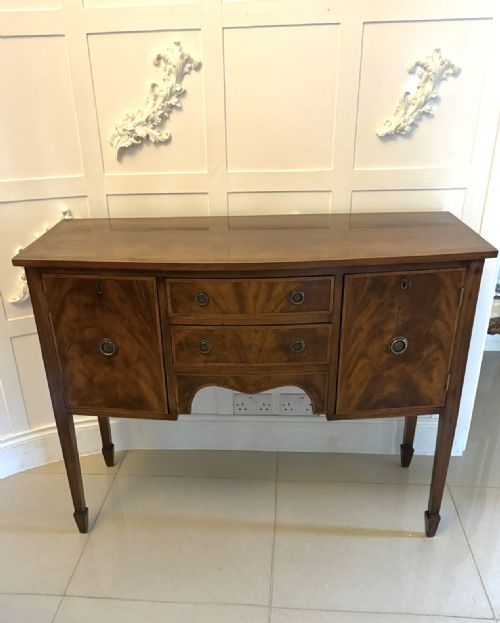
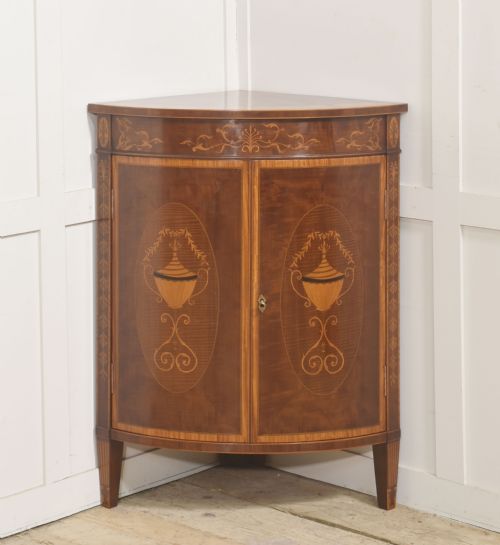
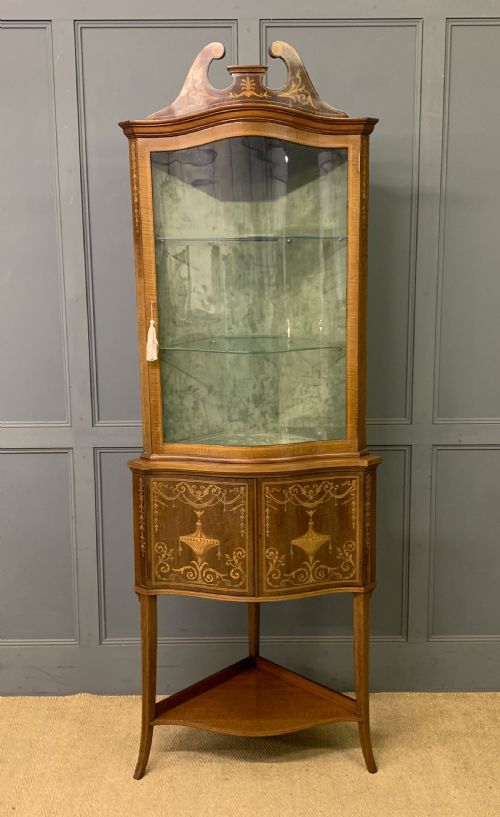
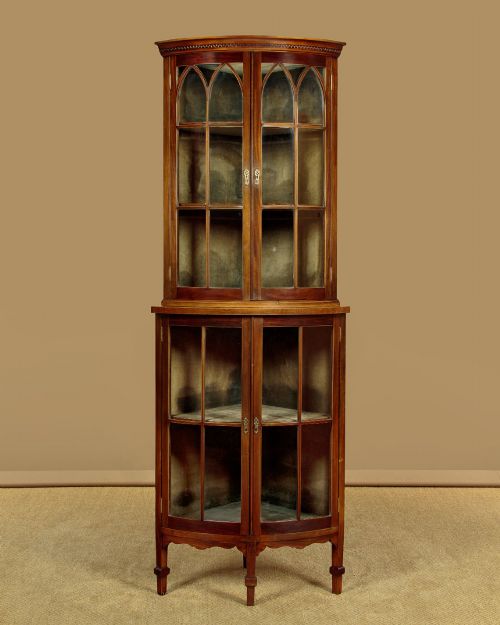
When searching for an edwardian bowfront cupboard, buyers encounter freestanding corner units, bedside chests, and larger side cabinets built with convex curved fronts. The Edwardian pieces on this page share space with earlier Georgian examples and later revivals, reflecting a lasting taste for the curved outline.
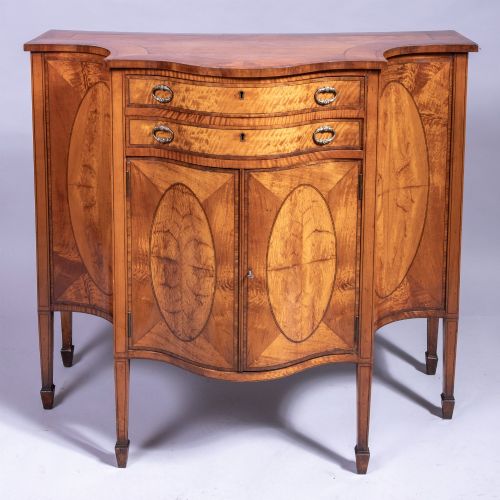
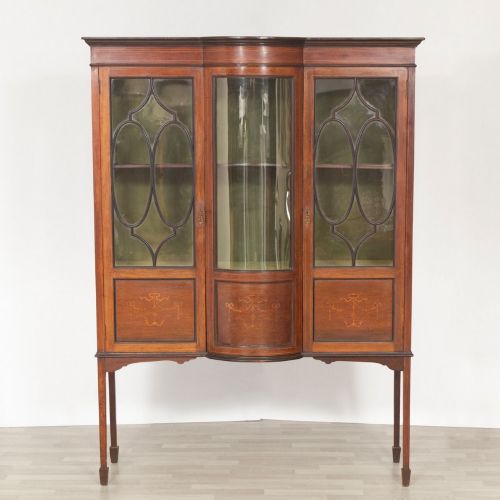
The primary forms take shape as display cabinets with glazed doors, sideboards for dining spaces, and smaller bedside tables fitted with cupboards. Many examples incorporate satinwood inlay or painted decoration influenced by earlier Sheraton designs.
Makers of the period utilised native and imported timbers, frequently pairing rich mahogany bases with delicate stringing in boxwood and ebony. These storage pieces suit both traditional interiors and modern rooms needing compact, curvaceous furniture.
How they were made
Cabinetmakers built these curved carcasses using solid mahogany and figured veneers applied to stable secondary woods, ensuring the bowed doors and frames retained their shape over time. Satinwood and rosewood veneers provided contrasting panels for marquetry motifs.
Inlay work relied on thin strips of boxwood and ebony set into routed channels, while painted decoration added floral garlands and neoclassical urns directly onto the timber surface. Brass hardware, including hinges, escutcheons and handles, completed the construction.
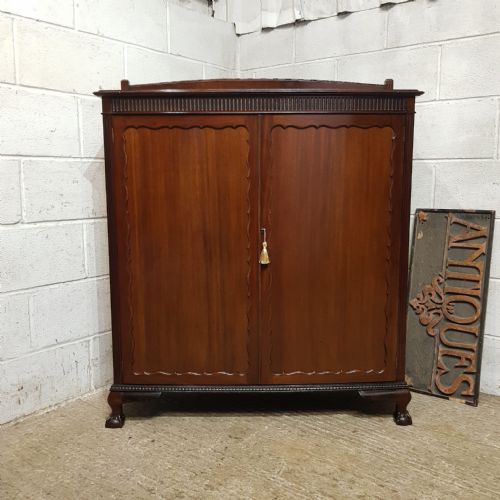
The furniture forms include corner cabinets, display cases, bedside chests, and compact sideboards.
What varies in quality
The standard of craftsmanship shows in the selection of timber figures, particularly where flame mahogany or highly figured satinwood veneers wrap evenly across the curved front. Finer pieces demonstrate meticulous hand-cut inlay rather than mass-produced transfers.
Structural integrity depends on the fit of the bowed doors within their frames and the stability of the joints where the curved sides meet. Superior examples retain their original brass fittings, hand-painted details and interior shelving without later alterations.
Edward and Roberts·Gillows
The Edwardian Bowfront Cupboard Glossary
- Bowfront
- A convex curved cabinet front that projects outward in a smooth arc. This shape softens room corners and adds visual depth to case furniture.
- Marquetry
- Decorative patterns formed by fitting together thin veneers of different coloured woods. Craftsmen cut these geometric or floral designs by hand before gluing them to the carcass.
- Satinwood
- A yellowish hardwood prized for its reflective grain and smooth texture. It served as a primary veneer or background for painted details during revival periods.
- Stringing
- Thin lines of contrasting timber inlaid into shallow grooves on cabinet surfaces. This linear detail outlines drawers, doors and tabletops.
- Vitrine
- A glass-fronted cabinet designed for displaying porcelain, glass or small collectables. These pieces often feature interior fabric linings and glass side panels.
Edwardian Bowfront Cupboard: Frequently Asked Questions
Where should I place an edwardian bowfront cupboard?
Corner cupboards fit neatly into unused room angles, while freestanding side cabinets and bedside versions suit living rooms, hallways and bedrooms.
Their curved profiles soften straight architectural lines and function well in spaces where traditional square furniture feels too heavy.
How do I care for mahogany and satinwood surfaces?
Keep wooden cabinets away from direct sunlight and heat sources to prevent the veneers from drying out or splitting. Dust regularly with a dry cloth and apply natural beeswax sparingly to nourish the polish.
How do I distinguish Edwardian pieces from Georgian originals?
Edwardian items often display machine-made uniformity in their internal construction, lighter secondary timbers, and revival styles influenced by earlier centuries. Georgian pieces typically show hand-tool marks and heavier framing timbers consistent with eighteenth-century workshop practices.