
Edwardian Bowfront Cabinet
An edwardian bowfront cabinet brings curved elegance to a room, offering practical storage disguised by sweeping mahogany or satinwood lines.
Edwardian Bowfront Cabinet
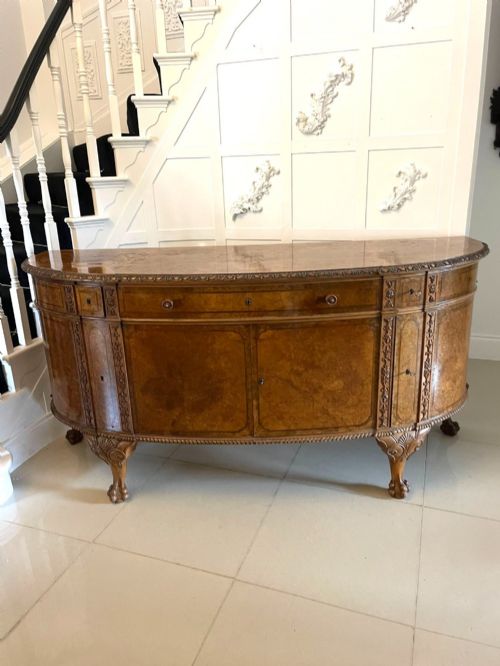
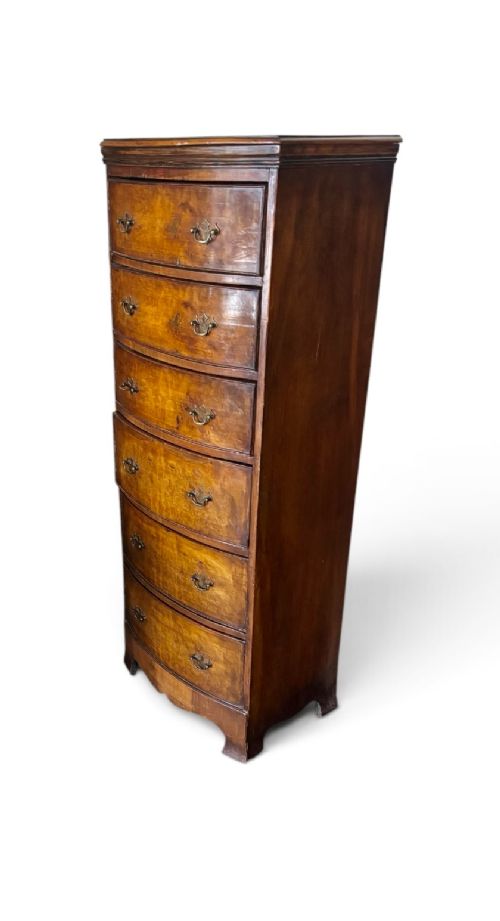
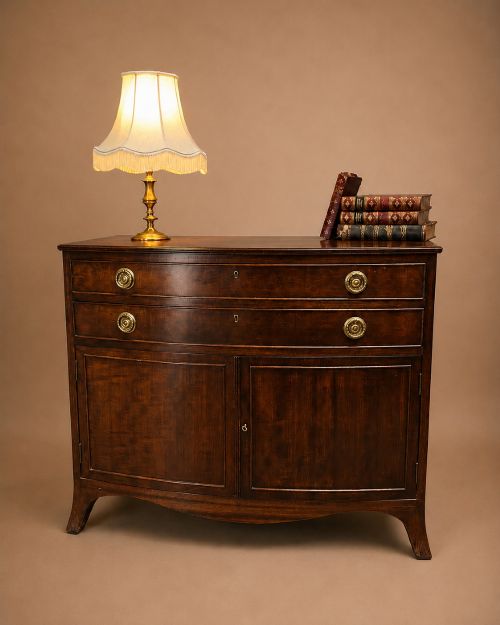
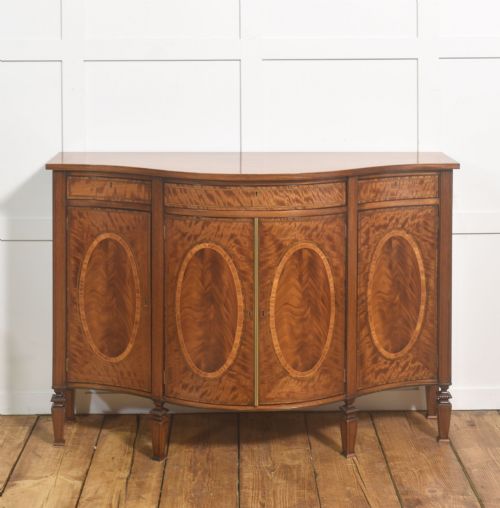
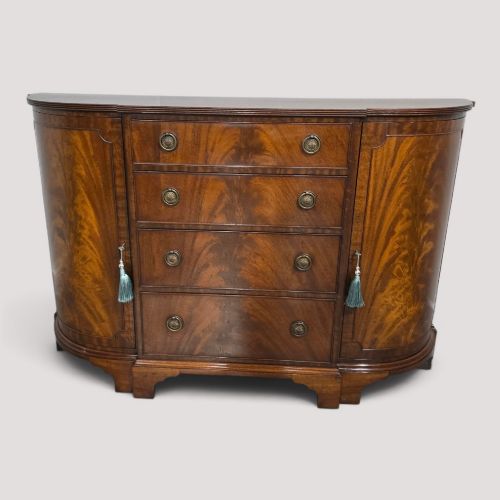
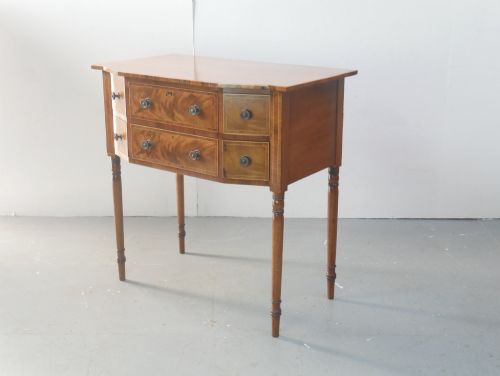
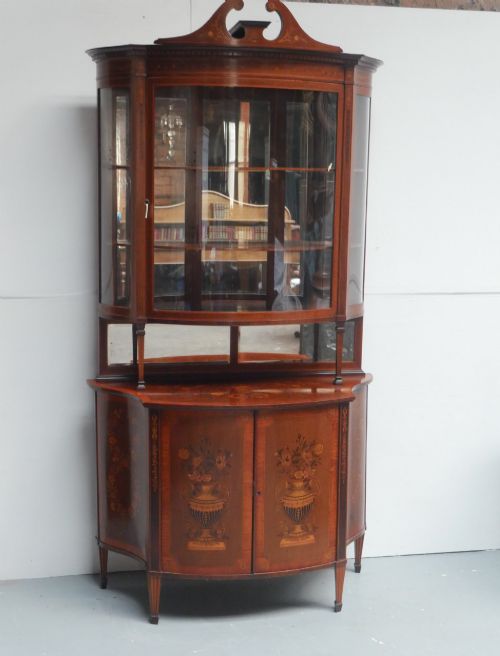
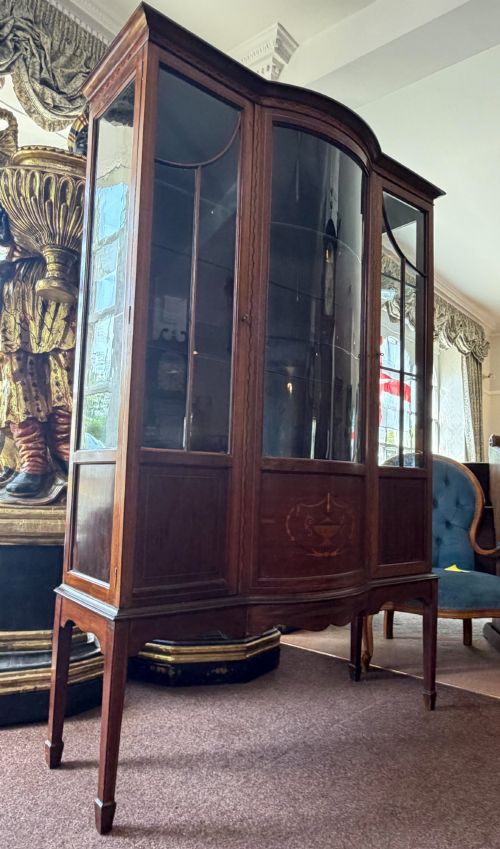
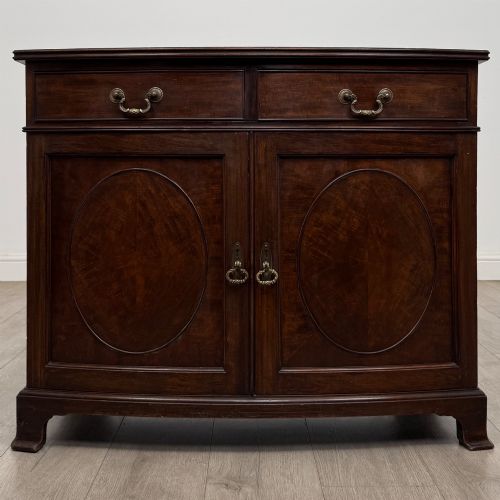
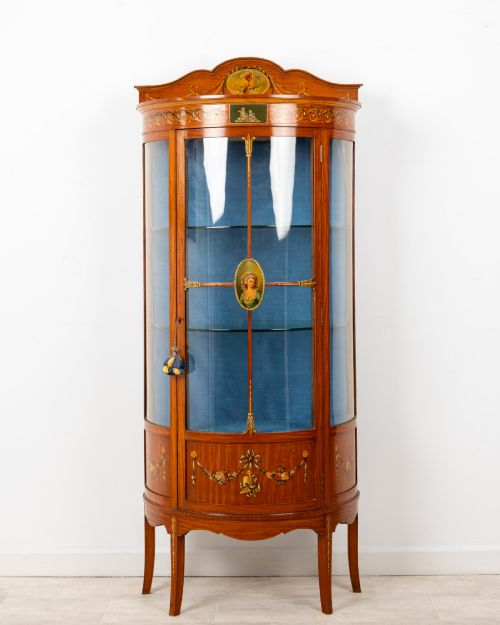
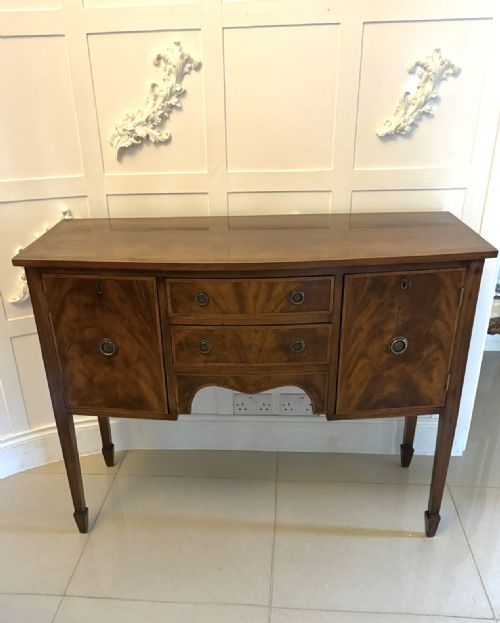
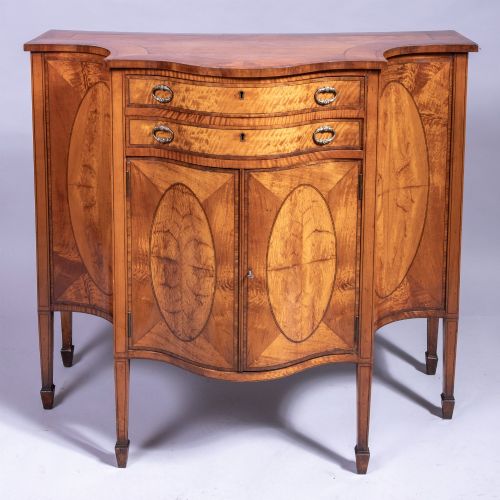
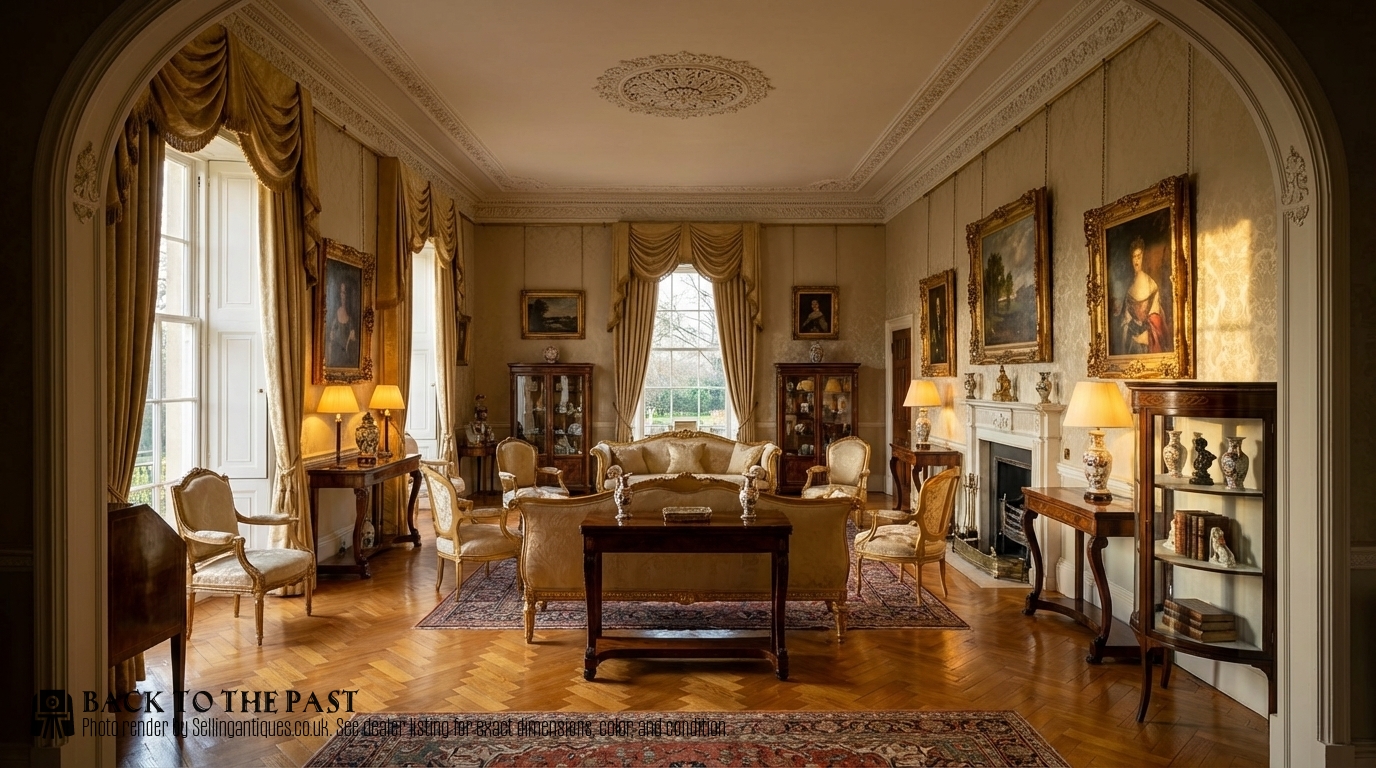
An edwardian bowfront cabinet is typically encountered as a display piece, sideboard, or music cabinet produced around the start of the twentieth century. These items manifest the revival of earlier Georgian and Sheraton aesthetics, favouring curved fronts that soften the corners of a room.
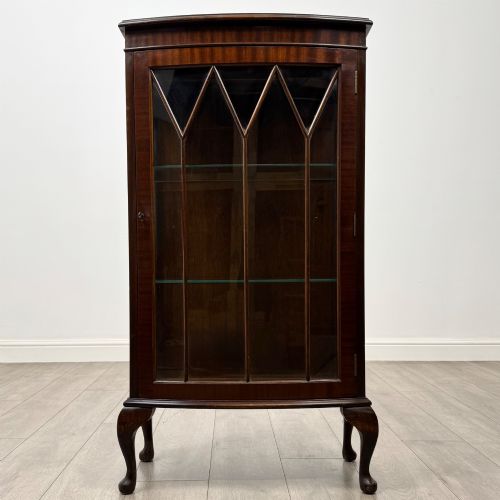
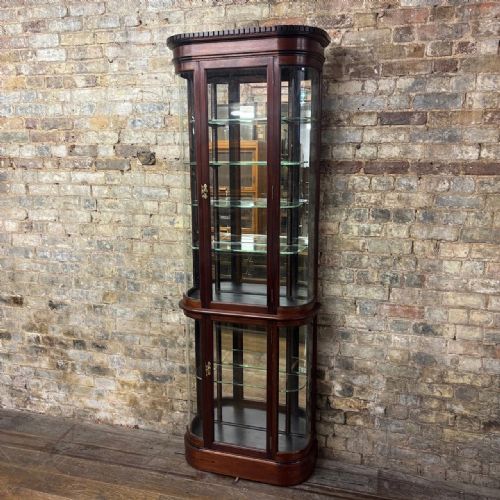
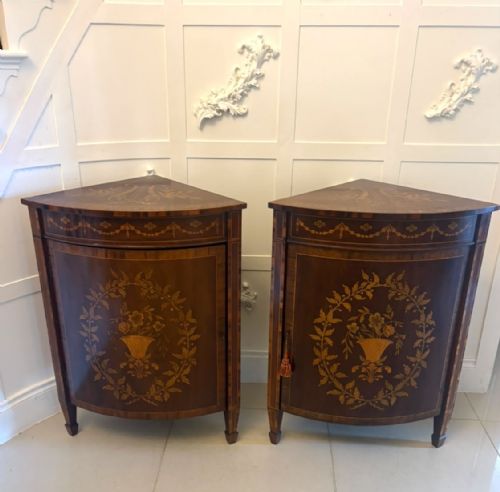
Makers of the period utilised mahogany and satinwood as principal timbers, often incorporating glass doors for vitrines or enclosing shelves behind solid wooden panels. The inventory shows diverse formats, ranging from tall display units to compact corner cupboards and low sideboards.
While Edwardian examples dominate the selection, related pieces stretch from the late nineteenth century into the early decades of the twentieth. Buyers frequently select these forms to introduce curvilinear design and functional surface area into traditional interiors.
Materials and Construction
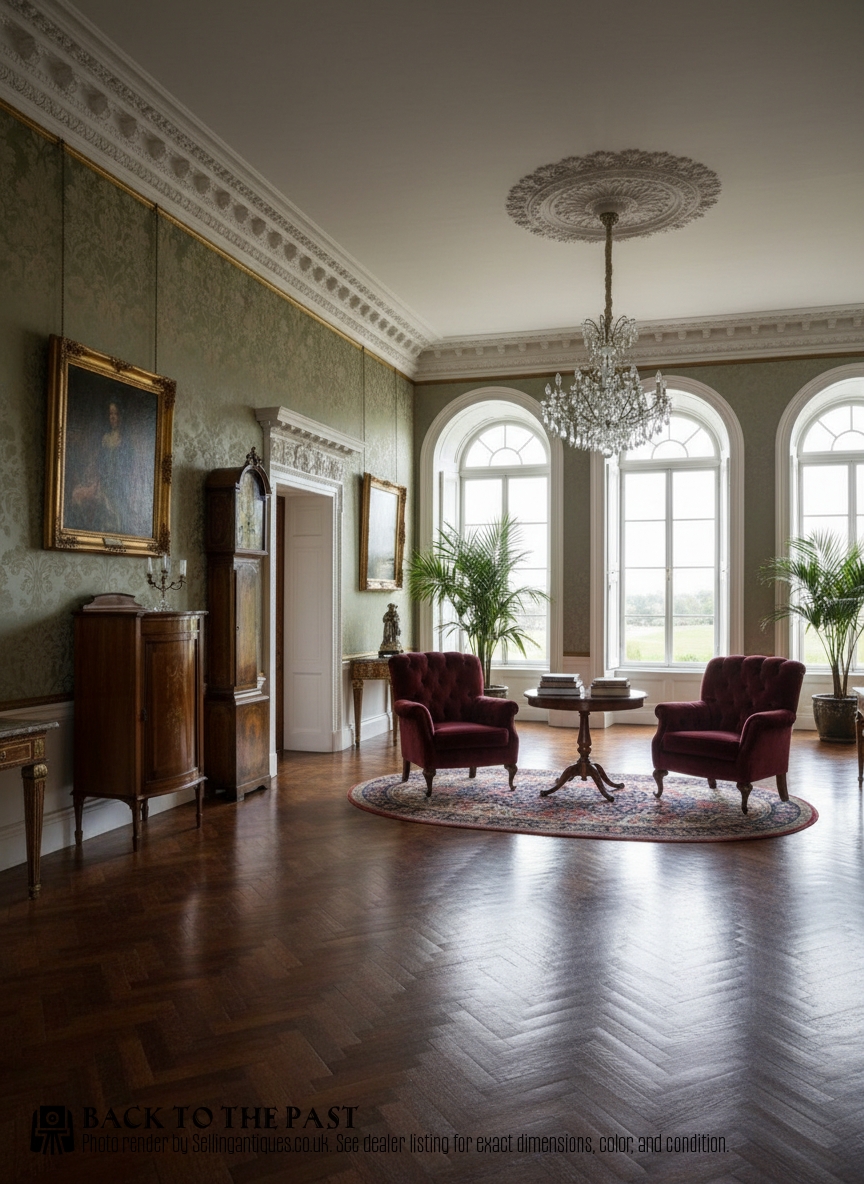
Cabinetmakers built these curved structures using solid timbers and supportive secondary woods, applying finely figured mahogany, flame mahogany, or satinwood veneers to the exterior surfaces. Bending wood to a consistent bowfront profile required careful steaming and lamination techniques before veneering.
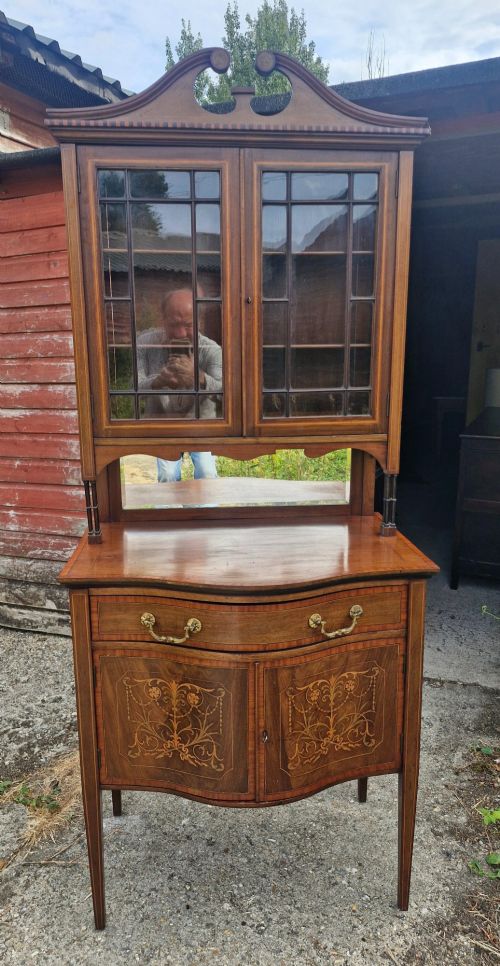
Decorative detailing relied on contrasting elements such as boxwood stringing, satinwood crossbanding, and marquetry inlays. Glazed display sections incorporated delicate timber framing, while hardware typically featured cast brass handles and escutcheons.
Edwardian Bowfront Cabinet Retail Price Guide 2026
Typical asking prices for edwardian bowfront cabinet among the pieces listed under this phrase on Sellingantiques today, from the lower quarter to the upper quarter. They describe what is for sale here now, not the wider market.
Music cabinets kept sheet scores flat and ready while polite society gathered around the upright piano for evening recitals.
Judging Quality
Quality rests upon the selection of timber veneers and the precision of the inlay work. Pieces displaying book-matched flame mahogany or intricate hand-painted satinwood demonstrate superior craftsmanship compared to plain or mechanically printed surfaces.
Structural integrity reveals itself in the smooth operation of doors and drawers along the curved radius. Superior examples maintain tight joints, well-fitted glass panes, and original brass hardware without excessive shrinkage or warping in the timber.
Edwards & Roberts
The Edwardian Bowfront Cabinet Glossary
- Bowfront
- A convex, outwardly curved front facade typical of certain sideboards, chests, and cabinets. This curved profile softens the rectangular lines of standard furniture.
- Satinwood
- A pale, lustrous hardwood originating from tropical regions, frequently used for veneers and fine cabinetmaking. It provides a bright, golden surface suitable for delicate inlay.
- Marquetry
- The art of forming decorative patterns on woodwork by fitting together small pieces of veneer. Artisans use various tinted woods to create floral or geometric pictures.
- Crossbanding
- A narrow strip of veneer applied perpendicular to the grain of the main surface. This technique creates a distinct border framing a drawer front or top.
- Vitrine
- A glass-fronted cabinet designed for displaying porcelain, glassware, or small ornaments. These pieces rely on internal visibility through glazed doors or side panels.
Edwardian Bowfront Cabinet: Frequently Asked Questions
What is an edwardian bowfront cabinet used for?
These cabinets serve multiple domestic purposes depending on their internal configuration. Display variants hold china and glassware, whereas sideboards and cupboards conceal dining linen or household items.
Their flat top surfaces also provide space for lamps, decorative objects, or serving food during gatherings.
How do I identify an edwardian piece?
Edwardian furniture often combines lighter timbers, Sheraton revival styling, and delicate boxwood stringing. The construction methods reflect early twentieth-century workshop standards, sitting between Victorian heaviness and later modernism.
Examining the secondary woods inside drawers and the style of the brass fittings helps confirm the production era.
Where should I place a bowfront cabinet?
The curved front makes these cabinets suitable for dining rooms, hallways, or living spaces where sharp corners might impede movement. Placing them against a flat wall allows the convex curve to stand out as a focal point.
Care should be taken to avoid direct sunlight to protect sensitive mahogany and satinwood veneers from fading.
Are these cabinets difficult to maintain?
Routine upkeep involves dusting with a soft cloth and occasionally feeding the timber with appropriate wax. Direct heat sources and damp environments should be avoided to prevent the veneer from lifting.
Keeping the brass hardware clean and ensuring the doors hang level preserves both the appearance and mechanics of the piece.