


Edwardian Bottle Coaster
These edwardian bottle coaster pieces are the tactile barware accessories that protected dining tables from condensation, combining silver work and turned wood.

Edwardian Bottle Coaster
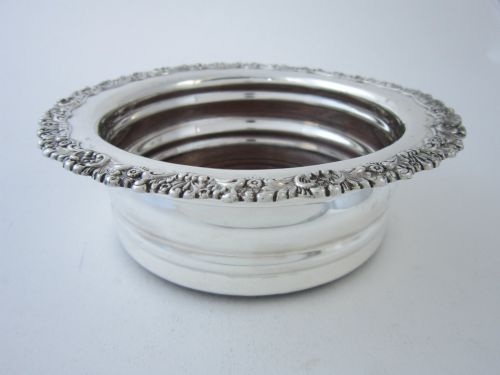
An edwardian bottle coaster serves to hold wine, champagne, or magnum bottles while resting upon the dining table. The form appears as a circular gallery designed to contain the base of a bottle during formal meals and gatherings.
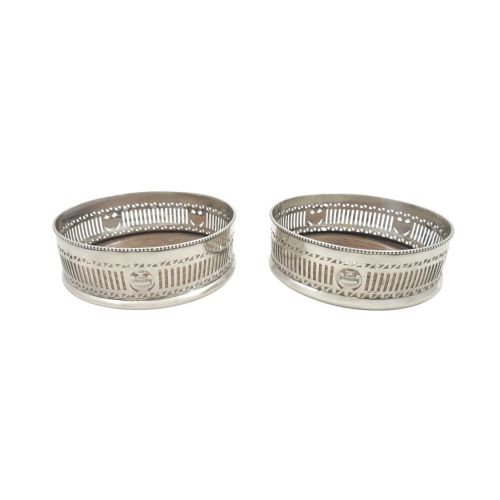
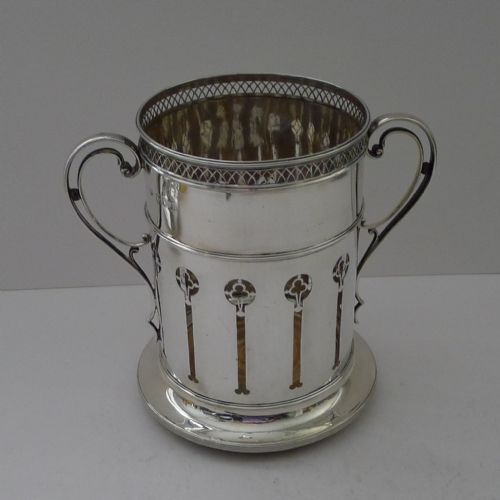
The version most frequently met on this page combines silver plate or sterling silver with a turned wooden base, often lined with felt to protect polished wood surfaces. Examples range from single bottle holders to multiple bottle configurations and larger serving pieces.
How they were made
Silversmiths shaped sterling silver or applied silver plate over base metals, frequently employing piercing and decorative chasing techniques to form the outer galleries. Workshops paired these metal rims with turned mahogany bases fitted internally with protective felt.
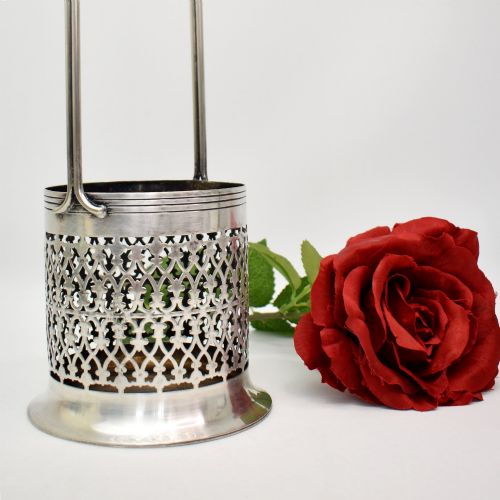
Makers integrated structural elements such as steel reinforcements and fitted glass inserts where the design called for crystal condiment bottles or specialised barware vessels.
Certain multi-bottle coasters double as table planters, letting a dining centerpiece transition from beverage service to botany.
What varies in quality
The distinction between standard production and superior examples rests upon the weight of the silver or silver plate and the crispness of the pierced or embossed ornament. Heavier gauge metal retains its structural integrity better across decades of use.
The execution of the wooden base, the quality of the turning in the mahogany, and the neatness of the interior felt lining separate workshop output. Maker marks from established retailers or silversmiths provide an additional indicator of provenance.
Brook and Son·Christofle·Asprey·D and J Welby
The Edwardian Bottle Coaster Glossary
- Silver Plate
- A thin layer of silver fused or electroplated onto a base metal such as copper or brass. This method offered the visual appearance of solid silver at a lower production cost.
- Sterling Silver
- An alloy consisting of pure silver and other metals, usually copper, standardised at a fineness of ninety-two point five percent. Pieces made to this standard frequently bear official assay hallmarks.
- Mahogany
- A durable tropical hardwood with a reddish-brown colour used extensively for the turned bases of coasters. It provided stability and weight to the bottom of the vessel.
- Felt
- A dense non-woven textile material glued to the underside of the wooden base. It prevents scratching on polished dining tables when the coaster is slid across the surface.
Edwardian Bottle Coaster: Frequently Asked Questions
What is an edwardian bottle coaster?
An edwardian bottle coaster is a small circular tray or gallery designed to hold wine bottles and decanters. They protected dining room tables from drips and rings.
Most examples from this period pair silver or silver plate with a wooden base. They remain practical accessories for modern dining tables.
How do I date an edwardian bottle coaster?
Dating relies on identifying silver hallmarks, maker marks, and stylistic indicators such as Art Nouveau motifs or Georgian Revival styling. Pieces often carry assay office stamps with specific date letters.
Construction methods, including the type of plating and wood turning, also help narrow down the period of manufacture.
Are these coasters suitable for modern wine bottles?
Standard coasters accommodate traditional wine and port bottles comfortably. Magnum and champagne sizes require larger dedicated coasters.
Measuring the internal diameter of the gallery ensures compatibility with modern bottle shapes before use.
How should I care for silver plated coasters?
Silver plate requires gentle cleaning with a specialist polish to maintain the finish without wearing through the thin metal layer. Avoid abrasive cloths that scratch the surface.
Keeping the wooden bases dry prevents warping and protects the internal felt lining from moisture damage.