


Pierced Silver Wine Stand
A pierced silver wine stand protects the dining table while holding a bottle or decanter with openwork grace.

Pierced Silver Wine Stand
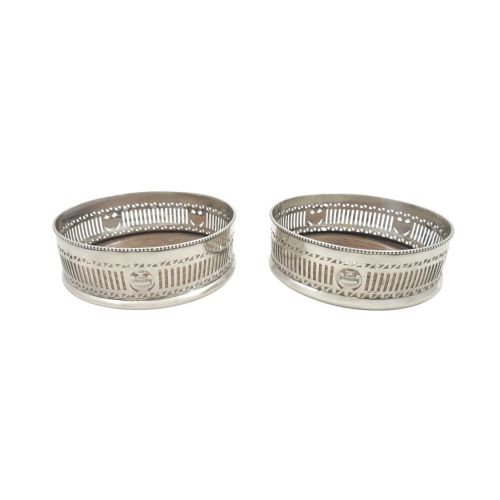
A pierced silver wine stand serves to hold bottles and decanters on the dining table while keeping moisture away from polished wood. Buyers searching for a pierced silver wine stand encounter circular table accessories designed to receive the base of a wine bottle or decanter securely.
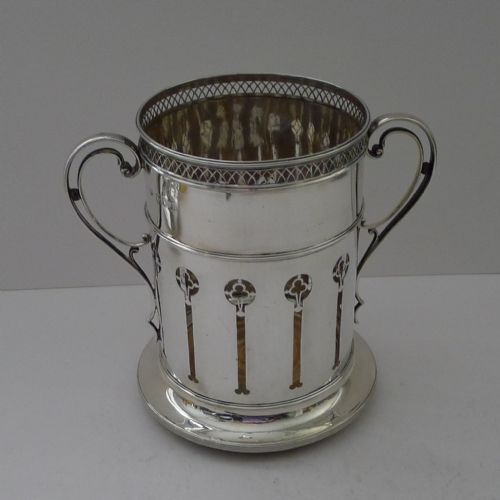
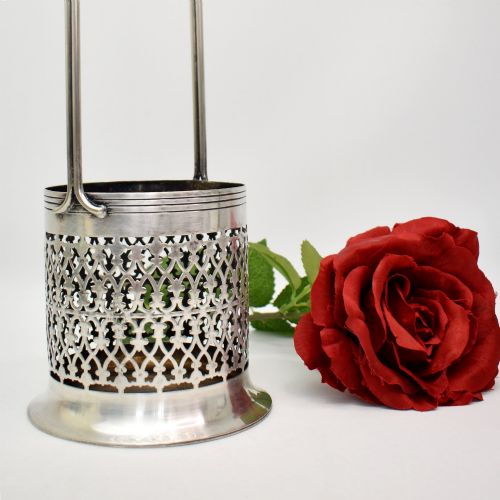
The pieces on this page appear in forms such as wine coasters, bottle holders, and syphon stands, originating from periods spanning the Georgian era through the Edwardian years and the twentieth century. These items function primarily as barware and table rests, though certain examples serve alternative roles on a desk.
Most items meeting this search take the form of individual coasters or pairs, with occasional multi-bottle frames designed to carry several vessels at once. The materials employed combine metalwork with wooden bases or felt linings to cushion the vessel.

What varies in quality
The distinction between standard examples and finer pieces rests upon the crispness of the pierced metalwork and the weight of the silver or plating. Workshops employing delicate hand-piercing achieved intricate geometric or floral openwork that marks the upper tier of production.
The choice of secondary materials, such as figured mahogany bases and heavy turned wooden inserts, separates utilitarian items from superior dining accessories. The presence of clear hallmarks or maker marks adds documentary weight to the piece.
Listings span the Georgian, Victorian, and Edwardian eras, utilising silver plate, sterling silver, mahogany, and turned wood.
Brook and Son Edinburgh·Asprey
The Pierced Silver Wine Stand Glossary
- Pierced work
- Metalwork decorated by cutting holes or patterns through the sheet to create an open lattice effect. This technique lightened the visual weight of heavy tableware.
- Old Sheffield Plate
- A method of fusing a thin layer of sterling silver to a copper core before rolling and shaping the metal. This technique predates modern electroplating.
- Wine coaster
- A small circular tray with a raised gallery designed to hold a wine bottle on the dining table. It allowed bottles to be passed smoothly across polished mahogany.
- Gallery
- The vertical outer wall of a tray or coaster, often pierced or decorated with repousse work. It retained the bottle safely within the perimeter during transit.
- Syphon stand
- A metal holder built to fit carbonated water bottles or syphons used in the dining room or smoking room. These stands often share the pierced decoration of wine coasters.
Pierced Silver Wine Stand: Frequently Asked Questions
How do I clean a silver plated wine stand?
Clean the metal using a soft cloth and a gentle silver polish formulated to protect plated surfaces from excessive wear.
Avoid immersing wooden bases in water, as moisture can warp the timber or damage the felt lining underneath.
Can these stands hold modern wine bottles?
Most standard wine and port bottles fit comfortably within the internal diameter of these traditional table coasters.
Larger magnum bottles require specific wider stands designed explicitly for bulkier vessels.
Were these pieces used singly or in pairs?
Dining tables during the Georgian and Victorian periods frequently utilised pairs of coasters to circulate different wines.
Single examples also appear regularly, particularly in multi-bottle frames or syphon stands.
How do I distinguish Georgian from Edwardian examples?
Georgian pieces often feature heavier Old Sheffield Plate construction with hand-cut piercing and simple wooden turned bases.
Edwardian items tend to display lighter sterling silver or refined electroplate with more intricate decorative edging.