
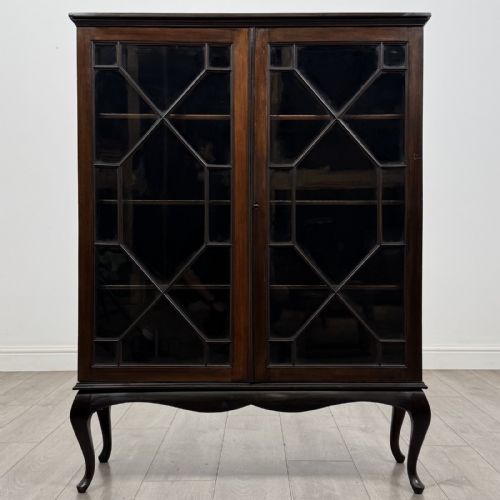
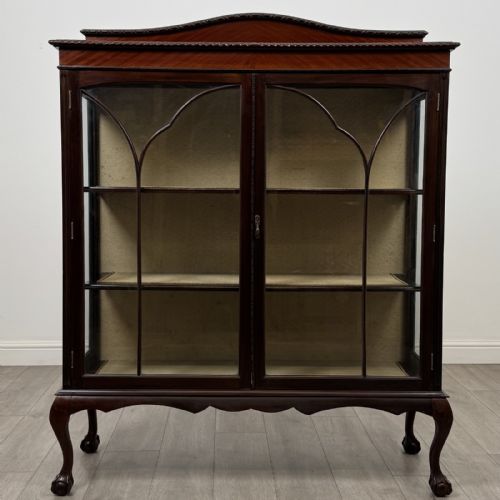
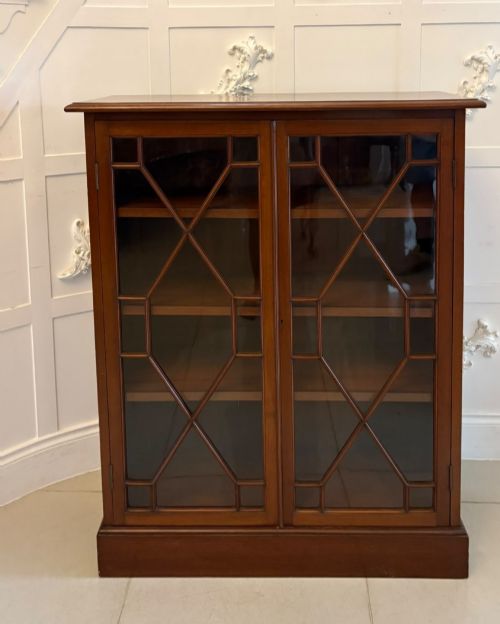
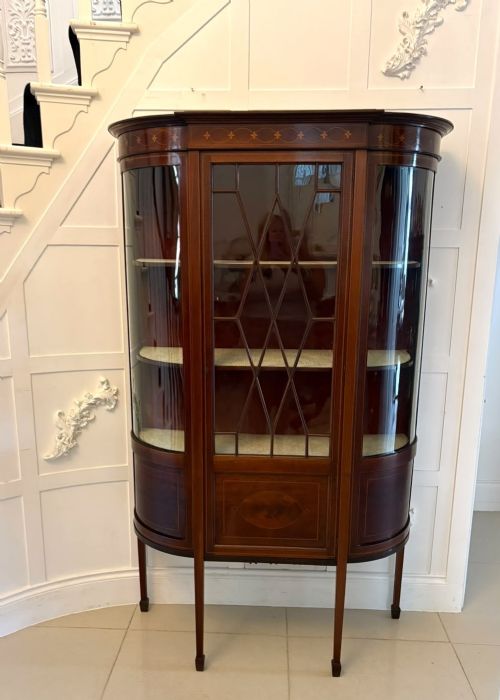
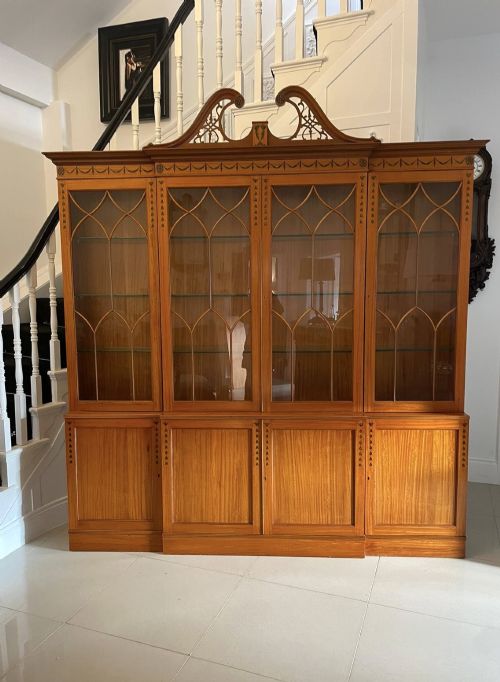
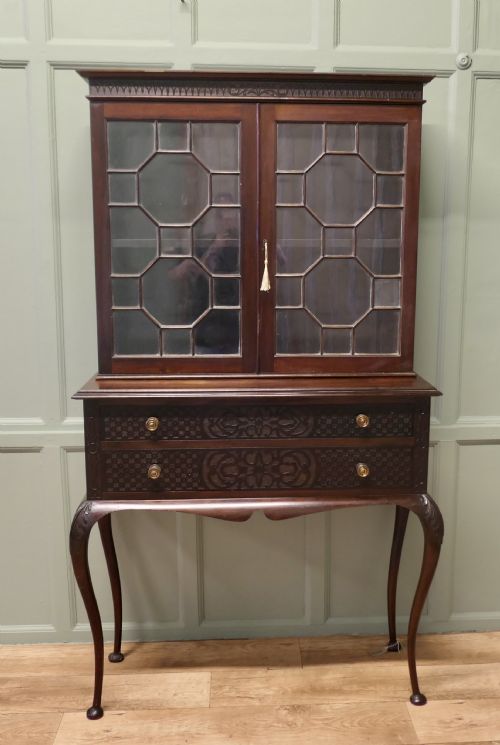
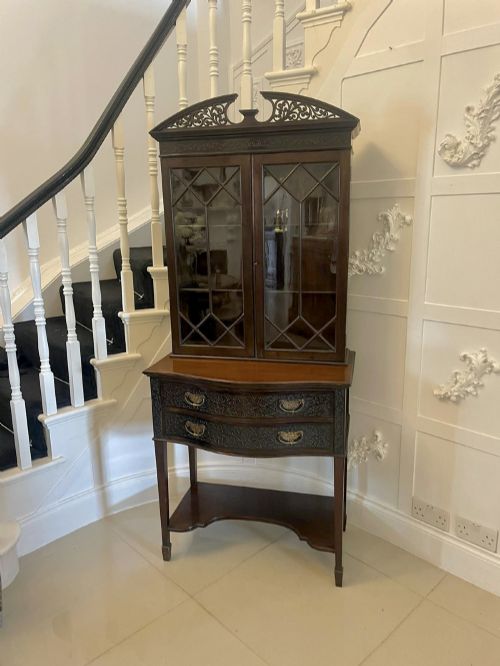
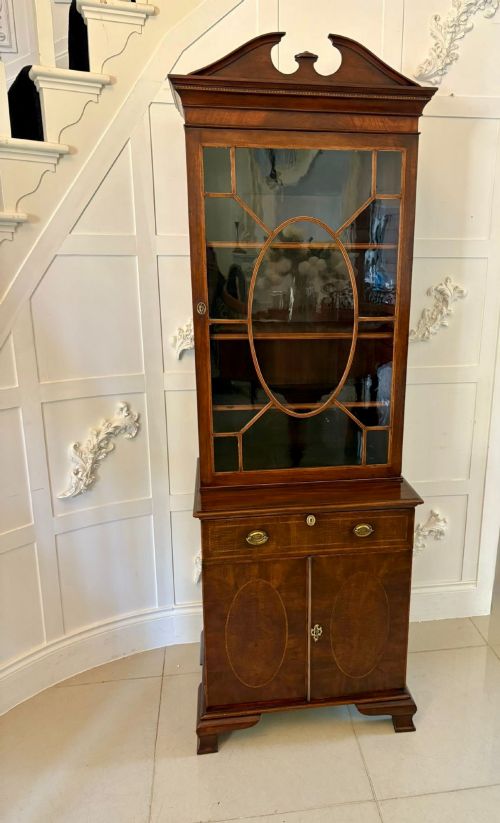
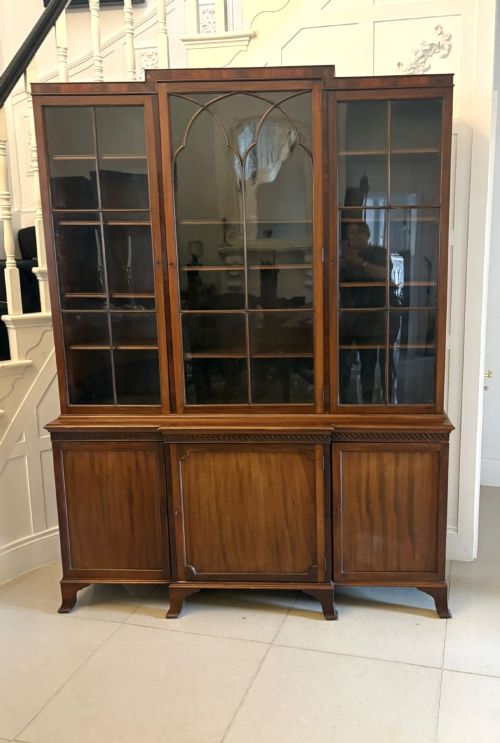

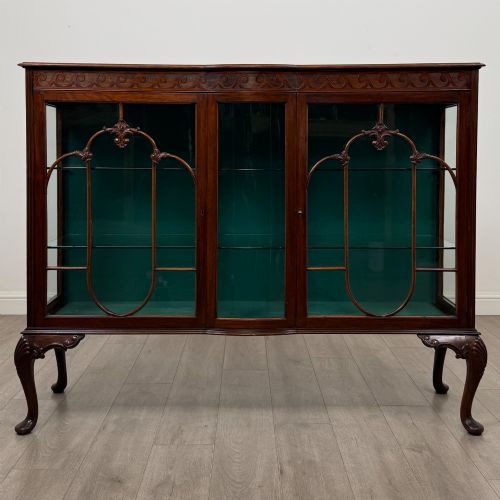
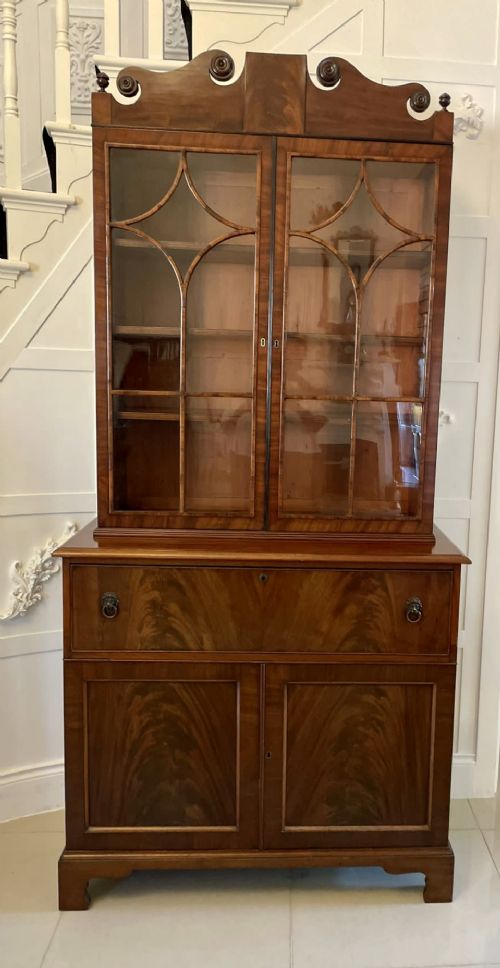
Edwardian Astragal Glazing Bookcase
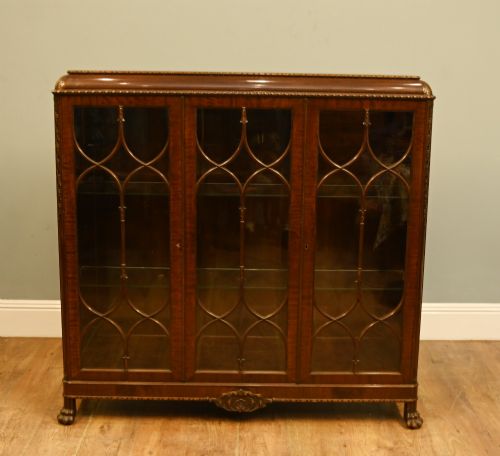
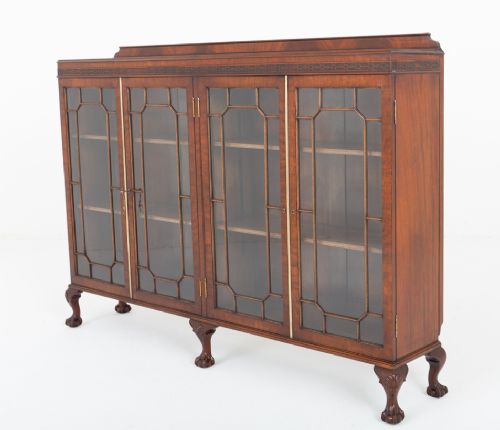
An edwardian astragal glazing bookcase brings classic proportion and glass-fronted storage to a room, uniting timber frames with delicate wooden bars.
Edwardian Astragal Glazing Bookcase
An edwardian astragal glazing bookcase combines upright book storage with framed glass doors, often featuring interior shelving behind individual glazed panes. These pieces emerge primarily from the Edwardian period and the early twentieth century, alongside Victorian and Georgian revivals.
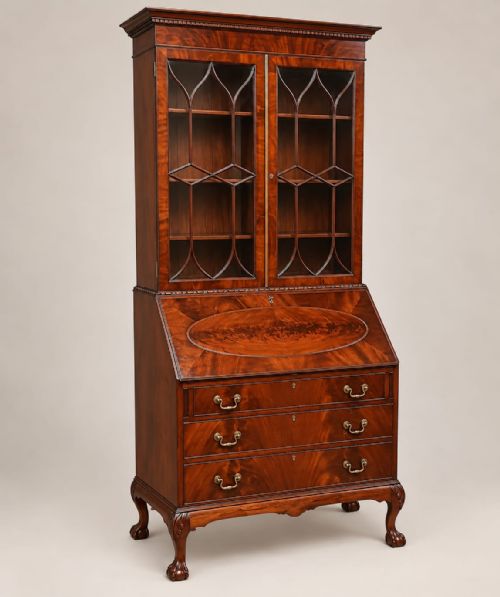
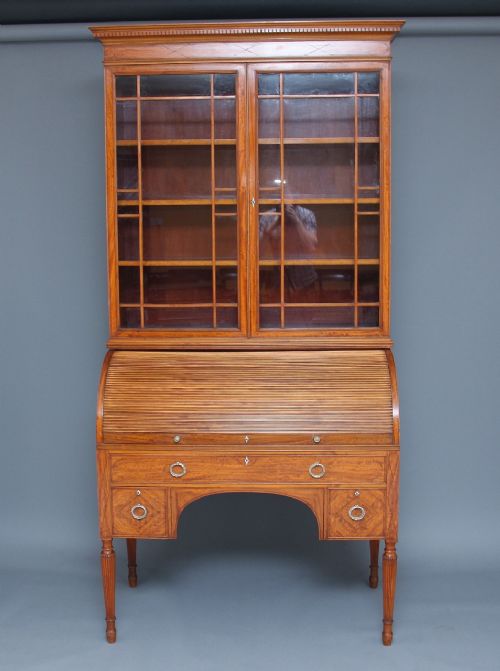
The form appears as tall breakfront library cabinets, bureau bookcases with writing desks, side cabinets, and compact display units. Mahogany serves as the principal timber, complemented by satinwood, walnut, and oak.
Makers and revival movements incorporate Sheraton, Chippendale, and Queen Anne influences, manifesting in bow-ended shapes, corner cabinets, and inlaid decorative motifs.
Materials and construction methods
Cabinet makers construct the primary carcasses utilising solid mahogany and oak, often applying fine veneers of satinwood and burr walnut to drawer fronts and panel surfaces. Glass panels sit secured within wooden framework divided by delicate astragal bars.
Detailing involves intricate satinwood inlay, marquetry, brass hardware, and occasional painted decorations or fabric linings within display sections.
Several cabinets conceal entire secret writing desks behind polite glass doors, proving Victorians and Edwardians loved a hidden compartment.
Assessing construction and design standards
Quality depends upon the crispness of the timber joinery, the precision of the astragal bar assembly holding the glass panes, and the selection of figured veneers. Finer examples display harmonious proportions, substantial breakfront cornices, and intact original brass fittings rather than later replacements.
The refinement of inlaid decoration and the overall structural integrity of the doors and drawers separate standard utility furniture from pieces produced by prominent cabinet makers.
Maple & Co.·Tudor & Burrey·Wylie and Lochhead·Gillows
The Edwardian Astragal Glazing Bookcase Glossary
- Astragal
- Moulded wooden bars that divide a glass door into smaller panes. These delicate strips create geometric patterns across the frontage.
- Breakfront
- A cabinet design where the central section projects forward from the flanking wings. This architectural layout adds depth and presence to larger bookcases.
- Bureau bookcase
- A dual-purpose form featuring a sloping writing flap above lower drawers, surmounted by a glazed bookcase section. Interior compartments provide fitted pigeonholes and small drawers.
- Marquetry
- Decorative patterns formed by fitting together contrasting pieces of wood veneer onto a solid ground. Artisans utilise varied timbers to create floral or geometric motifs.
- Satinwood
- A durable, lustrous timber native to India and Ceylon, prized for its golden yellow hue and utilised extensively for stringing and decorative veneers during the revival periods.
Edwardian Astragal Glazing Bookcase: Frequently Asked Questions
How do I identify an Edwardian bookcase?
Edwardian bookcases typically date from the period between 1901 and 1910, reflecting lighter proportions than their heavy Victorian predecessors. They frequently utilise mahogany timber combined with delicate satinwood inlay.
Many examples draw inspiration from earlier Georgian and Sheraton styles, featuring refined cornices and straightforward rectilinear or bow-ended carcases.
Where should I place a breakfront cabinet?
Breakfront cabinets require ample wall space due to their projecting central sections and generous proportions. They suit principal reception rooms, libraries, or large dining spaces where their architectural form can be appreciated.
Ensure the room maintains stable humidity levels to protect the timber carcase and delicate veneer work from warping.
Can I use a bureau bookcase for writing?
Bureau bookcases incorporate a fold-down writing flap that reveals an interior fitted with small drawers and pigeonholes. This surface provides a compact writing desk when lowered.
When not in use, the flap closes securely to conceal writing materials while keeping reference volumes stored safely in the upper glazed section.