
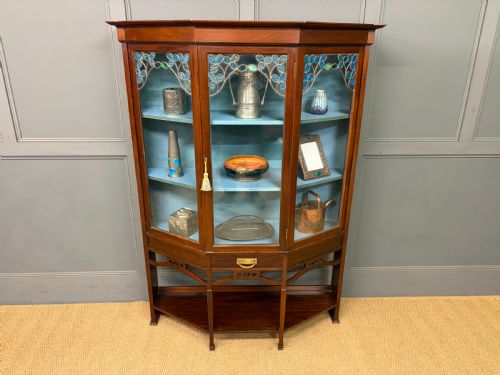


Edwardian Art Nouveau Vitrine
An edwardian art nouveau vitrine brings sweeping organic lines and fine timber into the drawing room to display cherished china and curiosities.
Edwardian Art Nouveau Vitrine
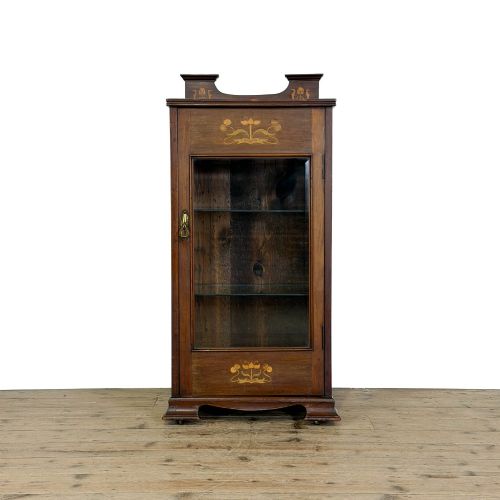
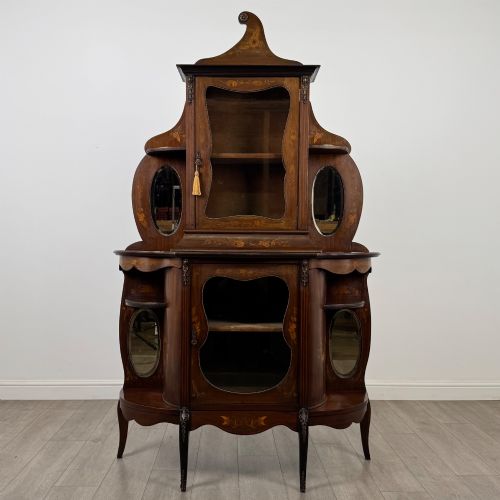
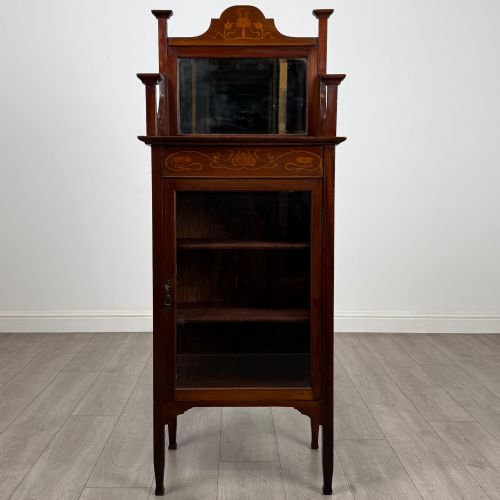
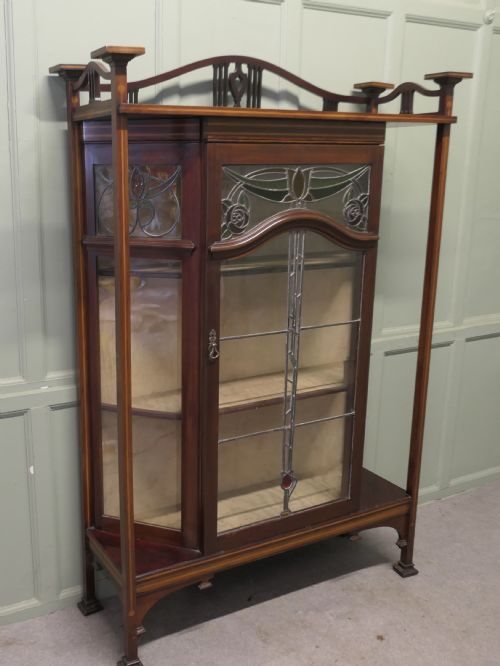
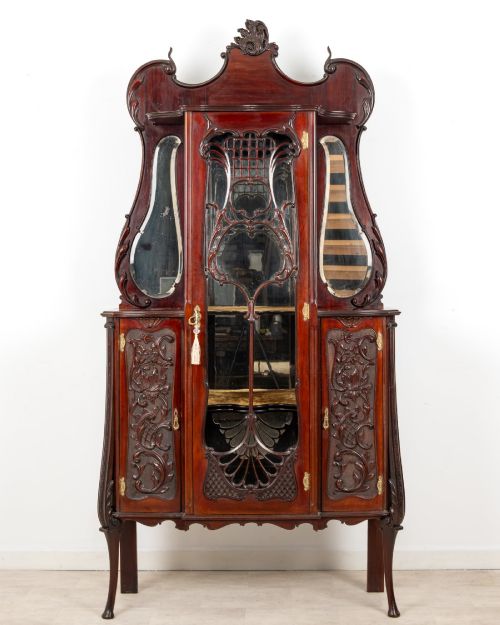
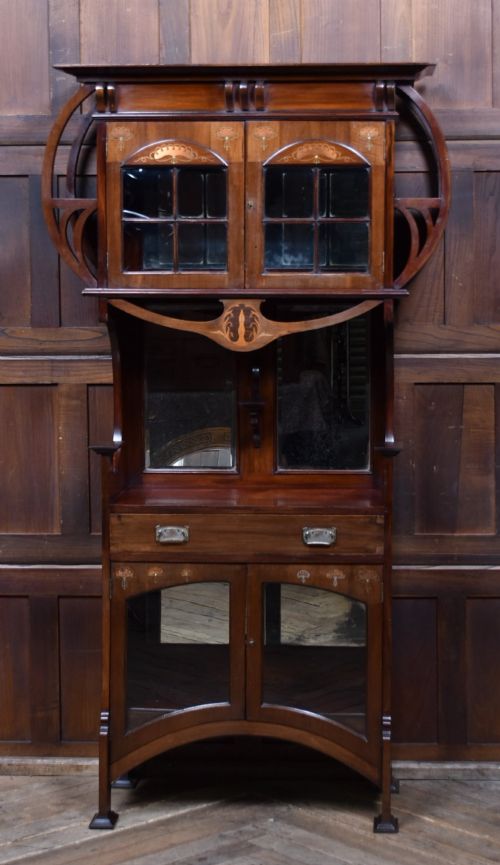
An edwardian art nouveau vitrine is primarily a mahogany display cabinet designed to showcase fine porcelain and decorative objects behind glass doors. These cabinets merge the structured cabinetry of the Edwardian and late Victorian periods with the flowing, organic motifs of the Art Nouveau movement.
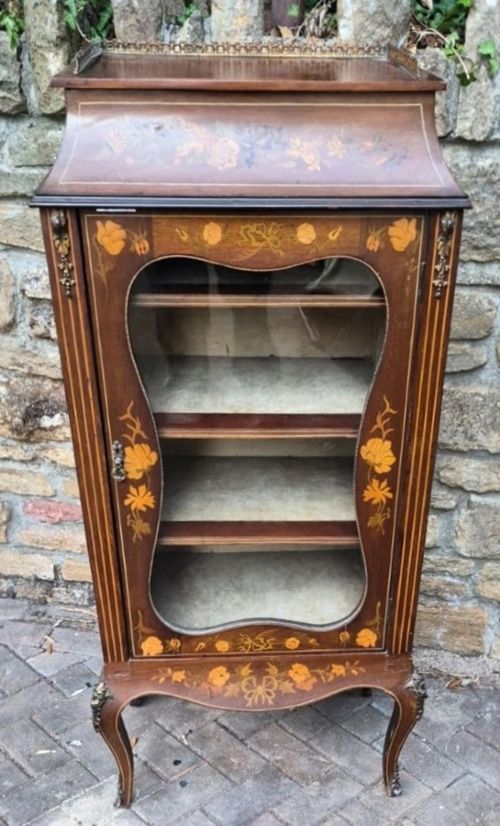
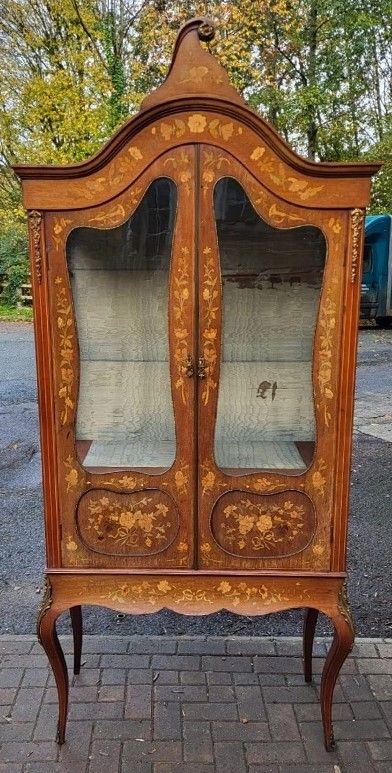
Buyers will most frequently encounter mahogany display cabinets decorated with delicate wood inlay, floral marquetry, and sometimes mirror backs or brass fittings. Forms range from bow front shapes to side cabinets and mirror back variants spanning the late nineteenth century into the early twentieth century.
While many carry the distinct aesthetic of Arts and Crafts influence, the core function remains the exhibition of household treasures. Each piece relies on glazed panels to protect the interior while opening up the formal parlour to light.
How they were made
Cabinet makers relied predominantly on solid and veneered mahogany as the structural base, often framing glass doors with precise joinery. Satinwood and various other woods were utilised for intricate marquetry and inlay work to create floral and linear patterns.
Brass fittings such as handles, hinges, and occasional mounts provided functional accents, while internal fabric linings and mirrored backs enhanced the display of objects. Stained glass panels occasionally appeared to punctuate the wooden framework with colour and texture.
Many of these cabinets hide small velvet-lined shelves originally intended to keep delicate porcelain safe from clumsy guests.
What varies in quality
The sophistication of the timber preparation and the precision of the marquetry set finer examples apart from simpler production. Subtle variations in the depth of the carving, the crispness of the wood inlay, and the integration of brass and glass determine the standing of each cabinet.
Proportion and the fluidity of the decorative motifs distinguish workshop output, as seen in pieces originating from documented design sources like Shapland and Petter. The quality of the original glass and the integrity of the mahogany structure dictate the enduring character of the piece.
Shapland and Petter
The Edwardian Art Nouveau Vitrine Glossary
- Marquetry
- Decorative veneer work applied to furniture surfaces to form pictures or ornamental patterns. Craftsmen cut contrasting pieces of wood like satinwood and mahogany to fit precisely within the design.
- Vitrine
- A glass-fronted cabinet designed for displaying fine porcelain, china, and small collectables. This French term describes the primary function of these glazed exhibition pieces.
- Bow front
- A convex curved cabinet front that softens the linear geometry of a room. This shape required skilled joinery to bend wood or shape veneers accurately.
- Bijouterie cabinet
- A specialised display case intended for smaller trinkets, jewellery, and curiosities, often featuring a glazed top or upper section. These items sit comfortably alongside standard china cabinets in domestic settings.
- Satinwood
- A durable, lustrous timber with a golden yellow sheen, frequently utilised for contrasting inlay work on darker mahogany cabinets.
Edwardian Art Nouveau Vitrine: Frequently Asked Questions
What is an edwardian art nouveau vitrine?
An edwardian art nouveau vitrine is a glazed display cabinet produced around the turn of the twentieth century that combines traditional cabinet making with flowing organic decoration.
These pieces use mahogany and detailed wood inlay to house and exhibit fine china and decorative objects.
How do I date these cabinets?
Dating relies on identifying stylistic markers such as late Victorian proportions, Edwardian marquetry, and distinct Art Nouveau motifs found in the woodwork.
Makers often integrated design elements from the Arts and Crafts movement alongside traditional cabinet formats during this transitional period.
Where were these cabinets placed?
These cabinets traditionally stood in formal reception rooms, drawing rooms, and parlours where guests gathered and hosts displayed their finest possessions.
The inclusion of mirror backs and glass panels served to brighten these spaces and reflect ambient light.
How should I care for the wood?
Maintain the mahogany and marquetry by keeping the cabinet away from direct sunlight and sudden changes in room temperature.
Regular dusting with a dry cloth protects the delicate veneer and preserves the original finish of the timber.