

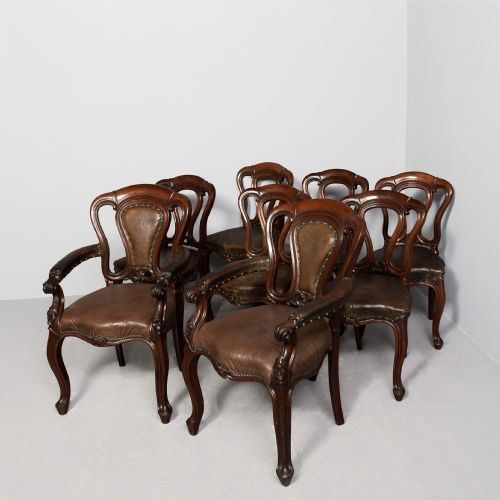
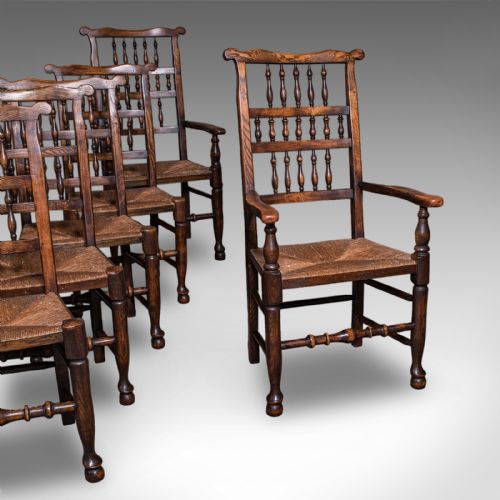
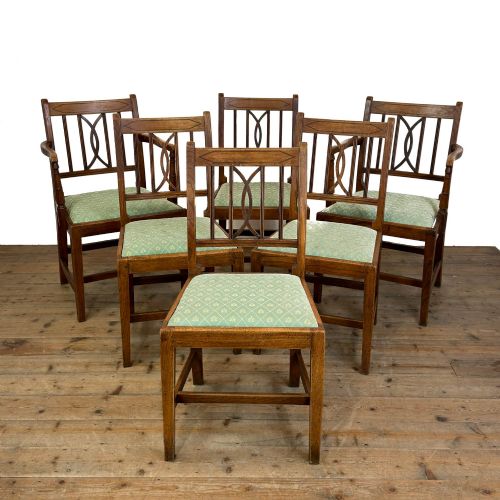
Edwardian Armchair Set
An edwardian armchair set brings together matching seats designed for comfort and social gathering, offering a cohesive period aesthetic for the home.
Edwardian Armchair Set
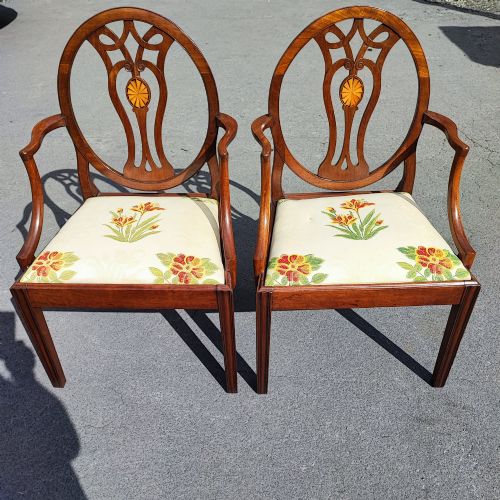
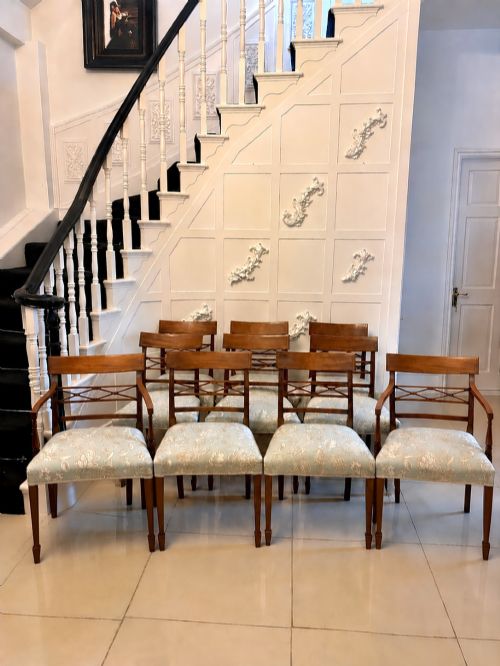
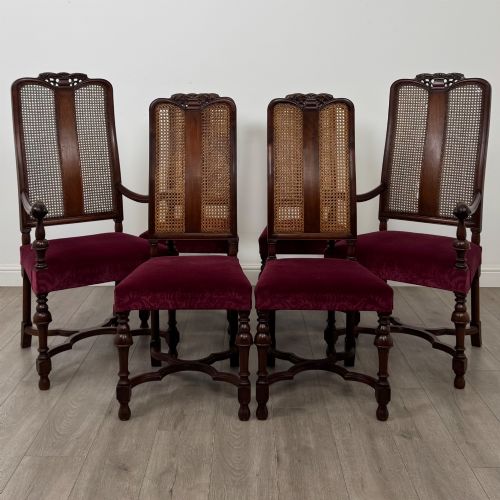
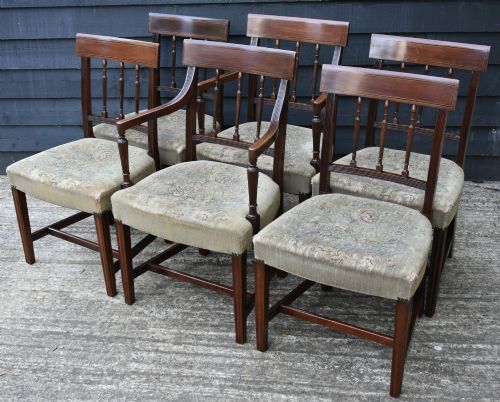
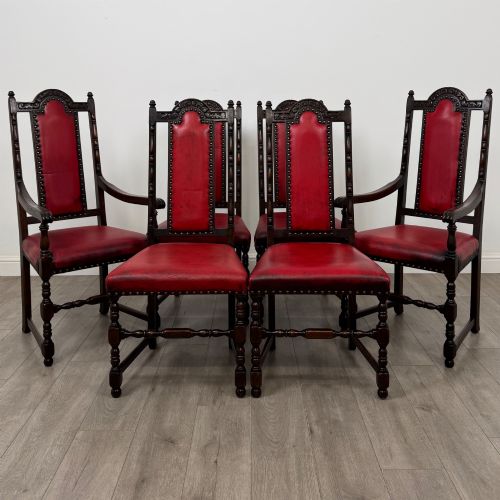
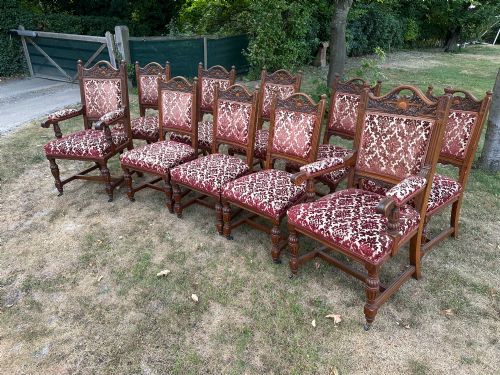
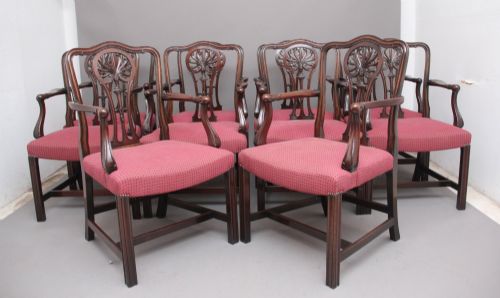
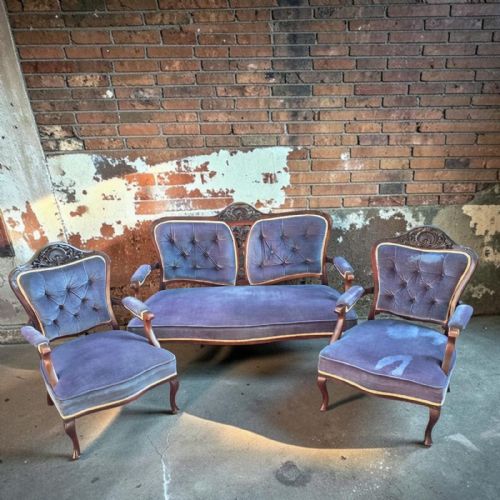
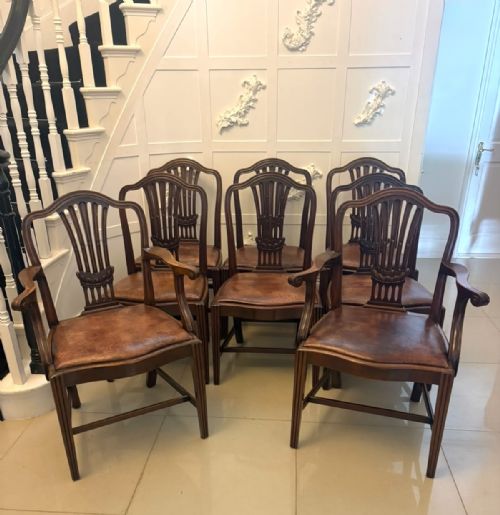
An edwardian armchair set comprises grouped seating designed for formal rooms, parlours, or dining spaces, frequently appearing alongside matching dining chairs, carvers, and larger salon suites. These pieces reflect the tastes of the early twentieth century, spanning dining configurations, parlour suites, and corner chairs.
The selections on this page draw from the Edwardian era, alongside related nineteenth-century and early twentieth-century examples that share similar craftsmanship. Buyers often encounter matching sets of armchairs paired with side chairs, or multi-piece upholstered parlour suites designed for reception rooms.
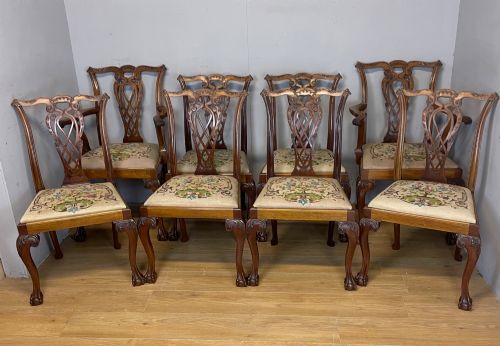
Originating predominantly from British workshops and prominent makers, these sets range from compact occasional chairs to large dining configurations and deep-seated club chairs. Their forms are rooted in historical revivals, adapting earlier Georgian, Chippendale, and Queen Anne lines for domestic use.
Materials and Construction
Makers relied heavily on solid hardwoods like mahogany, oak, and walnut, often accenting primary structures with satinwood inlay, marquetry, and delicate stringing. Secondary timbers such as beech, ash, and elm appear in regional country seating and kitchen dining sets.
Upholstery techniques varied from traditional horsehair stuffing secured over webbed frames to deep-sprung foundations covered in leather, velvet, or woven fabric. Brass castors, carved ball and claw feet, and exposed wooden frames completed the construction of both parlor suites and library armchairs.
Object configurations range from single occasional chairs to sixteen-piece dining sets and multi-piece upholstered parlour suites.
Assessing Craftsmanship
Quality rests in the crispness of carved details, the precision of inlaid wood veneers, and the structural integrity of the frame joints. Higher-tier sets display uniform wood grain selection and hand-carved motifs rather than applied compo ornaments.
The preservation of original surface finishes, leather upholstery, and maker stamps elevates certain pieces above standard production models. Sets that retain matching proportions across every chair without later alterations command greater appreciation from collectors.
Warings·Alfred Allen of Birmingham·Maple and Co·Waring and Gillow·Howard and Sons
The Edwardian Armchair Set Glossary
- Carver
- An armchair, usually designed with elbow rests to match a set of dining side chairs. These were traditionally positioned at the head of a dining table.
- Salon Suite
- A matched grouping of upholstered seating furniture for a formal reception room, typically comprising a settee and multiple armchairs or side chairs.
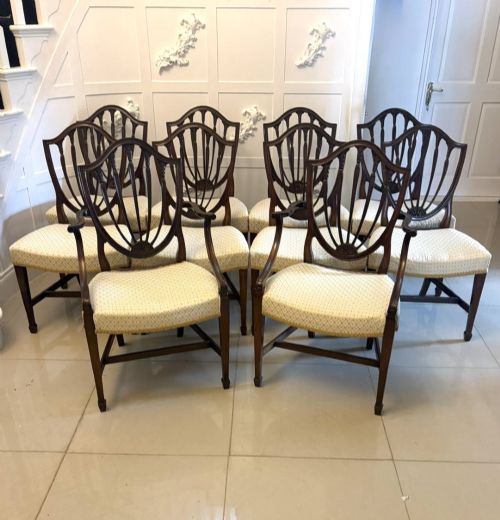
- Shield Back
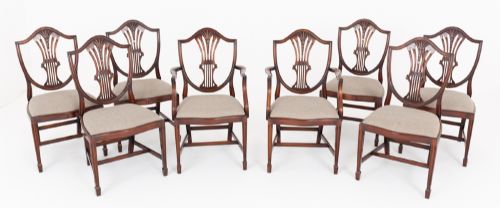
- A chair backrest shaped like an uptended heraldic shield, popularised during the Georgian period and revived in later seating.
- Marquetry
- Decorative veneer patterns formed by fitting together small pieces of different coloured wood, ivory, or shell to create pictorial designs.
- Bergere
- An upholstered enclosed armchair with exposed wooden framing and woven cane panels on the back and sides.
Edwardian Armchair Set: Frequently Asked Questions
How do I care for antique upholstery?
Protect delicate fabrics and original leather surfaces from direct sunlight and excessive heat to prevent fading and drying out. Regular gentle dusting and professional cleaning when necessary will preserve the textile integrity.
Avoid harsh chemical cleaners on antique wooden frames and leather. Conditioning treatments can maintain supple leather on club armchairs without damaging historic finishes.
Were these sets originally made together?
Most dining sets and parlour suites were produced as cohesive units by a single workshop or manufacturer. Larger sets sometimes combined side chairs and carvers designed in identical styles.
Matching sets ensure uniform timber grain, carving depth, and proportions across all seating elements. Discrepancies in minor details often indicate later assembly or marriages of similar chairs.
How do I distinguish revival styles?
Chippendale and Hepplewhite revival pieces emulate eighteenth-century aesthetics through characteristic back splats, carved cabriole legs, or shield backs. Examination of timber density, construction joints, and hardware helps confirm the actual manufacturing period.
Revival furniture incorporates period motifs while reflecting the machinery and production standards of the late nineteenth and early twentieth centuries. Comparing structural interiors clarifies whether a piece is an eighteenth-century original or a later revival.
Can these chairs be used daily?
Sturdy hardwood construction allows these chairs to withstand everyday domestic use provided the frame joints remain tight and secure. Periodic checks by a professional restorer can prevent minor looseness from developing into structural damage.
Upholstered salon suites and library armchairs offer comfortable seating for modern living spaces. Selecting chairs suited in scale to your room ensures both practical utility and balanced interior arrangement.