



Edwardian Architectural Artwork
Edwardian architectural artwork captures townscapes, colleges and historic interiors through watercolours, oils and charcoal.
Edwardian Architectural Artwork
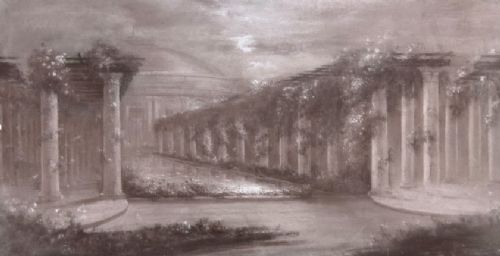
Edwardian architectural artwork brings together period watercolours, oils and charcoal drawings depicting historic buildings, street scenes and townscapes. Buyers seek these pieces to record specific British and European locations from the late nineteenth century into the early decades of the twentieth century.
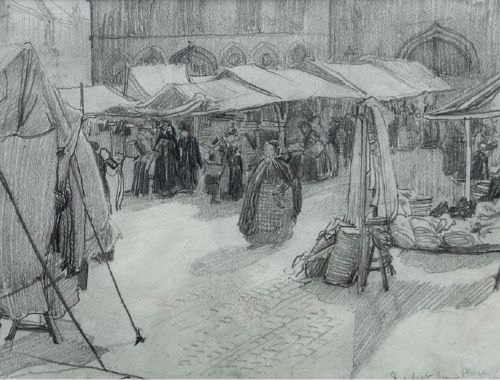
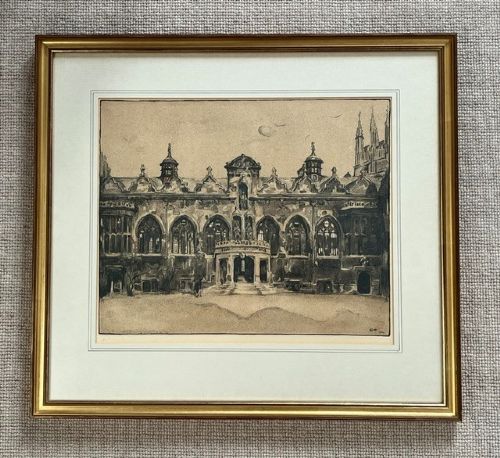
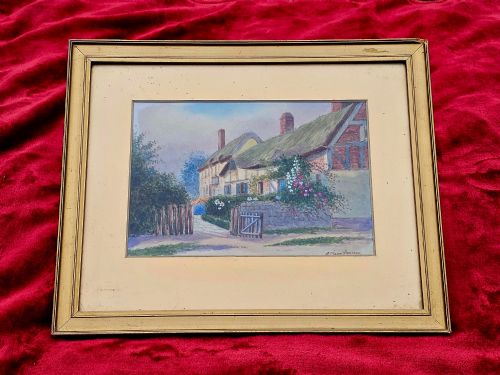
The selection on this page centres primarily on watercolours and oil paintings on paper and canvas, alongside original sketches and prints. Subjects range from Oxford colleges and London street scenes to continental markets and country houses.
How they were made
Artists worked primarily in watercolour, oil paint, charcoal and ink upon paper, canvas or board. Support materials often include paper attached to canvas stretchers or traditional framing behind glass with giltwood surrounds.
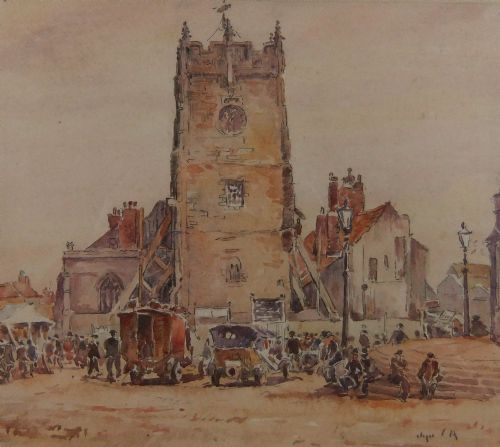
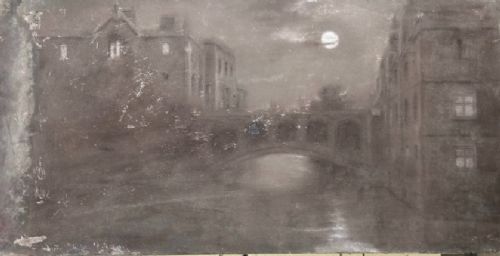
Execution relies upon observational draughtsmanship, tonal shading and washes to capture light upon stone facades and historic interiors.
Several watercolours meticulously record bustling market days where domestic poultry apparently joined shoppers on the cobbles.
What varies in quality
Quality rests upon the precision of the draughtsmanship and the artist's handling of perspective, light and atmosphere across facades and streetscapes. Stronger works convey distinct atmosphere and topographical clarity rather than rigid technical drawing.
The survival of the original medium also influences the piece, with well-preserved pigments on stable paper or canvas holding greater visual depth.
Henry Percy Huggill·Sir William Nicholson·Charles James Lauder·Rowland Henry Hill·Joseph W. Milliken
The Edwardian Architectural Artwork Glossary
- Watercolour
- A paint consisting of pigment suspended in a water-based solution, frequently applied to paper to achieve translucent washes.
- Charcoal
- A form of dry art medium made of organic carbonaceous material used for sketching and finished tonal drawings.
- Giltwood
- Wood that has been treated with gold leaf or a gold-coloured metallic finish, commonly utilised for period framing.
- Tonalism
- An artistic style focusing on shadow, mood and atmospheric effects rather than sharp topographical detail.
Edwardian Architectural Artwork: Frequently Asked Questions
What subjects appear in these works?
The pieces depict urban street scenes, Oxford colleges, continental markets, country houses and coastal townscapes.
Views range from London landmarks to international destinations rendered during the early twentieth century.
Which materials are used most often?
Paintings utilise watercolour and oil on canvas or board, alongside charcoal and ink on paper.
Supports frequently feature period framing in wood or giltwood behind protective glass.
How do I identify the period?
Dating relies upon artist signatures, exhibition records, costume details within figures and architectural styles.
Many works carry specific dates or stylistic markers aligning with late Victorian and Edwardian practices.
Where should I hang these pieces?
Works on paper require positioning away from direct sunlight to protect delicate watercolours and charcoal.
Traditional frames suit period interiors, studies or hallways alongside complementary historic furnishings.