



Edwardian Amethyst Seed Pearl
Edwardian amethyst seed pearl pieces combine rich purple quartz with delicate lustrous spheres, offering classic early twentieth-century elegance.
Edwardian Amethyst Seed Pearl
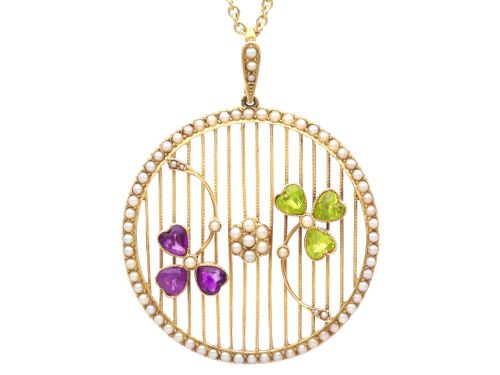
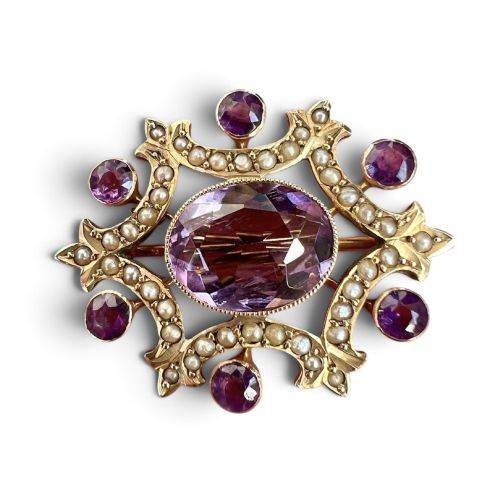
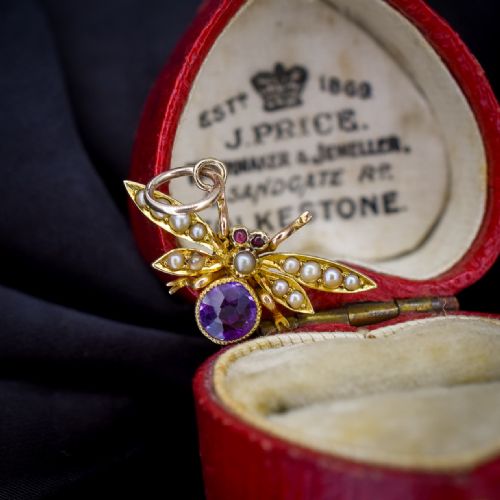
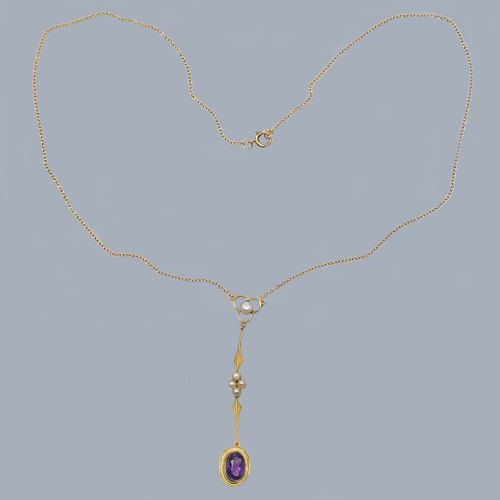
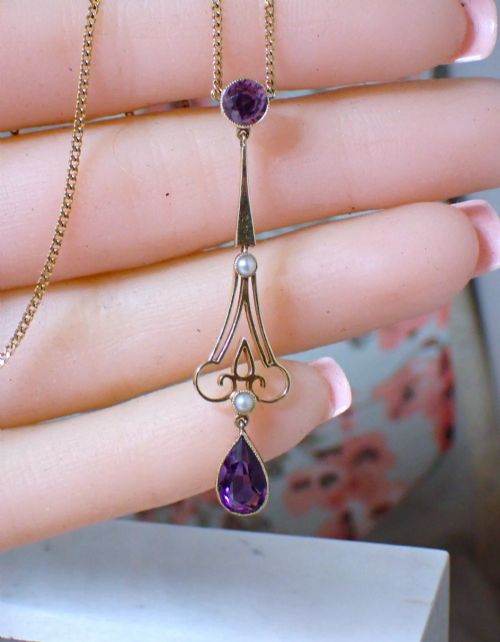
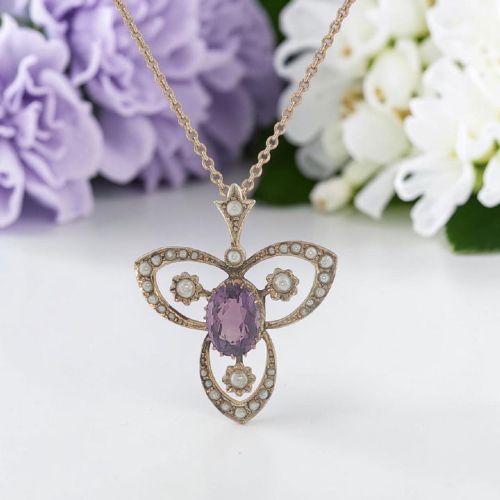
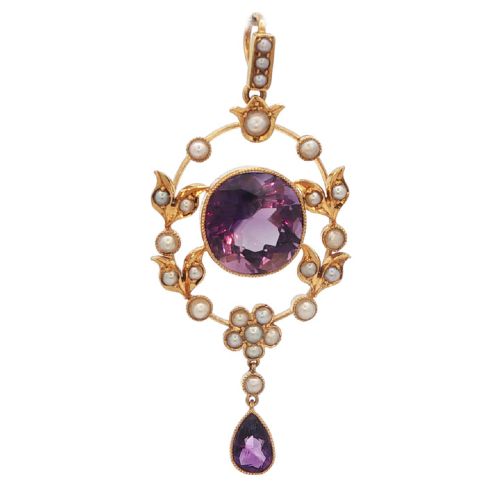
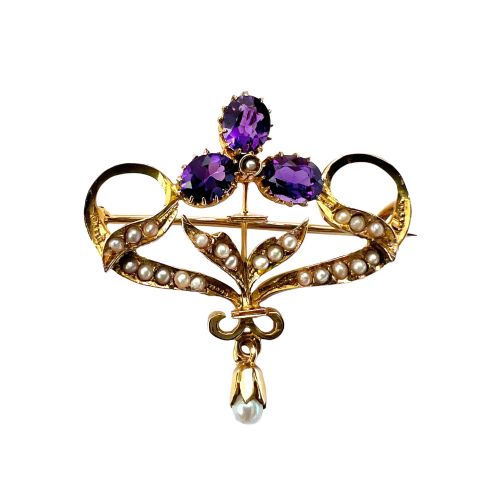
When you search for edwardian amethyst seed pearl, you are looking at jewellery predominantly from the early twentieth century, featuring deep purple stones paired with tiny natural pearls. These items appear most frequently as pendants, necklaces, and brooches, often displaying the flowing, organic lines characteristic of the period.
Makers frequently arranged these gems into floral motifs, ribbon bows, heart shapes, and target designs. The combination of violet hues and white pearl lustre defines the visual character of the category.
Materials and construction
Goldsmiths of the period utilised various purities of gold, predominantly nine-carat and fifteen-carat, alongside occasional examples in eighteen-carat gold and silver. These metals were shaped into delicate bezels, milgrain settings, and wirework frames to support the central amethysts.
Seed pearls were meticulously hand-threaded or secured with tiny pins, framing the larger purple stones in clusters, fringes, and lavalier drops. Art Nouveau interpretations incorporated flowing foliate lines and whiplash curves executed in gold wire.
Stones were faceted into round, oval, emerald, and drop cuts to catch the light, while pearls provided a soft, iridescent contrast to the transparent violet quartz.
Edwardian Amethyst Seed Pearl Retail Price Guide 2026
Typical asking prices for edwardian amethyst seed pearl among the pieces listed under this phrase on Sellingantiques today, from the lower quarter to the upper quarter. They describe what is for sale here now, not the wider market.
Factors of quality
The calibre of a piece depends heavily on the saturation and clarity of the amethyst and the uniformity of the seed pearls. Evenly matched pearls with strong lustre and clean, deeply coloured quartz distinguish finer examples from standard workshop production.
Intricacy of design and the weight of the gold also dictate the tier of an item. Heavier fifteen-carat gold mounts with detailed openwork, hand engraving, and articulated drops demonstrate superior craftsmanship compared to lighter, simpler nine-carat settings.
S. Blanckensee & Son·Hamilton & Co
The Edwardian Amethyst Seed Pearl Glossary
- Seed pearl
- A very small natural pearl, often half-drilled and secured with a pin, used to form delicate borders around larger gemstones.
- Lavalier
- A pendant necklace featuring a central stone or drop suspended lower than the main chain line, popular during the early twentieth century.
- Milgrain
- A decorative jewellery technique involving a raised border of tiny metal beads along the edges of settings.
- Foliate
- Ornamentation incorporating leaf and plant motifs, frequently seen in Art Nouveau designs.
- Target brooch
- A circular piece of jewellery featuring concentric rings of stones radiating outward from a central gem.
Edwardian Amethyst Seed Pearl: Frequently Asked Questions
How do I care for my necklace?
Clean these items gently with a soft cloth, avoiding harsh chemical dips that can damage pearls and softer metals.
Store them separately in a lined box to prevent the harder amethyst facets from scratching adjacent pieces.
Were these items worn daily?
Edwardian jewellery was frequently worn for social occasions, afternoon gatherings, and formal evening events.
Lighter pieces served as daytime dress accessories, while larger lavaliers and cluster pendants suited evening wear.
How can I date my pendant?
Examine the hallmark stamps, metal purity marks, and overall stylistic motifs to establish the era of manufacture.
Flowing asymmetrical lines suggest Art Nouveau influence, whereas symmetrical bows and target clusters point towards the Edwardian mainstream.
Are the pearls natural?
Jewellery from this era typically incorporates natural saltwater or freshwater seed pearls rather than modern cultured varieties.
Slight irregularities in shape and size often indicate their natural origin and period authenticity.