



Antique Purple Amethyst Charm
These pieces of antique purple amethyst charm jewellery offer rich colour and deep historical character for any collection.
Antique Purple Amethyst Charm
When you search for an antique purple amethyst charm, you are looking at small pendant jewels designed to hang from chains or bracelets. The selection on this page centres on items fashioned during the Victorian, Edwardian, and late nineteenth-century periods, spanning from eighteen ninety to nineteen hundred.
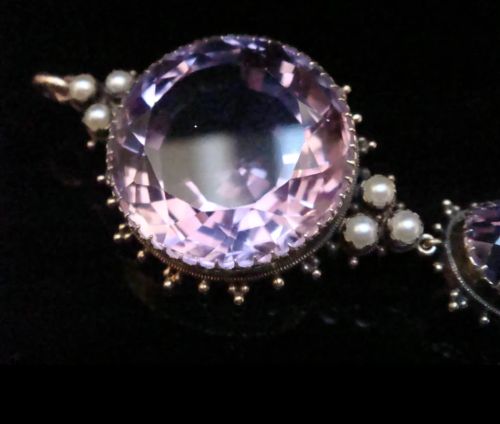
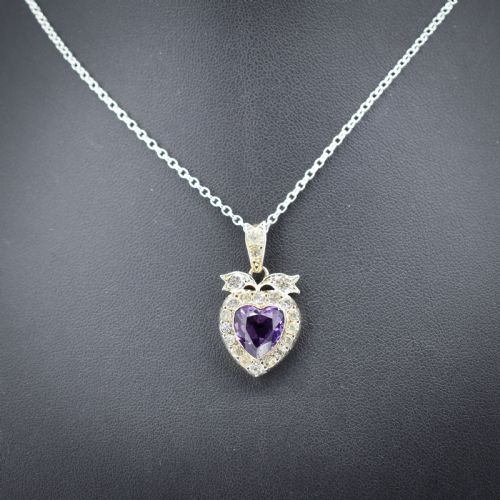
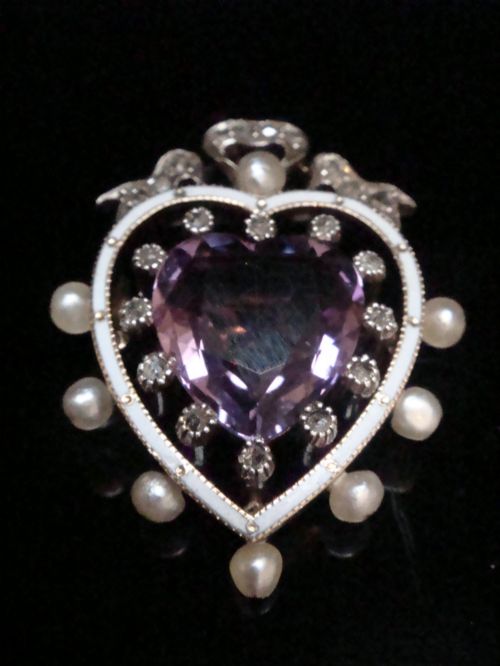
You will most frequently meet heart-shaped pendants and fob charms executed in gold. These range from simple gem settings to complex drops featuring seed pearls, enamel, and paste stones.
The objects combine portable charm formats with precious metals like nine carat, fifteen carat, and eighteen carat gold, alongside silver and amethyst paste alternatives.
How they were made
Maker's hands shaped these items using solid yellow gold in nine, fifteen, and eighteen carat purities, frequently pairing the warm metal with natural amethyst stones. Craftsmen also utilised silver settings for paste stones and applied delicate guilloche enamel over metallic bases.
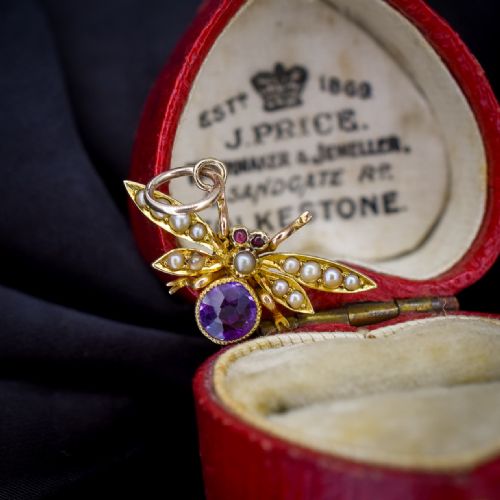
Intricate detailing relied on the incorporation of seed pearls, old cut paste, and diamonds, set alongside complex configurations such as insect fly motifs or tourmaline drops.
Antique Purple Amethyst Charm Retail Price Guide 2026
Typical asking prices for purple amethyst charm among the pieces listed under this phrase on Sellingantiques today, from the lower quarter to the upper quarter. They describe what is for sale here now, not the wider market.
Some past owners apparently preferred insects with their purple stones, as evidenced by a charming gold fly pendant resting among the hearts.
What varies in quality
Quality separates pieces through the selection of materials and the complexity of the design. Higher-end examples utilise higher carat golds and natural amethysts alongside seed pearls and enamel work, rather than simple glass or amethyst paste.
The sophistication of the form also dictates the tier of the piece, moving from straightforward gold pendants to intricate multi-stone hearts with tourmaline drops and diamond accents.
The Antique Purple Amethyst Charm Glossary
- Amethyst
- A purple variety of quartz prized for its deep violet hue in antique jewellery settings. It appears frequently in nineteenth-century pendants and charms.
- Guilloche enamel
- A decorative technique where an enamel layer is applied over engine-turned metalwork. This process creates patterned translucent colour effects.
- Seed pearl
- A very small natural pearl used in clusters or borders around central gems. These tiny pearls define many Edwardian and Victorian designs.
- Fob
- A small ornament attached to a pocket watch ribbon or chain. These items were often adapted as wearable charms or pendants.
Antique Purple Amethyst Charm: Frequently Asked Questions
What periods do these charms come from?
These pieces originate primarily from the Victorian and Edwardian eras, spanning the late nineteenth century and the opening years of the twentieth century. The dates reflect the prevailing decorative movements of those decades.
Craftsmen during these periods utilised distinct gold purities and decorative motifs that help identify the era of each pendant or charm.
What materials were used in these pendants?
The listings feature nine carat, fifteen carat, and eighteen carat yellow gold alongside silver. Stones include natural amethysts, amethysts paste, seed pearls, diamonds, and tourmalines.
Enamel work and glass also appear across the selection, contributing to the varied textures and visual richness of the pieces.
How were these charms worn originally?
Owners typically suspended these items from chains as necklaces or attached them to chatelaines and charm bracelets. Fobs served a dual purpose as pocket watch attachments and decorative pendants.
Today, buyers continue to wear them primarily as necklace pendants or add them to substantial charm bracelets.
How do I identify a heart pendant design?
Heart-shaped pendants feature prominently in the selection, often shaped from solid gold and centered on a purple amethyst stone. Many incorporate seed pearl borders or drop elements.
Maker details and gold purity marks stamped on the metal further assist in identifying the specific origin and construction style.