
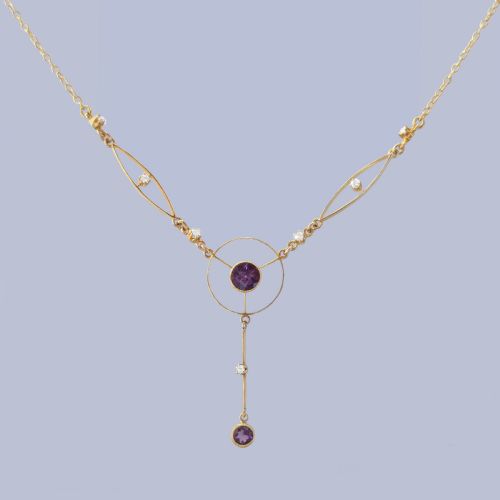
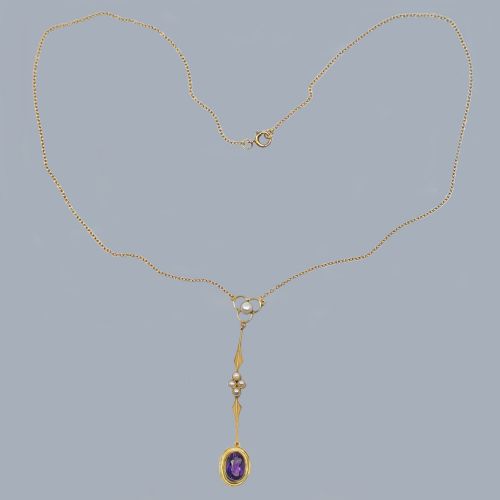
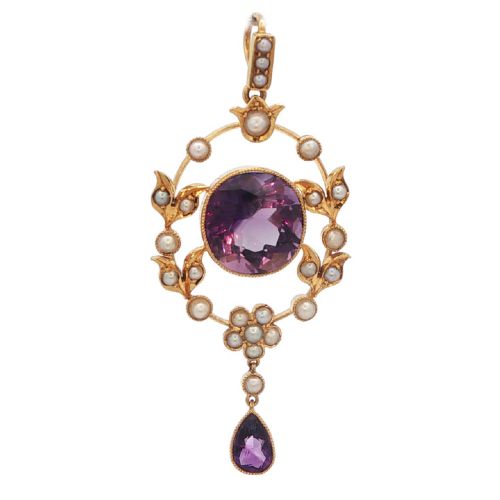
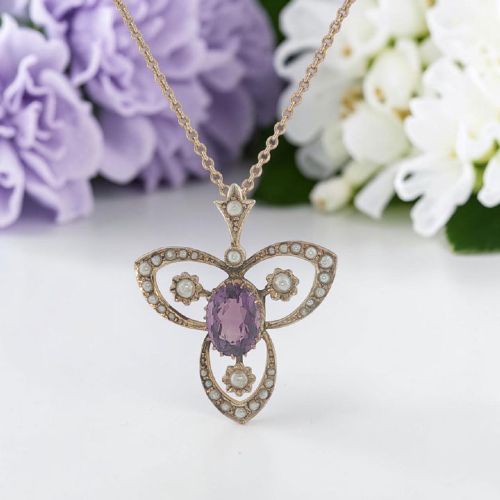


Edwardian Amethyst Necklace
An edwardian amethyst necklace brings together deep purple gems and delicate goldwork, offering a wearable piece of early twentieth-century design.

Edwardian Amethyst Necklace
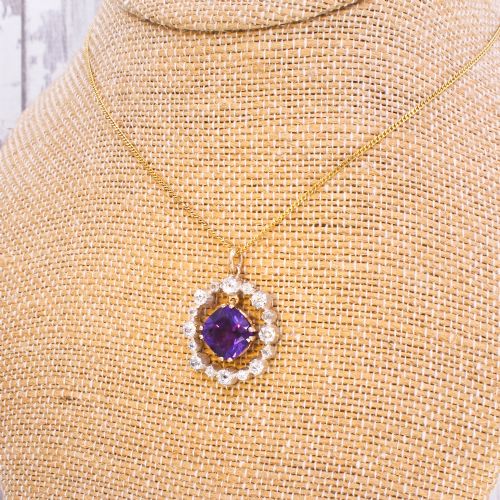
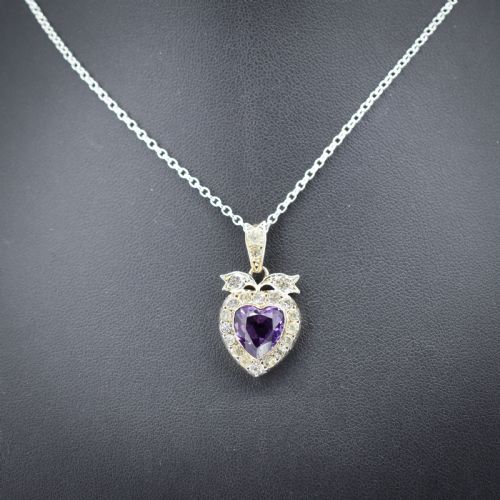
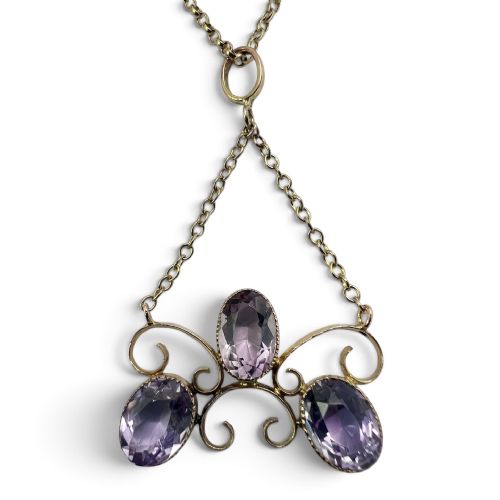
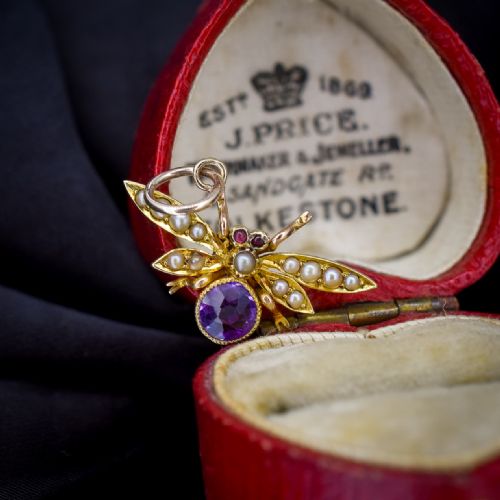
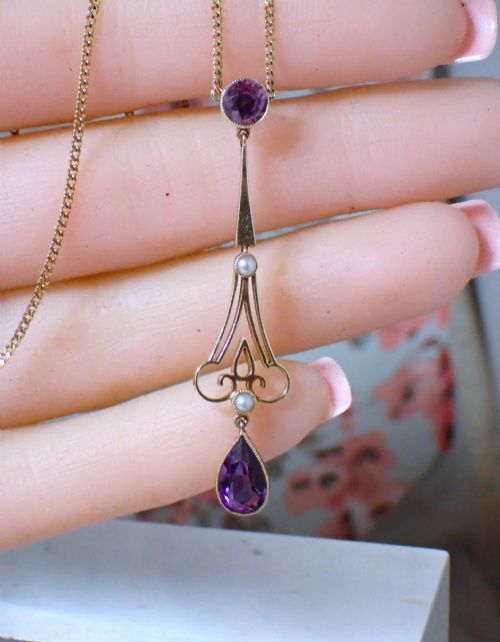
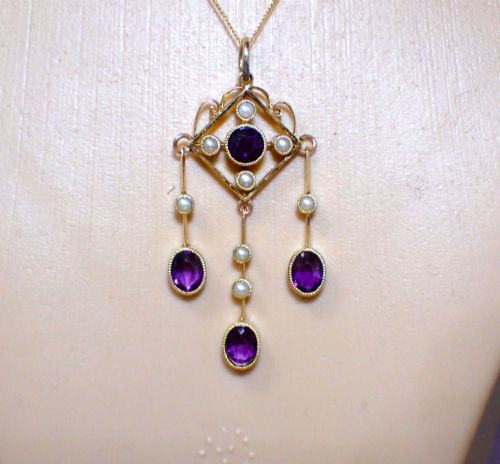
When you search for an edwardian amethyst necklace, you encounter delicate pendants and lavalier designs suspended from fine chains. The pieces most commonly found combine faceted purple quartz with shimmering seed pearls, reflecting the grace of the period.
Makers of the era utilised yellow gold in nine-carat and fifteen-carat purities, alongside silver, to mount central amethyst stones in drop and fringe formations. Art Nouveau and Arts and Crafts influences appear frequently alongside traditional Edwardian motifs.
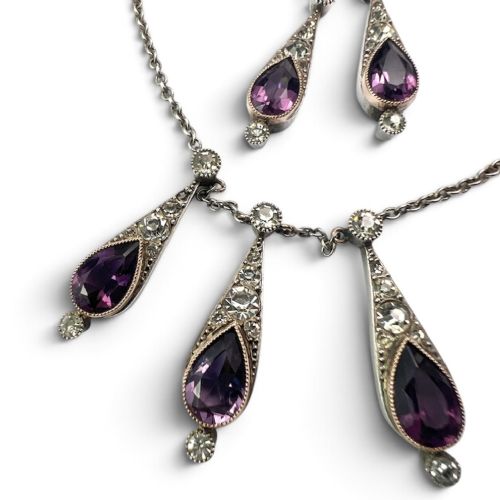
Alongside standard pendants, collectors discover negligé necklaces, hinged lockets, and multi-stone swag arrangements. These items range from simple daily wear to intricate jewelled settings featuring old-cut diamonds.
Quality variations
The fineness of the gold alloy and the depth of colour in the amethyst dictate the standing of a piece. Higher-tier examples utilise fifteen-carat or eighteen-carat gold paired with evenly matched, saturated purple stones and intact seed pearls.
The intricacy of the metalwork distinguishes standard commercial production from workshop pieces. Hand-beaten silver, plique-à-jour enamel, and integrated diamond accents elevate the construction standard of finer survivals.
Edwardian Amethyst Necklace Retail Price Guide 2026
Typical asking prices for edwardian amethyst necklace among the pieces listed under this phrase on Sellingantiques today, from the lower quarter to the upper quarter. They describe what is for sale here now, not the wider market.
Listings feature items spanning the Victorian era through the Art Deco period, with Edwardian designs in nine-carat and fifteen-carat gold predominating.
S. Blanckensee & Son·Hamilton & Co·Eduard Loss
The Edwardian Amethyst Necklace Glossary
- Lavalier
- A pendant featuring one or more suspended drops hanging from a central chain connection. This style gained immense popularity during the Edwardian era.
- Seed pearl
- A tiny, naturally small pearl used extensively to accent coloured gemstone pendants. They are typically drilled and held by delicate pins or wire.
- Fringe necklace
- A design where multiple gemstone drops hang at intervals along the lower edge of the chain. These create a graduated curtain effect across the collarbone.
- Negligé necklace
- A pendant style featuring two unequal drops suspended from a central ring. The asymmetrical arrangement typifies early twentieth-century jewellery.
- Plique-à-jour
- An enamelling technique resembling miniature stained glass without a backing. It allows light to pass directly through the translucent coloured glass.
Edwardian Amethyst Necklace: Frequently Asked Questions
How do I care for an edwardian amethyst necklace?
Clean these delicate gold and gemstone pieces gently using warm water and a soft brush, avoiding harsh chemical dips that harm pearls.
Store the necklace flat in a lined box to prevent the fine chain from tangling and the seed pearls from rubbing against harder gems.
Are these necklaces suitable for daily wear?
While the gold settings are durable, seed pearls require careful handling and should be kept away from moisture and cosmetics.
Reserve the necklace for occasional wear to protect the fragile silk stringing and antique claw settings from undue stress.
What is a suffragette necklace?
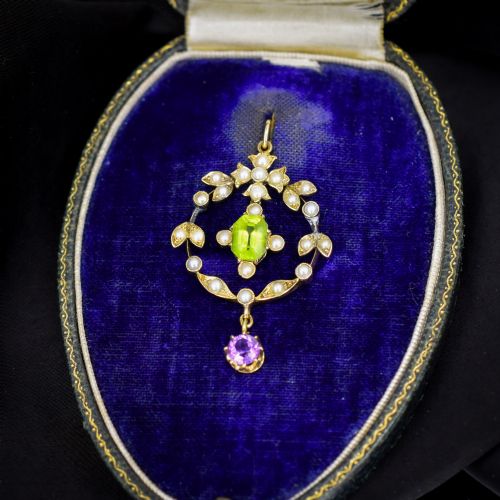
Jewellery featuring violet amethysts, white pearls, and green peridots represents the colours of the women's social and political union.
These pieces were worn discreetly to display political allegiance during the early twentieth-century suffrage movement.
How do I distinguish Edwardian from Victorian pieces?
Edwardian designs tend to favour lighter, airier platinum and yellow gold settings with floral or bow motifs, whereas Victorian work often appears heavier and more solemn.
Makers around nineteen-ten embraced whimsical elements like insect charms and openwork swags that contrast with earlier cluster styles.