
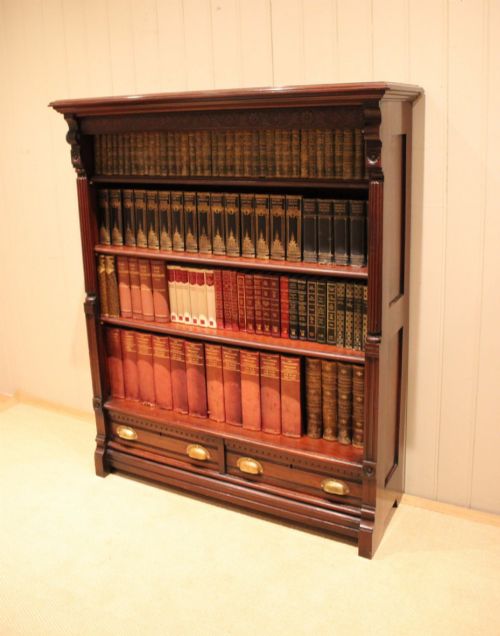
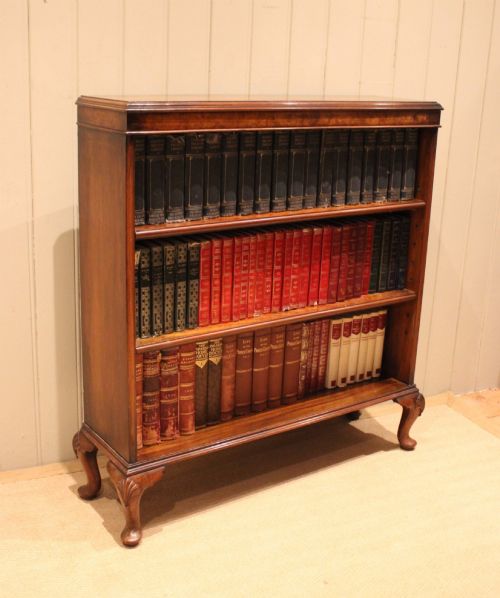
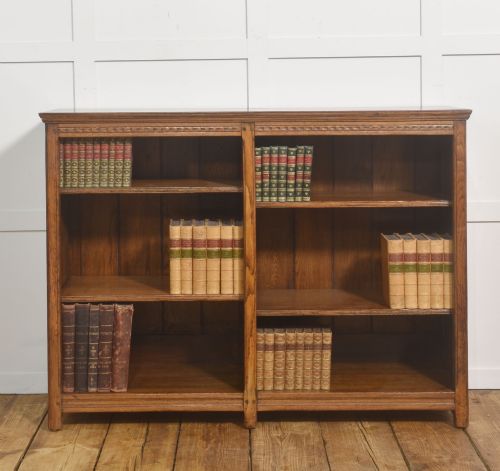
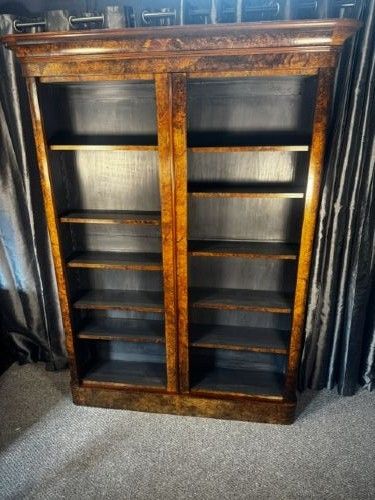
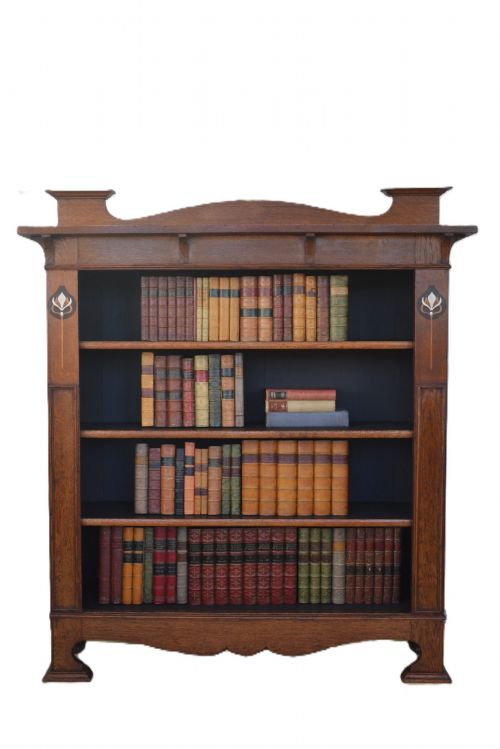


Edwardian Adjustable Bookcase
An edwardian adjustable bookcase offers flexible shelf heights, keeping a growing library orderly in polished mahogany, oak, or walnut.
Edwardian Adjustable Bookcase
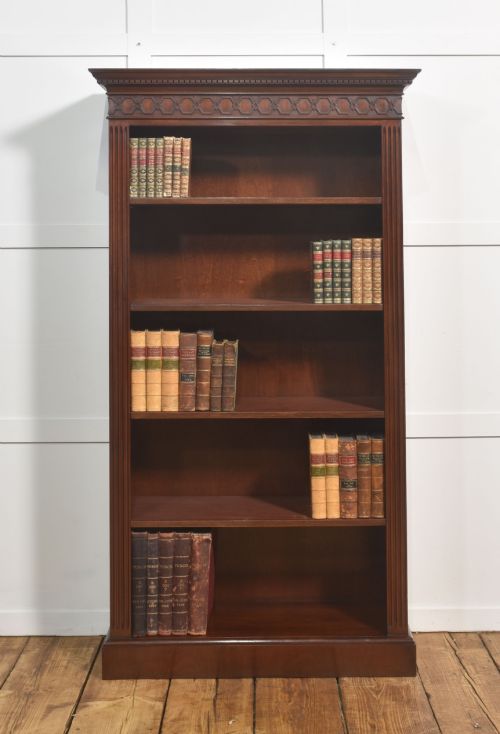
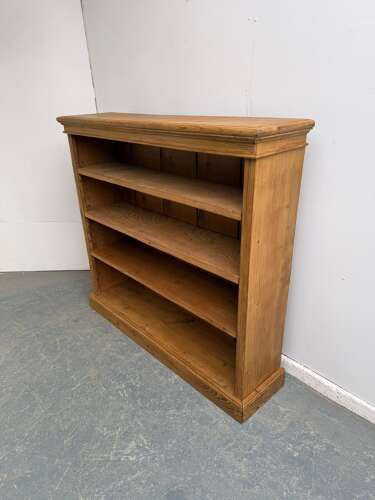
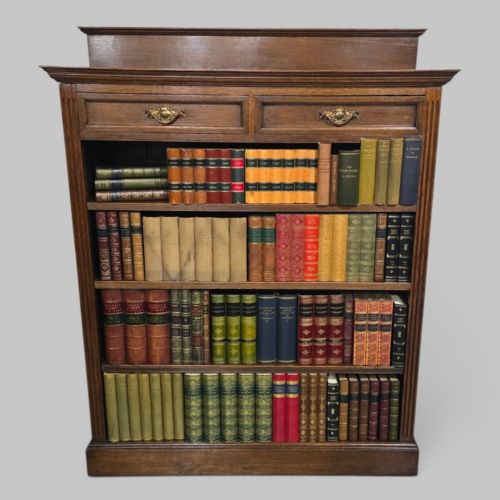
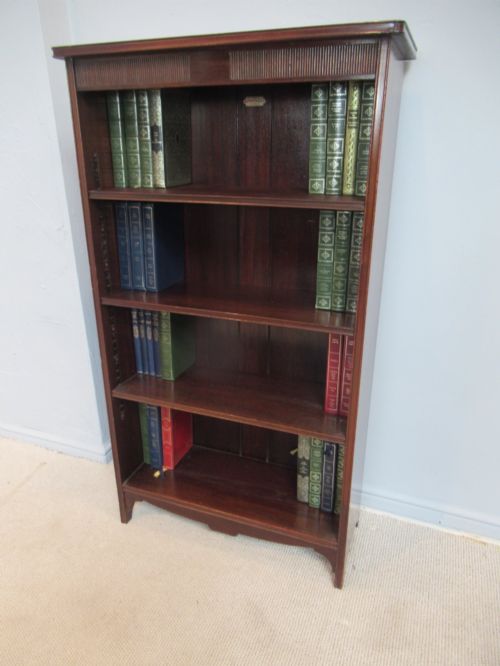
An edwardian adjustable bookcase provides flexible shelving for libraries, studies, and drawing rooms, accommodating volumes of varying heights. These items appear primarily in open forms or enclosed cabinet variations, often utilising modular shelf supports.
The pieces on this page span the Edwardian period alongside Victorian, 19th Century, and 1930 examples, showcasing formats from low standing shelves to large breakfront library bookcases. Smaller desk accessories like extending book slides also emerge among the selections.
Buyers seeking an edwardian adjustable bookcase frequently encounter sturdy oak and rich mahogany constructions, with walnut and burr walnut appearing in select refined models. These items range from plain utilitarian shelving to heavily carved or marquetry inlaid showpieces.
How they were made
Cabinet makers constructed these pieces using solid timbers such as oak and mahogany, occasionally applying walnut veneer or burr walnut for decorative surfaces. Brass fittings appear on shelving tracks, hinges, and extending mechanisms.
The internal shelving relies on adjustable systems, utilising wooden notches, metal pins, or ratchets to permit height modification. Glazed doors incorporate glass panels, while open front versions leave shelves accessible from the room.
Listings feature oak, mahogany, walnut, and pine, alongside glass and brass hardware.
What varies in quality
Material selection dictates the initial tier of quality, moving from simple pine and standard oak up to figured burr walnut and finely grained mahogany. The presence of marquetry inlay, carved detailing, and substantial breakfront cornices elevates individual pieces.
The precision of the adjustable mechanism influences overall utility, distinguishing simple fixed-notch supports from sophisticated brass-lined tracks. Superior examples maintain structural rigidity in taller frames while allowing smooth movement of the shelves.
Waring and Gillows·Edwards and Roberts
The Edwardian Adjustable Bookcase Glossary
- Adjustable bookcase
- A shelving unit equipped with movable shelves to alter vertical spacing. This design accommodates books of different heights within the same case.
- Breakfront
- A cabinet design where the central section projects forward from the flanking wings. This format adds architectural depth to large library bookcases.
- Book slide
- A small desktop accessory with extending ends to hold a row of books upright. These items share the adjustable nature of larger library furniture.
- Marquetry
- The art of applying decorative veneer pieces to form geometric or floral patterns. This technique appears on higher grade Edwardian and Victorian cabinetry.
- Burr walnut
- Timber taken from a walnut tree growth, yielding complex swirling grain patterns. This material marks luxury pieces produced during the period.
Edwardian Adjustable Bookcase: Frequently Asked Questions
How do adjustable shelves work?
Shelves rest on wooden side notches, metal pegs, or internal ratchets that allow vertical repositioning.
This adaptability accommodates volumes of different heights without requiring permanent structural changes to the interior.
Are these bookcases entirely solid wood?
Many examples utilise solid oak or mahogany throughout the frame, shelves, and panels.
Some models incorporate walnut veneer or burr walnut applied over secondary timbers on decorative exterior surfaces.
Where were these pieces used?
Libraries, studies, and drawing rooms housed these bookcases to organise growing personal book collections.
Lower models functioned beneath windows or served as surfaces for displaying decorative objects on top.
How do I care for the wood?
Maintain timber surfaces by dusting regularly with a dry cloth and avoiding direct sunlight.
Occasional application of appropriate wax polish helps preserve the finish on mahogany and oak pieces.