
Mahogany Low Bookshelves
Mahogany low bookshelves offer accessible proportions and rich timber, bringing warmth and utility to period rooms.
Mahogany Low Bookshelves
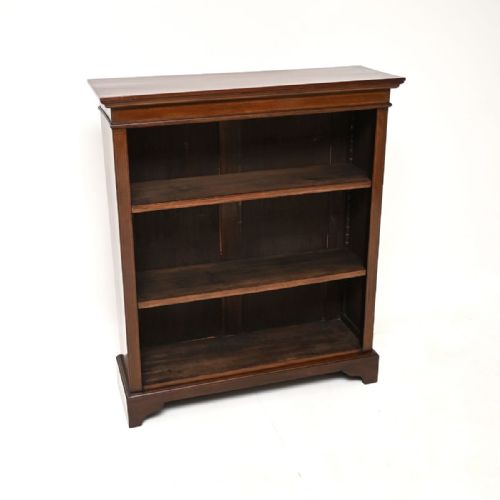
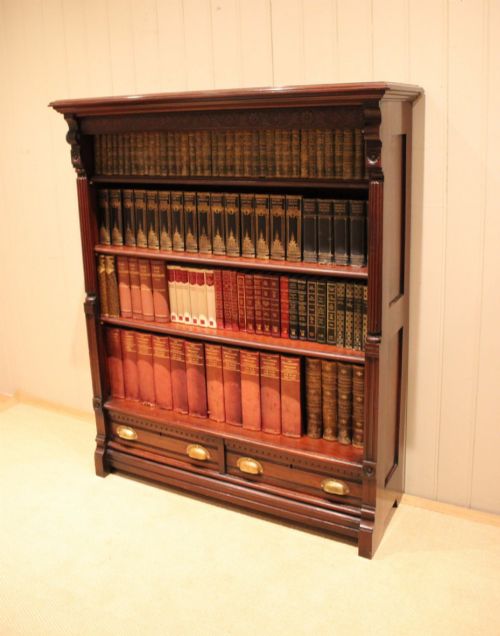
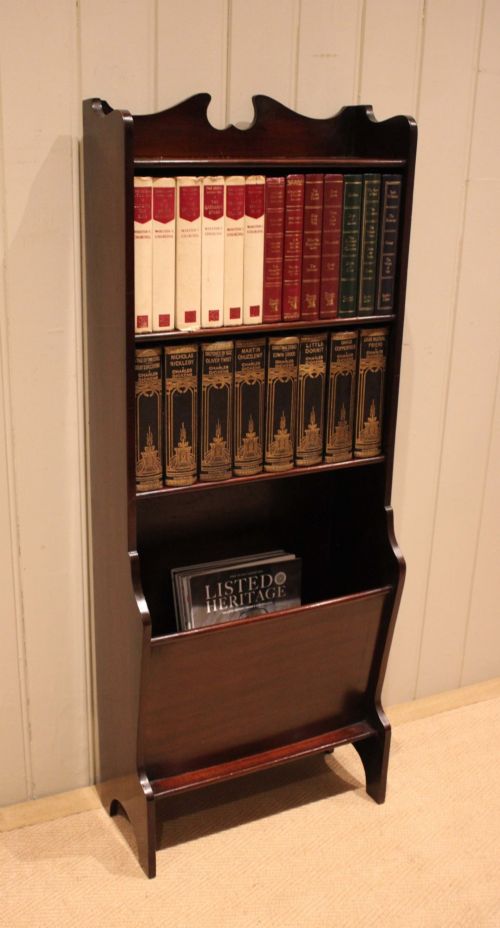
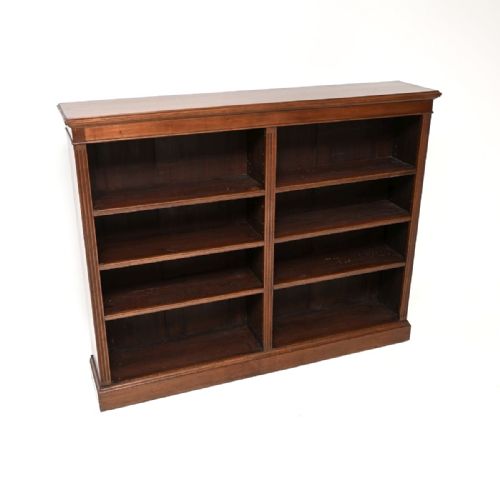
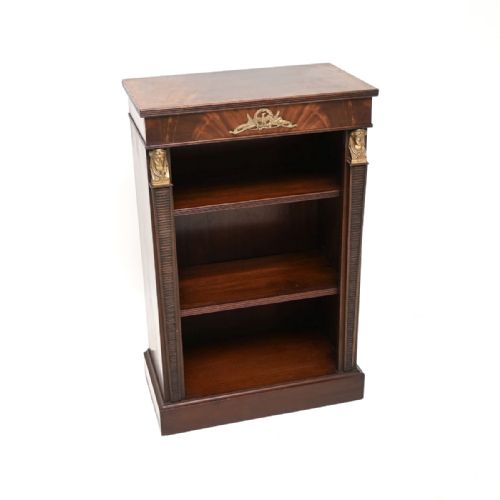
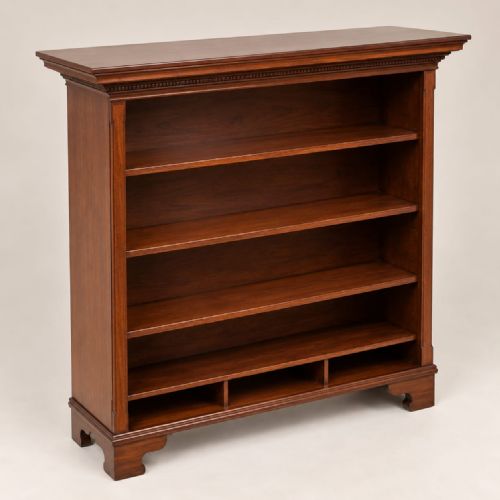
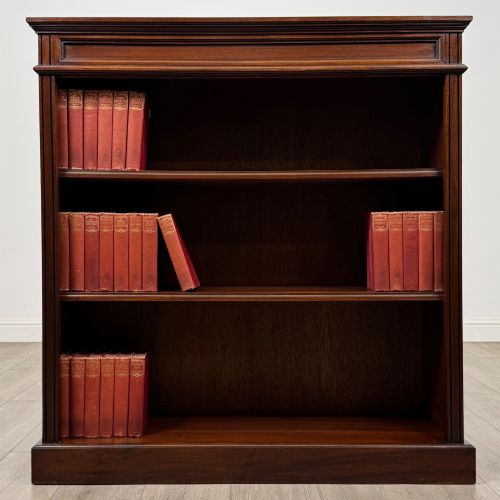
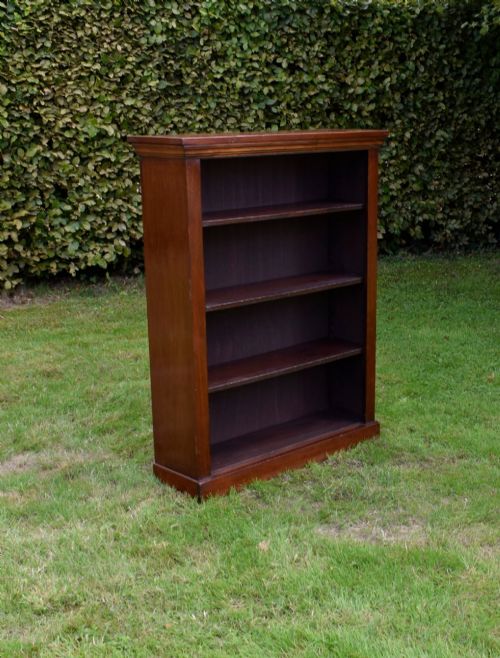
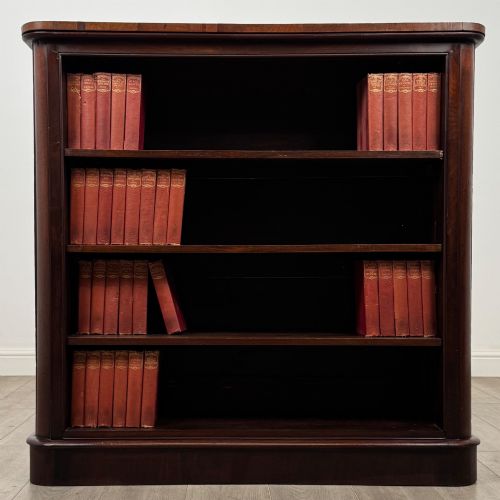
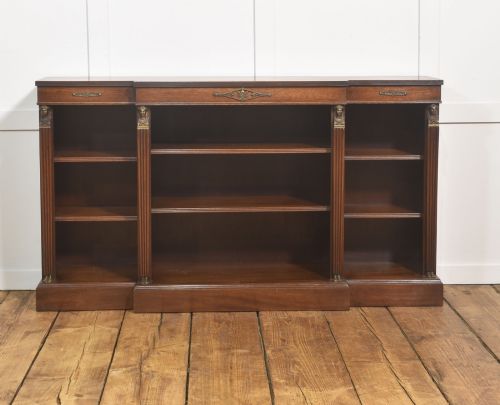
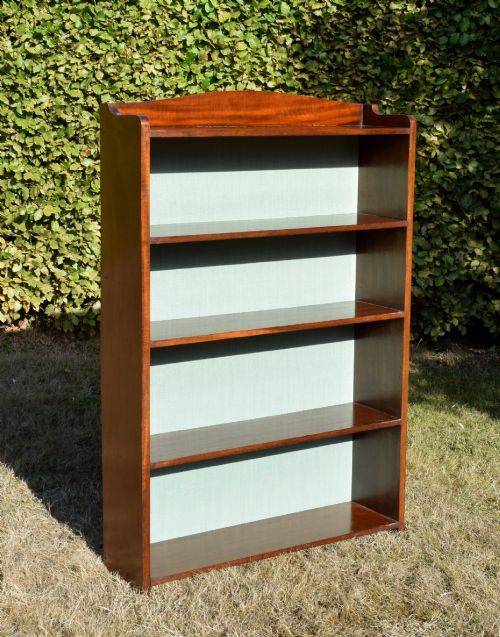
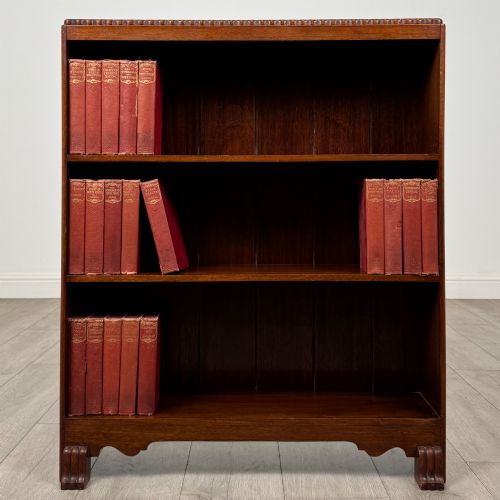
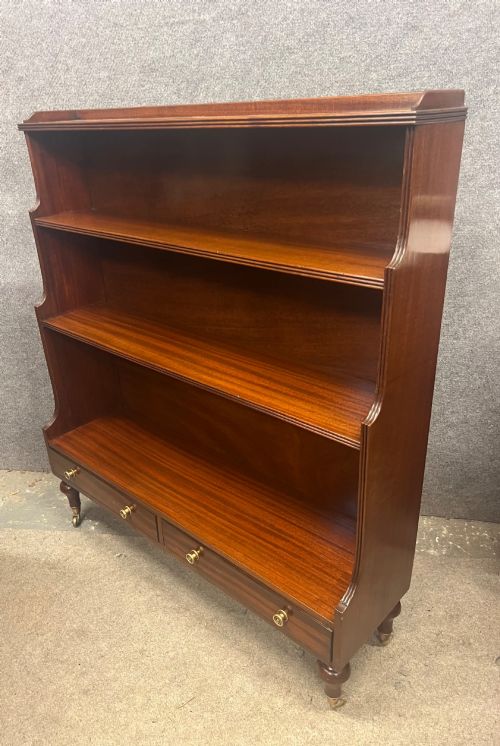
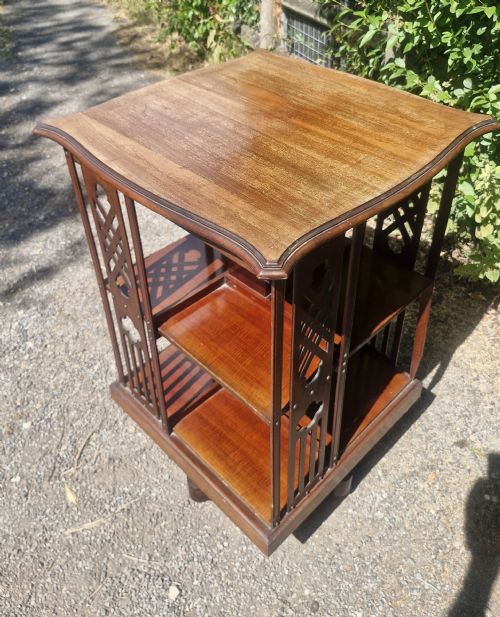
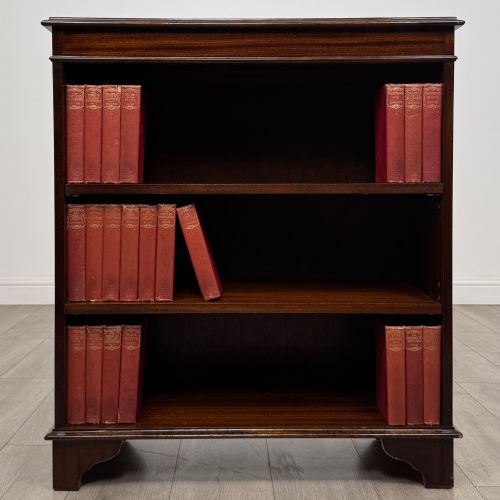
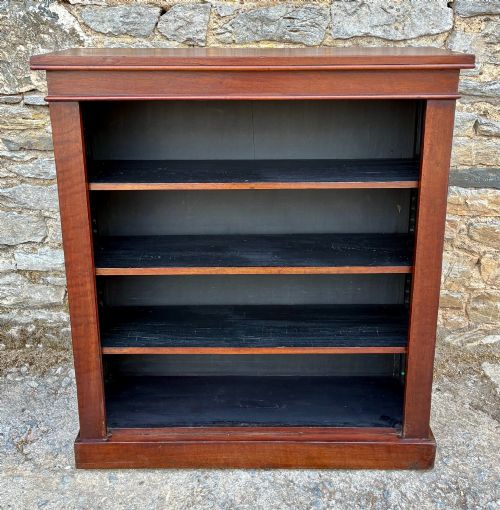
When searching for mahogany low bookshelves, collectors encounter pieces designed to hold volumes within reach while leaving wall space free above. The selection spans Victorian, Edwardian, and Regency periods, alongside revival pieces from the early twentieth century. Most examples take the form of open bookcases, though variations include waterfall shelves, revolving designs, and dwarf breakfronts.
The physical evidence on this page shows formats ranging from narrow wall units to large breakfront library bookcases. Timbers predominantly feature mahogany, sometimes accented with satinwood inlay or fitted with brass castors. Forms such as the waterfall bookcase and the low dwarf cabinet appear frequently among nineteenth and twentieth-century examples.
How they were made
Cabinet makers utilised solid mahogany and flame mahogany veneers over secondary timbers, often applying satinwood banding for contrast. Joinery relies on traditional methods suited to supporting heavy book collections, with adjustable shelf mechanisms appearing in many Victorian and Edwardian iterations.
Hardware details include brass elements such as castors on larger library pieces and occasional metal fittings. Certain cabinets incorporate glass panels or display doors, while others remain entirely open for easy access to volumes.
One revolving bookcase allows an entire personal library to spin on command with a gentle push.
What varies in quality
Quality rests upon the selection of timber grain, particularly the depth and movement found in flame mahogany veneers. Finer pieces demonstrate precise inlay work, such as satinwood banding, executed with clean lines and balanced proportions.
Structural integrity also separates standard utility pieces from exceptional workshop output. Adjustable shelving mechanisms that operate smoothly and the inclusion of original brass castors elevate a piece's standing.
Lamb of Manchester·Gillows
The Mahogany Low Bookshelves Glossary
- Breakfront
- A cabinet design where the central section projects forward from the flanking outer sections. This configuration adds architectural depth to larger library bookcases.
- Waterfall bookcase
- A set of open shelves where each tier steps back progressively from the one below, creating a silhouette resembling cascading water. It gained popularity during the Regency and Victorian periods.
- Dwarf bookcase
- A low shelving unit designed to sit beneath dado height, keeping books accessible without obscuring wall art. These pieces often feature adjustable wooden shelves.
- Flame mahogany
- A veneer figure produced from wood taken from the fork of the mahogany tree, showing swirling flame-like patterns. Cabinet makers prized this figure for principal display surfaces.
- Satinwood
- A pale yellow exotic timber used primarily for stringing and decorative inlay work on mahogany furniture. It provides a sharp visual contrast against darker cabinet woods.
Mahogany Low Bookshelves: Frequently Asked Questions
How do I date a mahogany bookcase?
Dating relies on observing stylistic markers, construction techniques, and timber characteristics recorded across periods. Regency pieces show classical proportions, whereas Victorian and Edwardian examples often introduce adjustable shelf mechanisms and inlaid satinwood.
Examining secondary woods and internal fixings helps narrow the decade of manufacture.
Are the shelves adjustable?
Many of the larger library and open bookcases feature adjustable wooden shelves supported by brass pegs or vertical racks. This allowed owners to alter shelf heights for varying book sizes.
Simpler or smaller models occasionally feature fixed shelving integrated into the structural uprights.
Where should I place a low bookcase?
Low bookcases suit studies, drawing rooms, and hallways where tall cabinetry would dominate the space. Their flat top surfaces also double as display areas for small objects or table lamps.
Keeping them away from direct heat sources protects the mahogany timber and prevents veneer warping.