



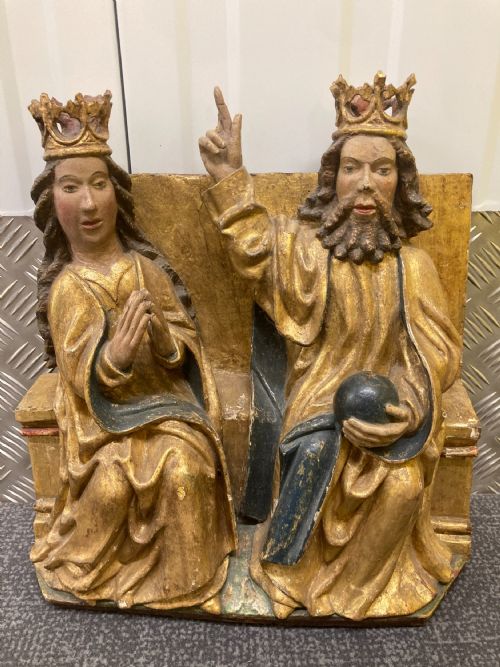


Ecclesiastical Timber Sculpture
Ecclesiastical timber sculpture brings carved saints, angels and panels from centuries of devotion into domestic spaces.
Ecclesiastical Timber Sculpture
These works comprise carved figures of saints, apostles, and biblical scenes, along with architectural fragments and relief panels originating from churches and monastic settings. Buyers encounter numerous examples in oak, walnut, and limewood dating from the medieval period through the nineteenth century, including Gothic and Baroque interpretations.
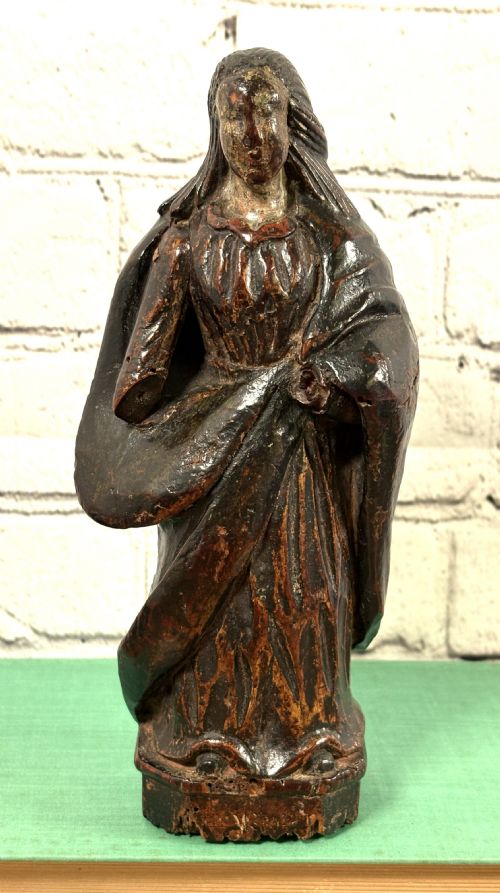
The inventory on this page ranges from pre-sixteenth century medieval figures to nineteenth-century Gothic Revival pieces. Figures of the Virgin Mary, Christ as Corpus Christi, and various saints predominate, presented either as individual statues, pairs, or within wall-relief panels.
Materials and construction
Carvers utilised native hardwoods such as oak, walnut, applewood, and olive wood, selecting timber for density and grain to withstand detailed chisel work. Figures were often fashioned from a single block or assembled from sections for larger compositions.
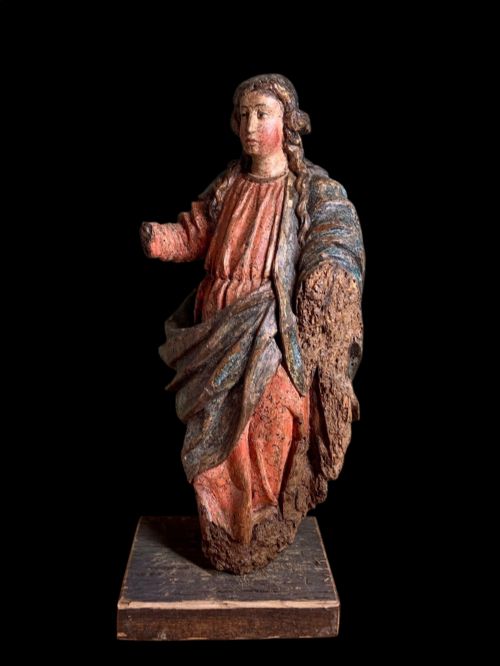
Many surfaces received layers of gesso before being painted in polychrome pigments or finished with gold leaf. Over centuries, these decorative coatings have weathered, revealing the underlying timber beneath remnants of historic paint and gilding.
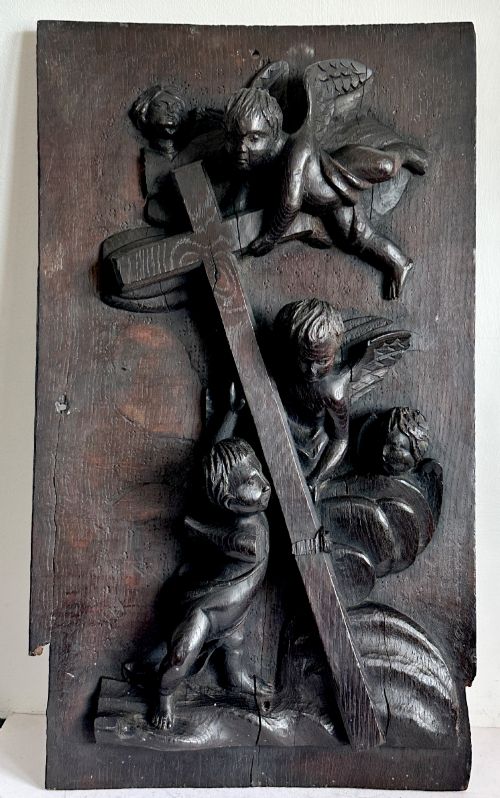
The selection includes architectural fragments, wall reliefs, and free-standing figures of saints, angels, and cherubs.
Assessing quality and execution
The sophistication of the hand-carved detail distinguishes individual pieces, particularly in the rendering of facial expressions, drapery folds, and anatomical proportions. Master carvers achieved natural movement and depth in timber, whereas lesser works remain rigid and shallow.
The preservation of original surface treatments, including early polychrome paint and gesso layers, heavily influences the integrity of a piece. Examples retaining their historic painted finishes demonstrate greater authenticity compared to stripped or heavily restored surfaces.
The Ecclesiastical Timber Sculpture Glossary
- Polychrome
- Painted in several colours. This term describes historic wood sculptures finished with pigments over a gesso ground.
- Corpus Christi
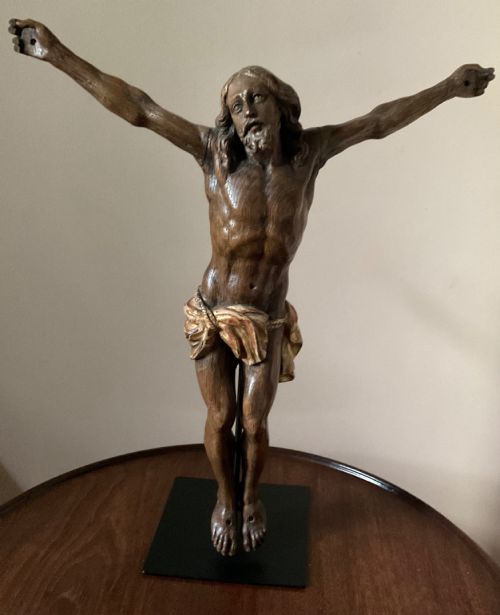
- The body of Jesus Christ depicted on the cross. These timber carvings focus on the figure of Christ alone.
- Gesso
- A plaster mix applied to wood surfaces as a base for painting and gilding. It provides a smooth ground for decorative finishes.
- Relief
- Sculpture carved to project from a background flat surface. Wall reliefs depict narrative scenes such as the way to Calvary.
- Giltwood
- Wood carved and decorated with gold leaf. This technique illuminated sacred figures within dim church interiors.
Ecclesiastical Timber Sculpture: Frequently Asked Questions
What subjects appear in ecclesiastical timber sculpture?
Figures typically represent biblical subjects, including saints, angels, the Virgin and Child, and scenes from the life of Christ such as the crucifixion.
Panels and fragments also depict allegorical subjects and cherubs, reflecting the devotional function of the original church settings.
How are different periods identified?
Stylistic indicators such as Gothic drapery folds, Baroque movement, or Gothic Revival proportions help date the carvings. Material choices and tool marks further assist in distinguishing medieval work from later nineteenth-century interpretations.
Remaining traces of early gesso and polychrome paint also provide clues to the age and origin of the piece.
Where did these sculptures originate?
Most pieces originate from European churches, chapels, and monasteries, spanning regions from England and France to Germany, Italy, and the Low Countries.
They were removed from ecclesiastical contexts over centuries through alterations, secularisation, or the dispersal of church furnishings.
How should wood sculptures be displayed at home?
Pieces require stable indoor environments away from direct sunlight and sudden temperature shifts to protect the timber and historic surface finishes. Wall-mounted sculptures and architectural fragments need secure fixings suited to their weight.
Free-standing figures benefit from placement on stable surfaces where their carved details remain visible from multiple angles.