



Ecclesiastical Oak Seat
An ecclesiastical oak seat brings centuries of chapel and church history directly into a room, offering sturdy joinery and solemn character.
How they were made
Makers relied on solid oak for durability, often finishing the timber with traditional joints, carved trefoil details, and occasionally gold leaf highlights. Metal brackets and brass fittings reinforced structural points on larger benches and pews.
Upholstered elements, where present, utilise needlepoint or heavy fabric insertions, alongside rush seating on specific regional chair variants. Carved embellishments reflect Gothic Revival and Black Forest traditions applied by hand.
What varies in quality
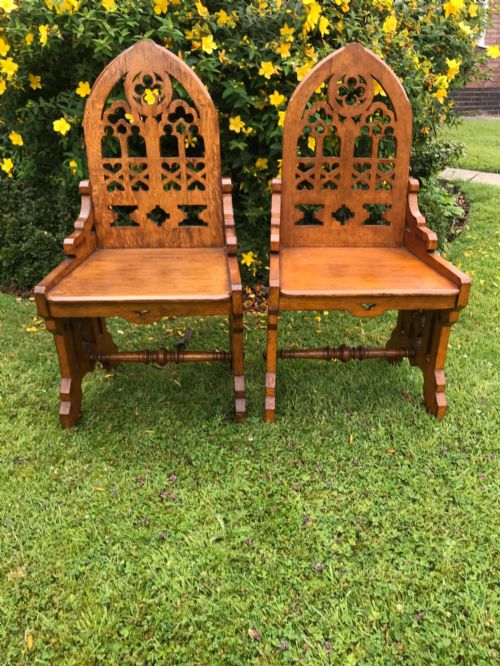
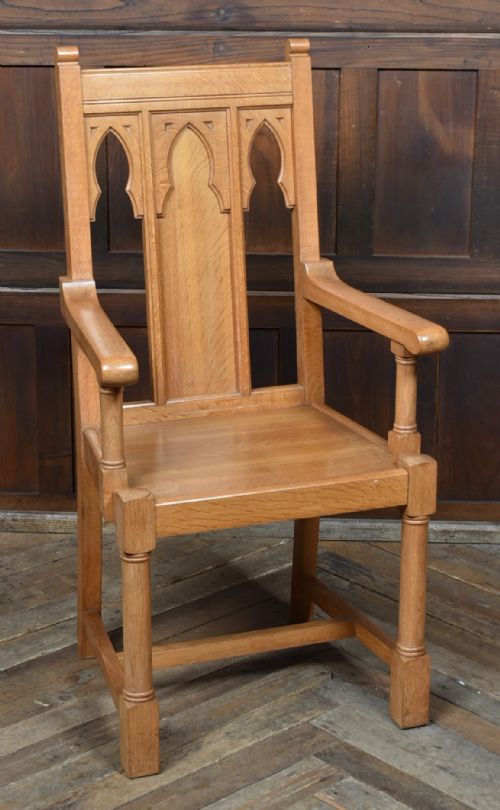
The distinction between standard institutional seating and high-status examples lies in provenance, such as pieces marked for specific cathedrals or architectural commissions. Carved depth and intricacy of Gothic detailing also separate basic utilitarian chapel chairs from grander thrones.
Originality of timber and surface patination dictate desirability, with unaltered pre-reformation or Victorian Gothic examples commanding particular interest. The integrity of the oak frame and regional provenance further define the standing of each piece.
A few well-travelled chairs carry the literal scars of cathedral attendance, bearing stamped inventory marks from St Paul's itself.
The Ecclesiastical Oak Seat Glossary
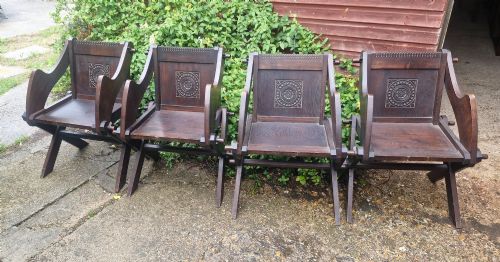
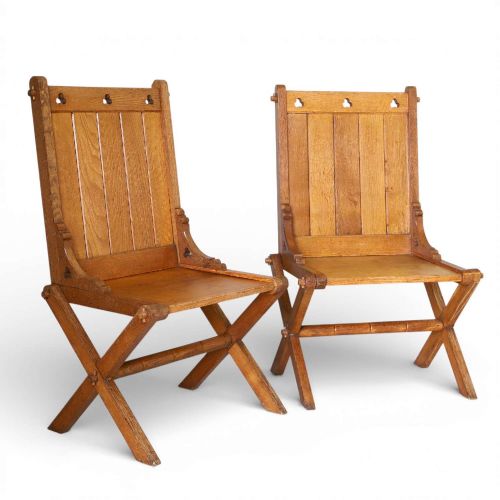
- Glastonbury chair
- A pegged wooden armchair of medieval design revived during the nineteenth century, featuring an X-framed base and sloping arms.
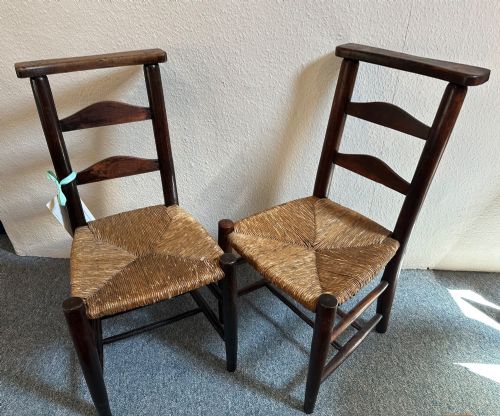
- Prie-Dieu
- A devotional prayer chair fitted with a narrow shelf or desk top for kneeling and resting elbows during worship.
- Trefoil
- A three-lobed decorative ornamental shape resembling clover leaves, frequently pierced into the timber backs of Gothic revival furniture.
- Pew
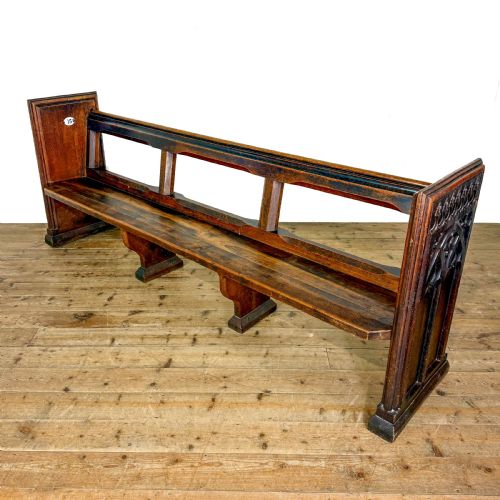
- A long wooden bench seat designed for communal seating in churches, constructed with solid panelled backs and ends.
- Pre-reformation
- Dating from before the sixteenth century English Reformation, denoting Catholic ecclesiastical furniture of great antiquity.
Ecclesiastical Oak Seat: Frequently Asked Questions
What is a Glastonbury chair?
A Glastonbury chair is a distinctive wooden armchair with an X-shaped frame, flat arms, and a panelled back.
First popularized in medieval times and revived extensively during the Gothic Revival period, these seats are constructed from solid oak.
How do I identify a church pew?
Church pews are long, linear wooden benches designed for rows, featuring high panelled backs and substantial end standards.
They originate from chapels and churches, offering fixed communal seating rather than movable domestic chairs.
What is a Prie-Dieu chair?
A Prie-Dieu is a specialised prayer chair that incorporates a lower kneeling board and an upper shelf or rail.
Victorian and Regency examples allowed worshippers to lean while reading devotional texts.
Are these chairs comfortable?
Ecclesiastical seating was built for upright posture and durability during long services rather than relaxed lounging.
While supportive, the wooden seats and rigid backs reflect their institutional origins.
How do I care for antique oak?
Antique oak benefits from stable indoor humidity levels away from direct heat sources and sunlight.
Regular dusting with a dry cloth preserves the natural timber finish without stripping surface patination.