




Ecclesiastical Carved Wood Art
Ecclesiastical carved wood art brings centuries of devotion into a room, taking the form of saints, bishops and altarpieces shaped by hands long gone.
Ecclesiastical Carved Wood Art
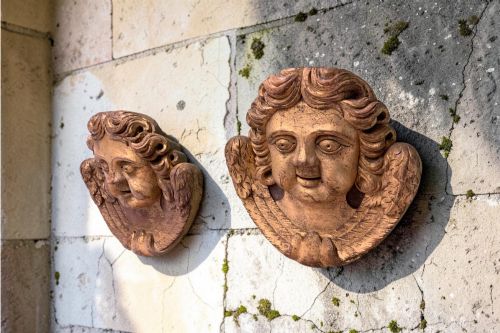
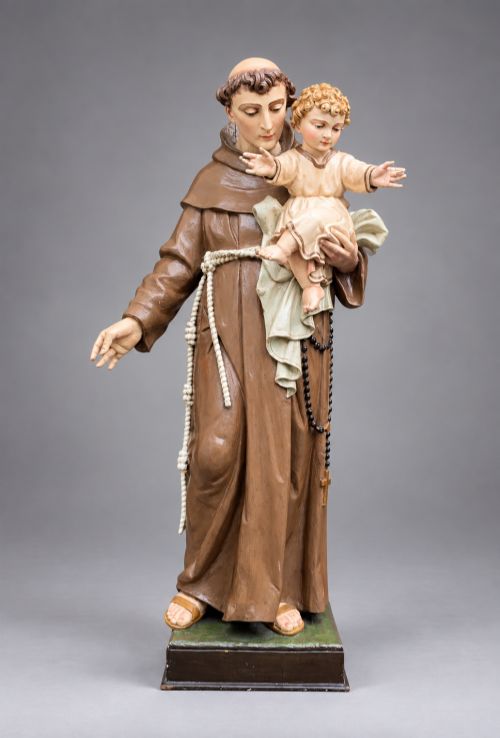
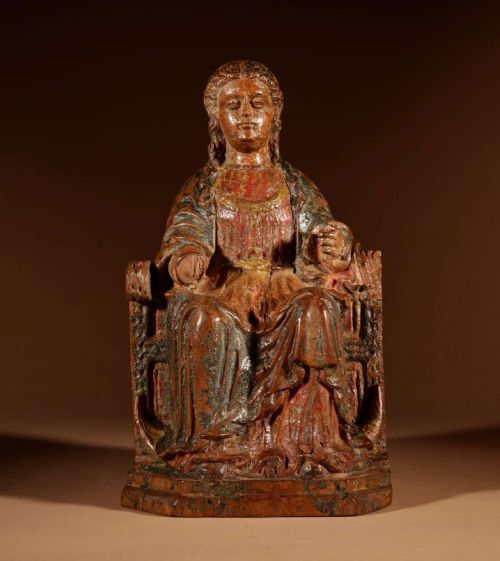
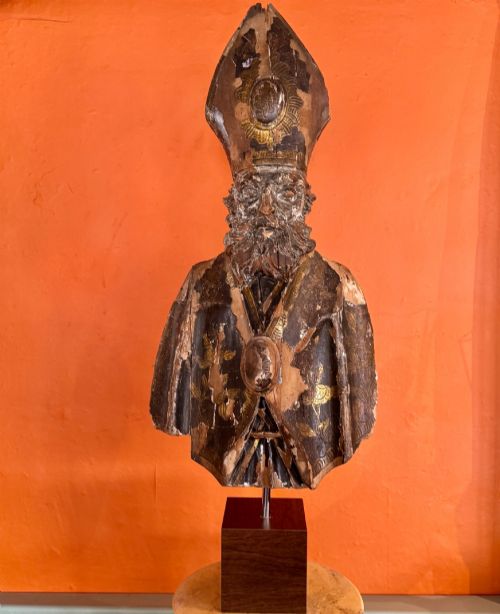
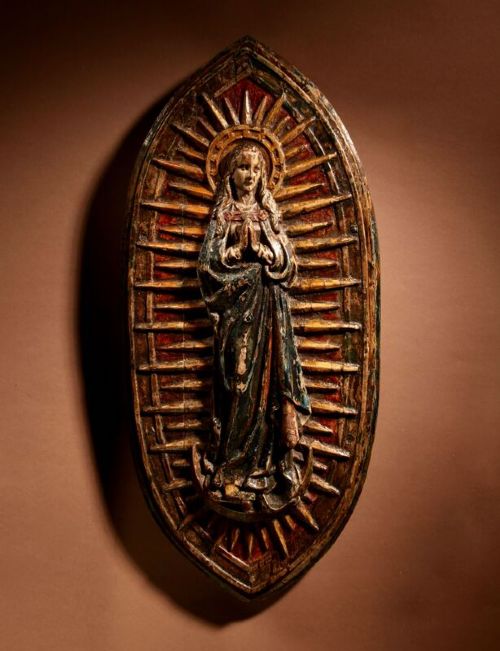
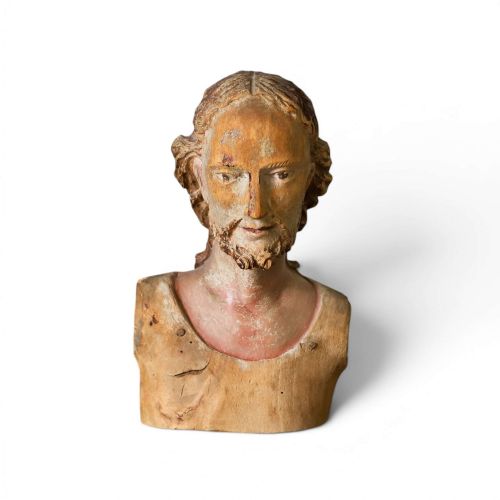
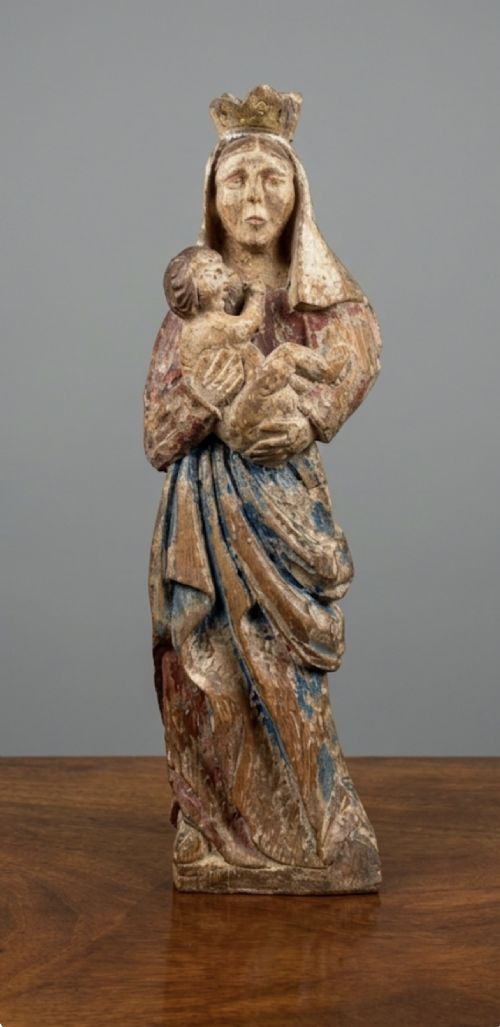
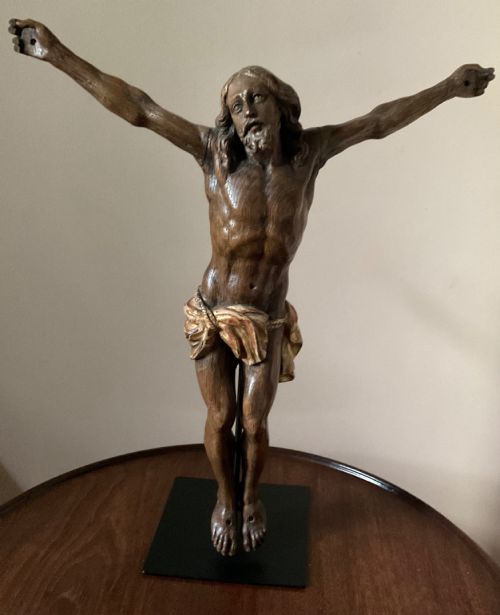
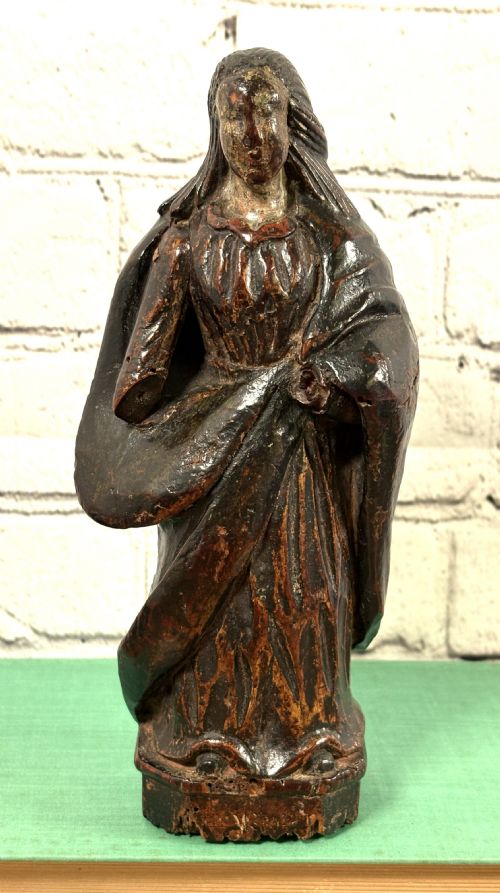
When someone searches for ecclesiastical carved wood art, they find devotional objects created for churches and private chapels across Europe. These pieces take the form of freestanding statues, wall sculptures, relief panels and busts depicting biblical figures, saints and bishops.
The versions most commonly met on this page span several centuries of craftsmanship, ranging from medieval depictions to Baroque and Gothic Revival works. Figures such as the Virgin Mary, Christ, Saint John the Baptist and various bishops appear frequently in walnut, oak and limewood.
Origins stretch across Italy, Germany, Flanders and the Low Countries, reflecting diverse regional workshops and local sculptural traditions. Collectors encounter both small devotional groups and life-size figures that once formed central parts of larger altarpieces and church tracery.
Materials and carving techniques
Wood selection determined the depth and longevity of each sculpture, with dense hardwoods like oak, walnut, applewood and olive wood providing a stable base for intricate chiselling. Softer woods such as limewood and pine also permitted fluid, deep undercutting by master carvers.
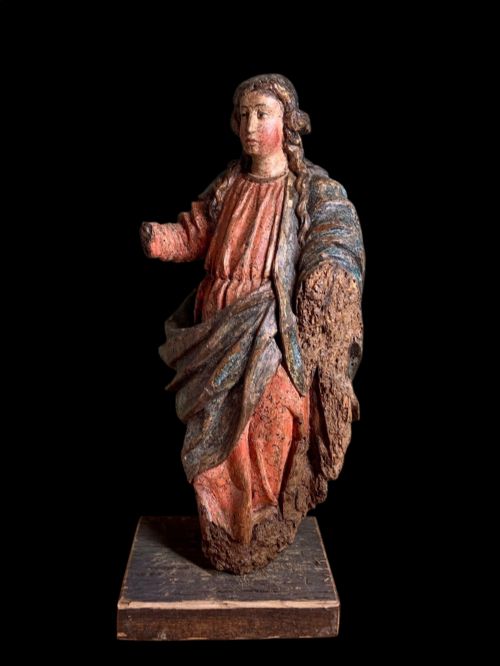
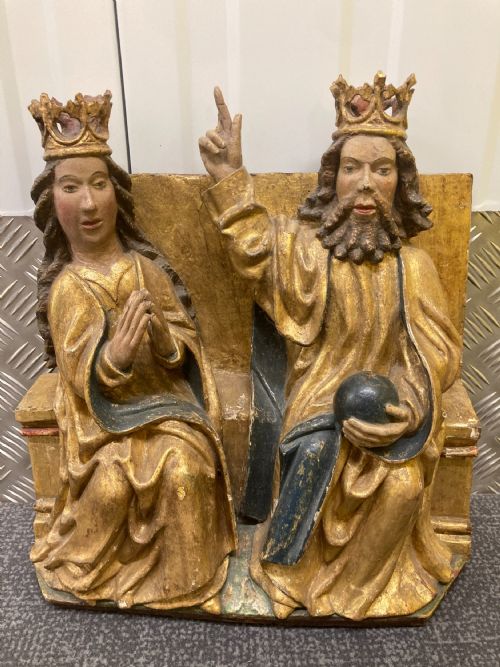
Surface preparation involved applying gesso directly onto the timber to create a smooth ground for subsequent layers of paint and gold leaf. Polychrome decoration brought realism to the garments and flesh tones of saints and divine figures.
Gilding techniques utilised gold leaf applied over bole or gesso preparations, catching candlelight within dim ecclesiastical interiors. Many surfaces retain fragments of original painted and gilt finishes beneath centuries of patina.
Listings feature woods such as oak, walnut, limewood, applewood, pine and olive wood, spanning the sixteenth to nineteenth centuries.
Assessing sculptural quality
The hierarchy of quality rests primarily on the anatomical precision, expressiveness and depth of the original carving. Superior pieces display masterly control over drapery folds, facial expressions and hands, whereas lesser works rely on stiff, formulaic repetition.
The survival of original surface treatments plays a major role in establishing the distinction between standard and exceptional examples. Traces of authentic polychrome paint and gold leaf elevate a piece, while later overpainting or stripping alters its historical integrity.
The Ecclesiastical Carved Wood Art Glossary
- Polychrome
- Painted in several colours. This surface treatment was widely applied to wood sculptures to enhance realism.
- Gesso
- A plaster mixture used as a smooth base for painting or gilding on wood. It provides an adherent surface for gold leaf.
- Corpus Christi
- The body of Christ depicted on a cross. These anatomical carvings focus heavily on the suffering and posture of the figure.
- Tracery
- Openwork ornamentation in stone or wood, commonly found in Gothic architecture. Church panels often incorporate this geometric design.
Ecclesiastical Carved Wood Art: Frequently Asked Questions
How old are these wood carvings?
The pieces span from medieval periods through the seventeenth, eighteenth and nineteenth centuries. Each era brings distinct stylistic traits tied to Renaissance, Baroque or Gothic Revival movements.
Craftsmen during these periods utilised local hardwoods and traditional preparation layers like gesso and gold leaf. Dating relies upon examining tool marks, timber shrinkage and stylistic conventions of the specific region.
Where were these sculptures originally displayed?
Most of these works originated inside European churches, cathedrals and monastic chapels. They stood within large altarpieces, adorned choir stalls or served as devotional figures mounted on walls.
Some smaller statues were commissioned for private domestic oratories. Their removal from sacred spaces into the secular marketplace occurred over centuries of dispersal and restoration.
How should I clean polychrome wood?
Polychrome and gilded surfaces require gentle maintenance to preserve fragile paint layers. Dusting should be done lightly with a soft, dry brush without applying moisture or cleaning agents.
Water and chemical solvents can dissolve historical gesso and paint. Professional conservators should handle any significant restoration or deep cleaning.