




Ebony Wood Pedestals
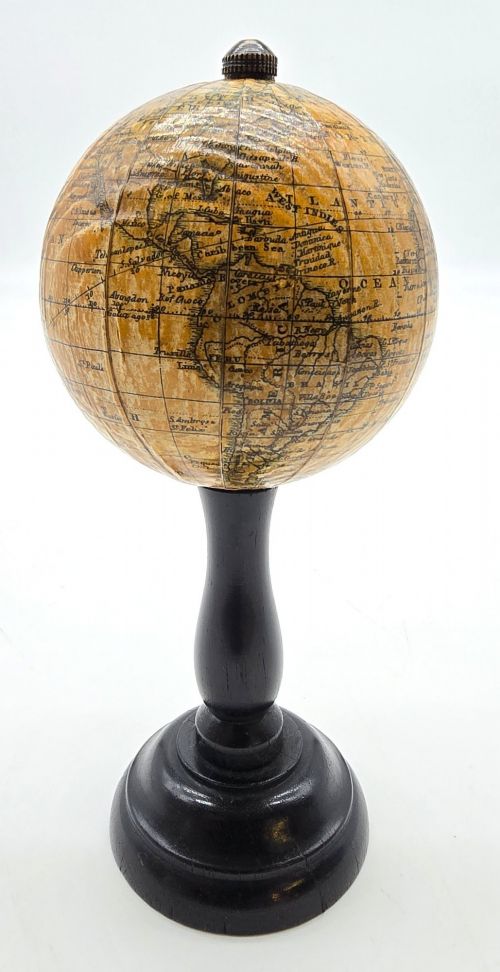
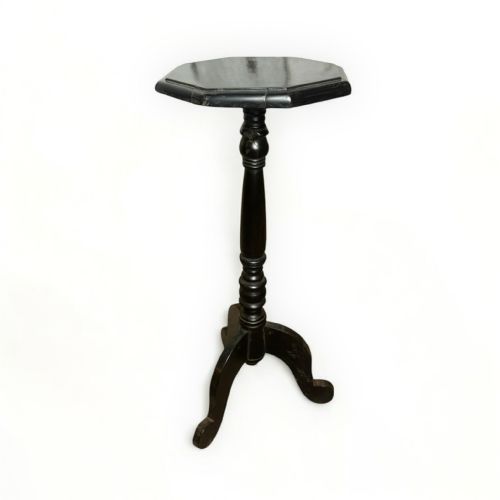
These ebony wood pedestals and related tables bring dense tropical timber and colonial craftsmanship directly into your interior.
Ebony Wood Pedestals
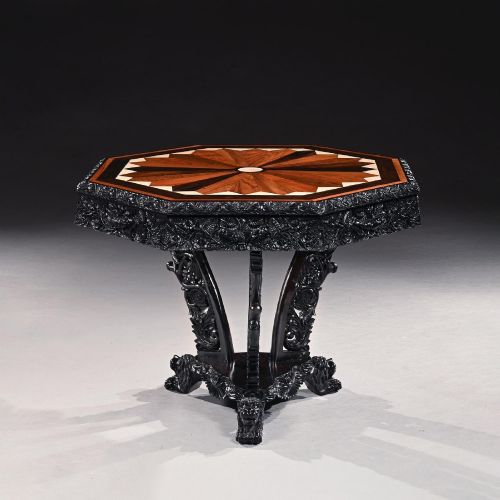
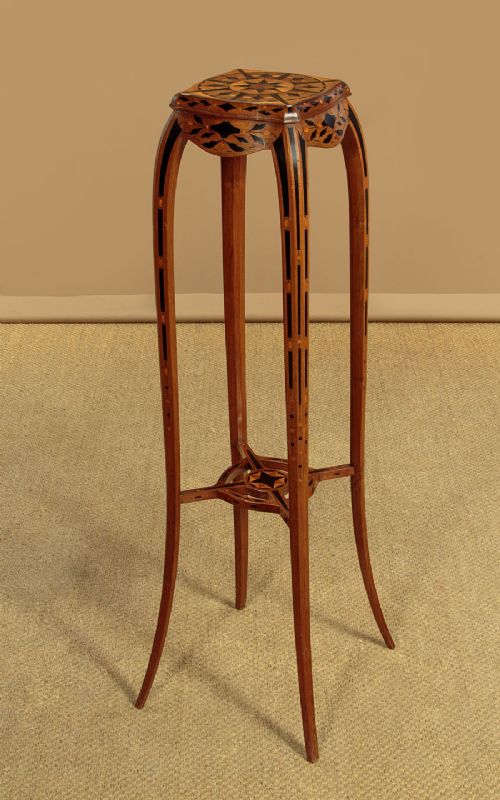
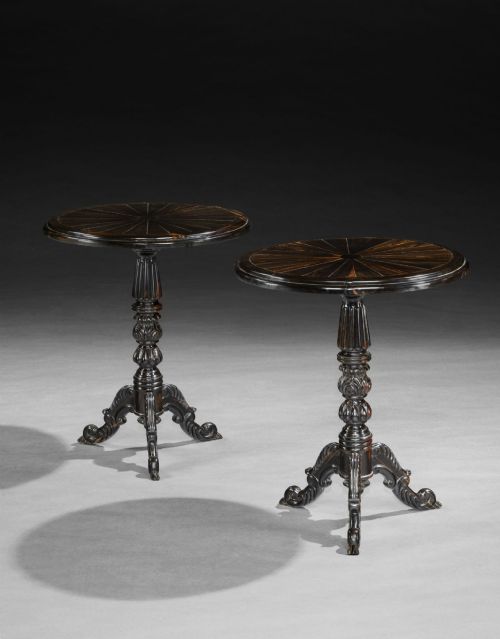
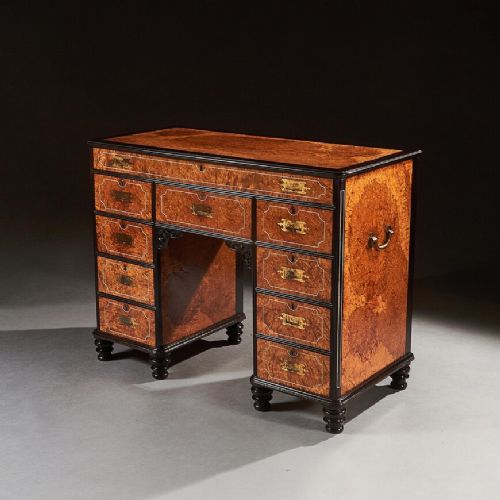
Ebony wood pedestals and associated tables encompass substantial plant stands, torcheres, and display columns created from dense dark heartwood. Alongside these vertical supports, the selections feature centre tables, side tables, occasional pieces, and campaign desks utilising the same heavy dark timber.
You will most frequently encounter nineteenth century examples shaped by Anglo-Indian colonial and Ceylonese workshops, alongside Regency and Victorian pieces. These range from solid ebony construction to intricate combinations with specimen woods, amboyna, and brass details.
Colonial makers utilised the natural heft and deep dark grain of ebony for formal display and domestic utility. The inventory balances these nineteenth century regional interpretations with later twentieth century Art Deco expressions in Macassar ebony.
How they were made
Master artisans shaped heavy solid ebony and Macassar ebony through intensive carving, turning, and joinery. The natural density of the timber permitted intricate crisp profiling and deep relief decoration without losing structural integrity.
Workshops combined ebony with exotic specimen woods, amboyna, burr elm, and satinwood to create high contrast veneers and inlay patterns. Brass and metal fittings were integrated for structural reinforcement and decorative accenting.
Ebony Wood Pedestals Retail Price Guide 2026
Typical asking prices for ebony wood pedestals among the pieces listed under this phrase on Sellingantiques today, from the lower quarter to the upper quarter. They describe what is for sale here now, not the wider market.
Solid ebony sinks in water due to its extreme density, a property that once caused nineteenth-century shippers to load it as ballast.
What varies in quality
Quality rests in the selection of the primary timber and the precision of the carved or turned enrichment. Dense solid ebony components show superior weight and stability compared to veneered carcases, though expert contrasting with amboyna or satinwood requires immense skill.
Regional execution dictates the refinement of the piece, from the crisp foliate carving of Ceylonese workshops to the geometric purity of Art Deco Macassar design. Finer examples maintain structural balance across tripod bases and pedestal columns.
The Ebony Wood Pedestals Glossary
- Ebony
- A dense black or very dark brown wood yielded by several species of trees, particularly Diospyros. It is prized for its fine texture and ability to take a smooth polish.
- Macassar ebony
- A distinct timber featuring warm brown and dramatic black striping, originating from Southeast Asia. This variant gained particular favour during the Art Deco period.
- Torchere
- A tall ornamental stand or candlestick holder designed to support a light source or plant. In furniture, it functions as a display pedestal.
- Campaign desk
- Portable furniture constructed for travel, featuring recessed brass handles and knock-down components. These pieces combined utility with exotic hardwoods for colonial officers.
Ebony Wood Pedestals: Frequently Asked Questions
What are ebony pedestals used for?
These tall stands and columns serve to elevate decorative objects, sculptures, or plants within a room. Their dark timber provides a strong visual anchor for whatever is placed upon the top surface.
Historically, they were positioned in principal reception rooms to display prized ornaments or lighting. Today, they function in domestic interiors to draw the eye upward and showcase ceramics or bronzes.
How do I date an ebony table?
Examine the construction methods, joinery style, and secondary woods concealed beneath or inside the piece. Nineteenth century colonial examples often feature dense hand-carved motifs and regional timbers.
Twentieth century pieces, such as Art Deco items, utilise streamlined geometric forms and Macassar veneers. Comparing the turning style and hardware against documented period designs confirms the origin.
Where were colonial ebony pieces made?
Many fine items originated in nineteenth century Ceylon, specifically around the Galle district, and various Anglo-Indian workshops. Local craftsmen applied European furniture forms to native tropical hardwoods.
These pieces reflect an exchange of design ideas between British occupants and skilled indigenous carvers. The resulting objects combined European utility with intricate regional decorative techniques.