






Ebony Keepsake Box
An ebony keepsake box is a dark, dense repository for small treasures, built to endure in wood and brass.
Ebony Keepsake Box
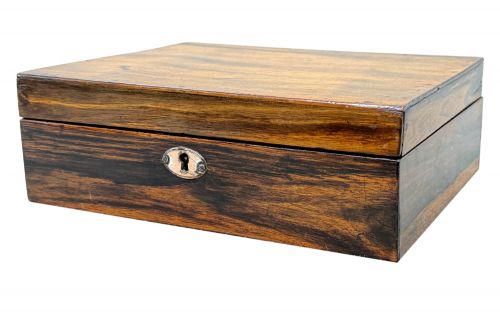
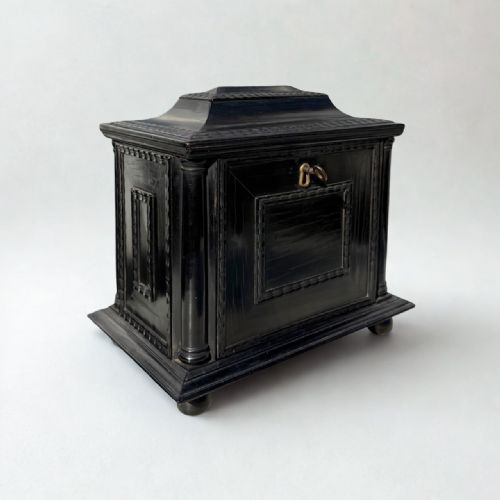
When you search for an ebony keepsake box, you are looking at small containers designed to hold letters, jewellery and precious items. The examples appearing on this page span several centuries, reaching from the eighteenth century through to the art deco era of nineteen thirty.
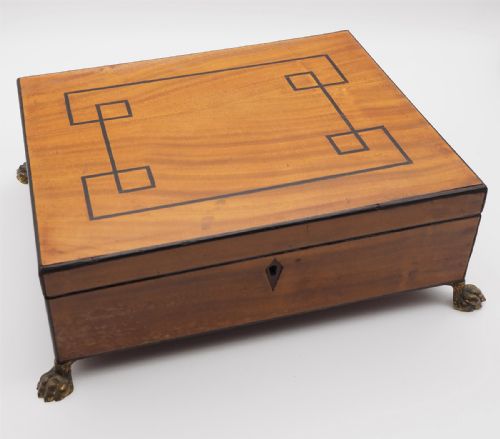
You will meet various forms here, including writing boxes, tea caddies, work boxes and trinket boxes. Many pieces combine ebony with contrasting materials such as brass, satinwood and mother-of-pearl.
Geographic influences shape these pieces significantly, with Anglo-Indian colonial workshops and Ceylonese makers featuring alongside European examples. The stylistic range covers Regency, Victorian, Flemish Baroque and Art Deco periods.
How they were made
Cabinetmakers utilised dense tropical hardwoods like solid ebony and coromandel, often working them alongside lighter woods such as satinwood and burr yew to create strong visual contrast. Artisans applied intricate parquetry, reeded decoration and mosaic inlays, sometimes incorporating delicate porcupine quill work into the surfaces.
Many boxes integrate polished brass mounts, escutcheons and stringing to reinforce corners and frame the timber grain. More ornate examples from the nineteenth century feature detailed mother-of-pearl inlay embedded directly into the dark wood ground.
Ebony Keepsake Box Retail Price Guide 2026
Typical asking prices for ebony keepsake box among the pieces listed under this phrase on Sellingantiques today, from the lower quarter to the upper quarter. They describe what is for sale here now, not the wider market.
Several makers decorated nineteenth-century boxes using quills harvested from porcupines.
What varies in quality
Quality rests upon the precision of the timber selection and the execution of the inlay work. Boxes featuring solid ebony or finely figured coromandel display a greater depth of material discipline than simpler veneered constructions.
The integration of secondary timbers and metal fittings reveals the maker's hand. Superior pieces show exact alignment in brass stringing, tight parquetry joints and harmonious grain matching across the lid and sides.
The Ebony Keepsake Box Glossary
- Ebony
- A dense, heavy black hardwood prized for its smooth finish and ability to hold fine detail. It forms the primary structure of these boxes.
- Parquetry
- Geometric wood mosaic work arranged in patterns on the exterior surface. This technique creates visual texture using contrasting timbers.
- Escutcheon
- A protective brass plate surrounding the keyhole. It prevents the wood from splitting around the lock mechanism.
- Stringing
- Thin lines of contrasting wood or metal inlaid into the surface. It outlines the borders and panels of the box.
- Caddy
- A container originally designed for storing tea leaves. These boxes often feature internal compartments with fitted lids.
Ebony Keepsake Box: Frequently Asked Questions
What went inside a keepsake box?
These boxes held personal valuables, letters, rings and small keepsakes. Interiors often included compartments or lift-out trays to organise these items.
Larger versions functioned as writing boxes or tea caddies, serving specific domestic duties in the nineteenth-century home.
How do I identify a Regency box?
Regency pieces often display clean classical proportions, contrasting satinwood borders and brass stringing. They date from the early nineteenth century.
Look for refined geometric inlays and architectural profiles that reflect the taste of that specific period.
What is Anglo-Indian work?
Anglo-Indian items were produced in the Indian subcontinent during the colonial period, frequently utilising local dense timbers. Craftsmen combined traditional British box forms with indigenous carving methods.
These pieces often feature solid ebony construction or distinctive porcupine quill decoration.
How should I clean my box?
Maintain the timber with a microcrystalline wax applied sparingly with a soft cloth. Avoid using liquid polishes or water on the ebony and inlay.
Gentle dusting preserves the polished surface and protects vulnerable brass fittings and mother-of-pearl sections.