
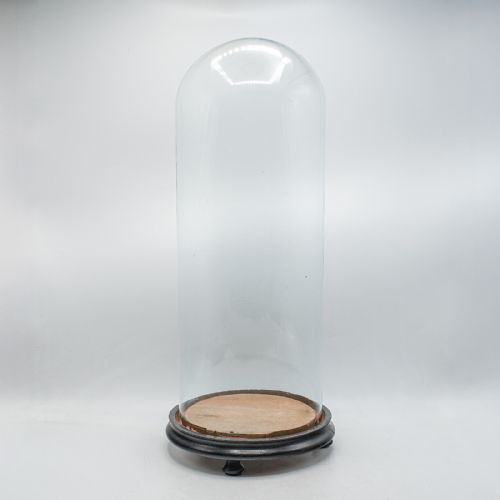
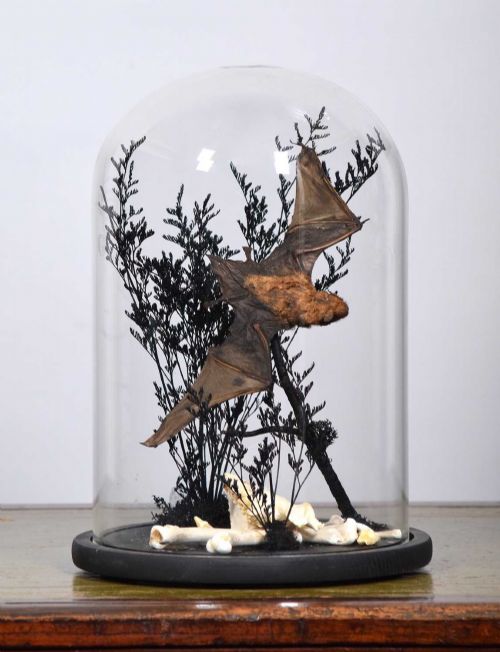


Ebonised Wood Glass Dome
An ebonised wood glass dome protects fragile treasures under clear blown glass while framing them against a dark, dramatic timber base.
Ebonised Wood Glass Dome
An ebonised wood glass dome serves as a protective enclosure for delicate specimens, taxidermy, and ornaments. These display domes preserve fragile objects from dust and handling while presenting them clearly from every angle.
Most examples found here date from the Victorian and Edwardian periods, including late Victorian pieces and specific years like 1860, 1870, 1880, 1886, and 1905. They take the form of display domes, cloches, diorama domes, and clock cases.
The objects housed within these glass covers vary widely. Listings show taxidermy specimens such as bats and Indian stuffed birds, alongside botanical items, ornaments, and clock movements.
Materials and construction
Makers utilised clear blown glass to form the protective covers, shaping them into tall, wide, or oval profiles. These glass domes sit securely upon timber bases treated with ebonising to imitate ebony.
The underlying timber structures often pair with interior linings of fabric, felt, or wood to cushion and display the specimen. Some bases incorporate additional support materials like pine or bone.
Specialist workshops assembled these display cases to house specific subjects, from professor's specimens to intricate taxidermy showcases.
Listings combine clear glass with ebonised wood, pine, fabric, felt, and timber across Victorian and Edwardian periods.
Assessing quality and proportion
Quality rests in the clarity and weight of the blown glass cover, where superior examples display minimal distortion and even thickness. The depth of the ebonised finish on the wood base also distinguishes finer pieces.
Proportion dictates the visual balance between the height of the glass dome and the thickness of the timber base. Superior display cases maintain clean lines that complement the specimen held within.
James Gardner
The Ebonised Wood Glass Dome Glossary
- Ebonised wood
- Timber treated with stain, dye, or polish to simulate the dark, dense appearance of genuine ebony. This dark finish creates a strong visual contrast against the clear glass dome.
- Cloche
- A bell-shaped glass cover designed to protect delicate objects or plants. The term derives from the French word for bell.
- Taxidermy specimen
- Preserved animal skin prepared for display. These specimens form a frequent focal point inside Victorian and Edwardian glass domes.
- Diorama dome
- An enclosure housing a three-dimensional scene or arrangement of specimens. These display cases often feature carefully composed backgrounds for taxidermy.
- Display showcase
- A protective container with transparent sides or top used for exhibiting valuables. These items include clock cases and ornament showcases.
Ebonised Wood Glass Dome: Frequently Asked Questions
What fits inside an ebonised wood glass dome?
These enclosures house delicate items that require protection from dust and disturbance. Common contents include taxidermy specimens, botanical specimens, clocks, and small ornaments.
The shape and height of the glass cover determine what fits inside, ranging from tall bats and birds to wide diorama arrangements.
How do I date a glass dome?
Dating relies on the materials, construction methods, and style of the ebonised wood base. Victorian and Edwardian examples show distinct turning techniques and interior linings of fabric or felt.
Matching the proportions of the glass and the timber base helps align the piece with periods such as the late nineteenth century.
Are the glass covers removable?
The glass dome typically lifts straight off the ebonised wood base to allow access to the interior specimen. This loose fit relies on a rebate or groove in the timber to hold the glass steady.
Care is required when lifting the heavy glass cover during cleaning or maintenance.
Where were these domes placed in a home?
In Victorian and Edwardian interiors, these display cases sat on mantelpieces, side tables, and cabinets. They served to showcase natural history collections and decorative ornaments in domestic rooms.
Professor's specimen domes also appeared in studies and academic settings for close observation.