


Ebonised Walnut Bookcase
An ebonised walnut bookcase combines dark, polished timber with richly figured walnut to anchor a room with architectural presence.
Ebonised Walnut Bookcase
When you search for an ebonised walnut bookcase, you enter a field defined by Victorian and nineteenth century craft, alongside occasional eighteenth century Italian double dome bureau bookcases and Dutch examples. These pieces range from narrow open shelf bookcases and small pier cabinets to large display cabinets and bureau bookcases.
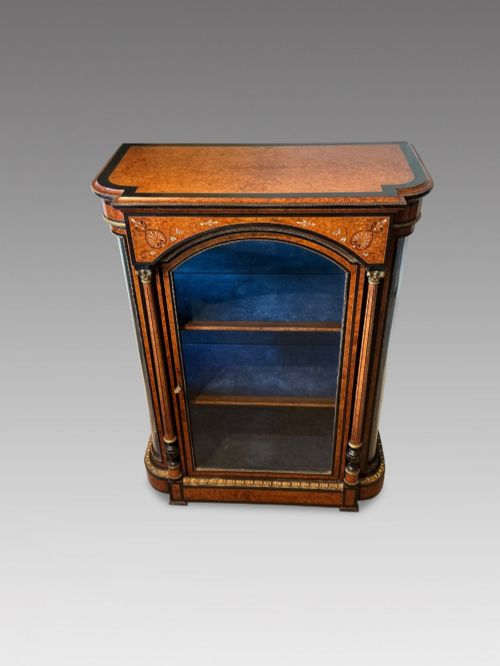
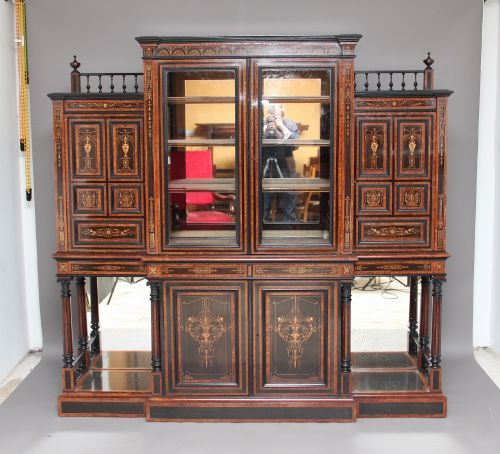
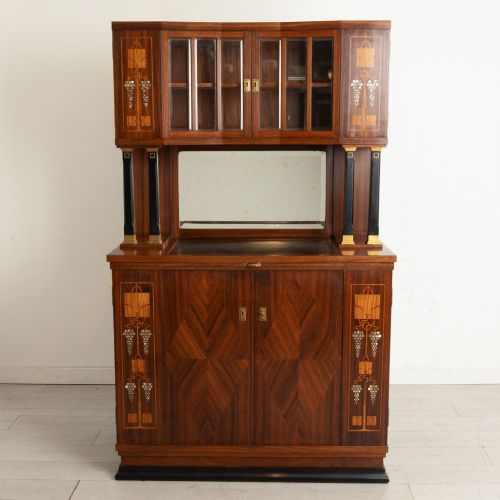
The versions you are most likely to meet on this page utilise walnut, burr walnut, and amboyna, finished with dark ebonising to contrast against gilt bronze or brass mounts and glazed doors. Victorian and Aesthetic movement aesthetics dominate the selection, bringing varied forms from upright pier cabinets to broader display cases.
Materials and construction methods
Cabinet makers constructed these pieces using solid walnut and applied veneers such as burr walnut and amboyna over secondary timbers, then treated the wood to achieve a dense ebonised finish that mimics ebony. Inlaid marquetry, brass stringing, and gilt ormolu mounts punctuate the dark surfaces.
Listings feature Victorian, nineteenth century, and eighteenth century pieces utilising burr walnut, amboyna, glass, and brass.
Judging quality and craftsmanship
The distinction between standard and superior pieces rests on the selection of timber veneers and the crispness of the ebonised finish. Burr walnut and amboyna panels display lively, natural grain patterns that require expert matching across doors and facades.
Secondary details, from finely cast ormolu mounts and intact brass stringing to the execution of inlaid marquetry, elevate the piece. The integrity of the glass panes and the precision of the door closures further separate everyday cabinet work from workshop output associated with known makers.
Lamb of Manchester·August Ungethüm
The Ebonised Walnut Bookcase Glossary
- Ebonised
- Wood treated with stain, dye, or paint to resemble natural ebony. This dark finish gained widespread popularity during the Victorian period.
- Burr walnut
- Timber taken from a tree growth that produces complex, swirling grain patterns. Cabinet makers prized this wood for decorative veneering.
- Ormolu
- Gilded bronze mounts applied to furniture for decorative effect. It adds metallic contrast to dark ebonised surfaces.
- Pier cabinet
- A low cabinet designed to fit wall spaces between windows. These pieces often feature glass doors and internal shelving.
- Bureau bookcase
- A combination of a sloping writing desk and enclosed shelving above. Eighteenth and nineteenth century examples often employ double dome tops.
Ebonised Walnut Bookcase: Frequently Asked Questions
How do I date an ebonised walnut bookcase?
Dating relies on observing construction methods, timber choices, and stylistic cues such as Victorian proportions or Aesthetic movement decoration. Hardware, locks, and secondary woods also offer clues to the decade of manufacture.
Eigheteenth century examples show different carcass assembly compared to nineteenth century production. Comparing the specific mouldings and veneer types helps narrow the period.
Are these bookcases suitable for modern homes?
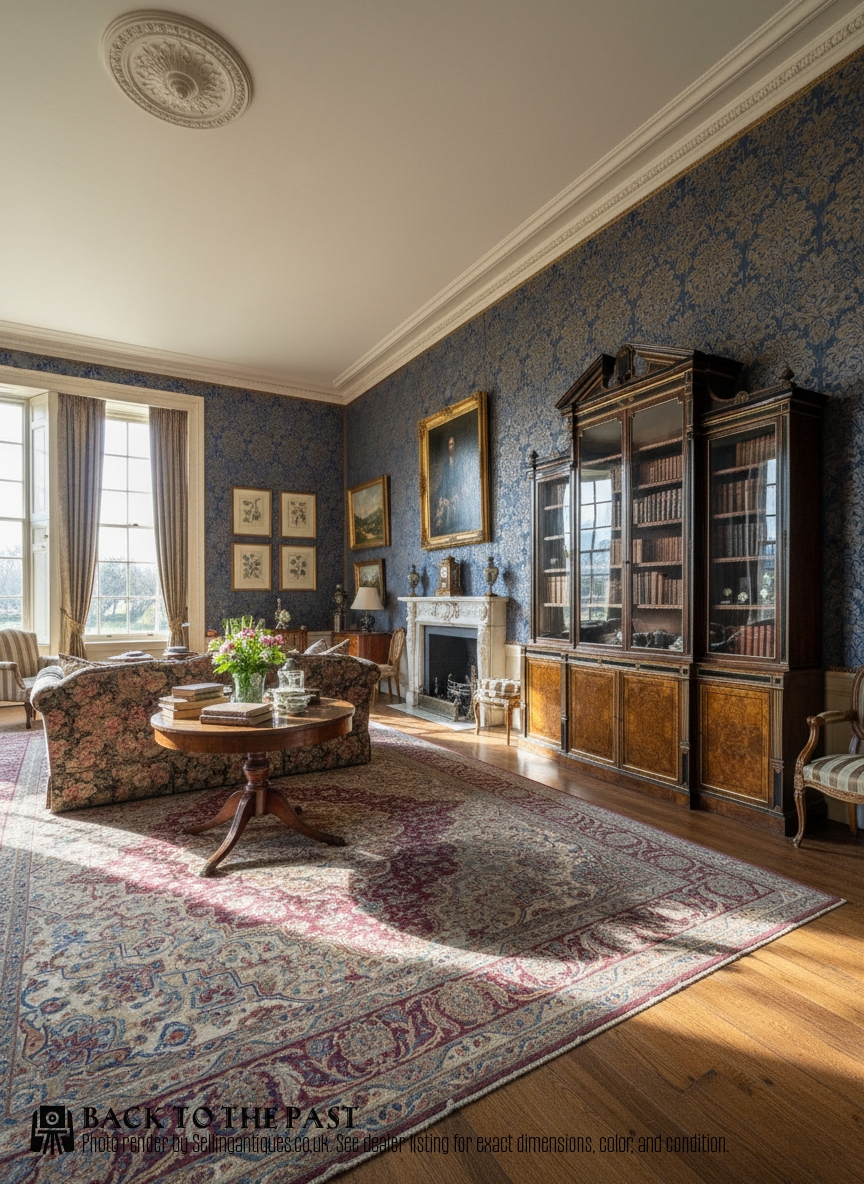
These pieces function well in contemporary interiors by providing vertical storage and display space with a strong visual anchor. Their dark finishes pair easily with various wall colours.
Many styles, from narrow open shelves to glass fronted display cabinets, fit living rooms and studies. Proper placement avoids direct sunlight to protect walnut veneers and velvet linings.
How should I care for ebonised and walnut surfaces?
Maintenance involves dusting with a soft cloth and avoiding silicone polishes that can build up on ebonised finishes. Keeping pieces away from extreme temperature fluctuations prevents veneer cracking.
Waxing walnut surfaces periodically preserves the timber's lustre. Gentle care ensures the original ebonising and grain patterns remain intact.