
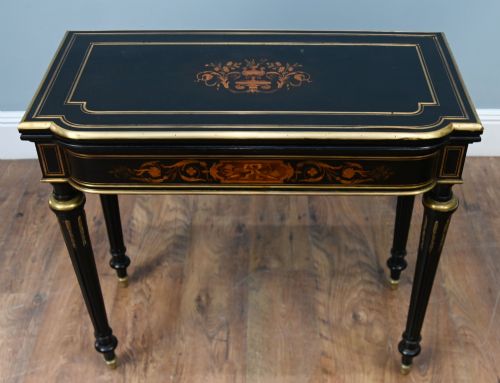
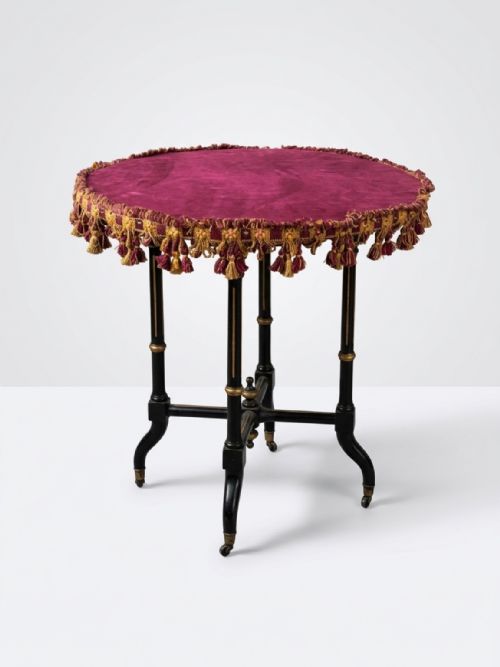
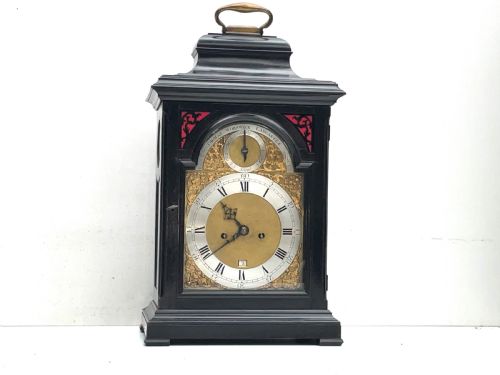
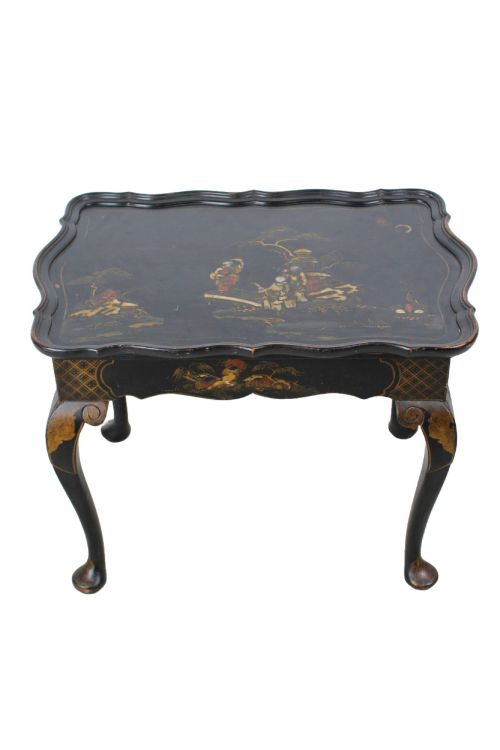
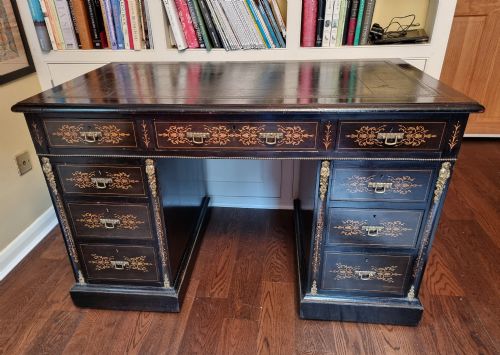
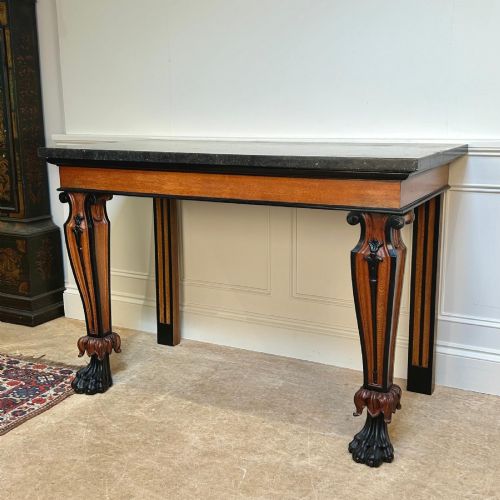
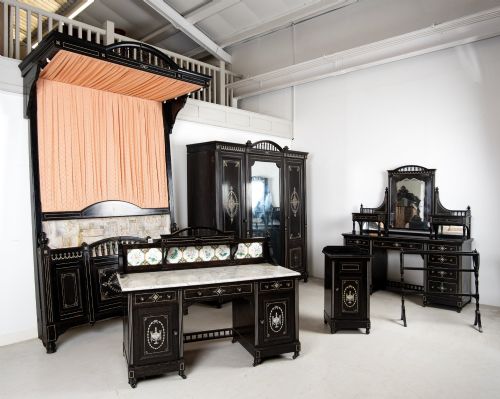
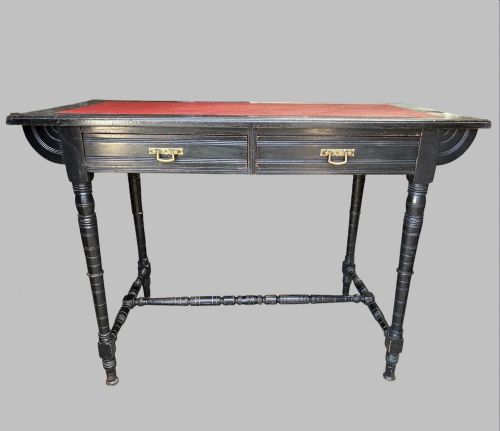
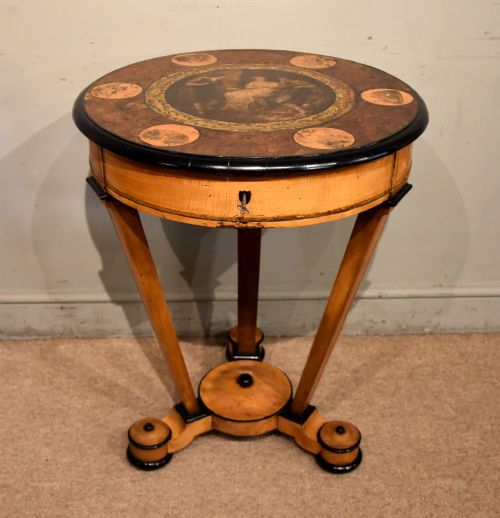
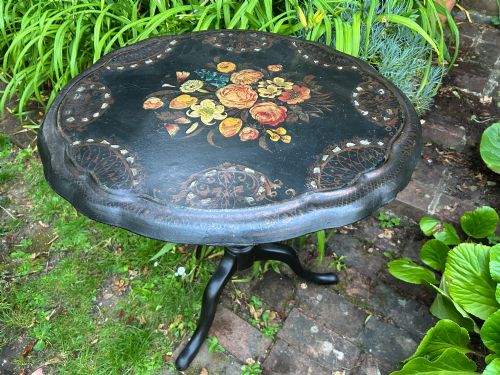
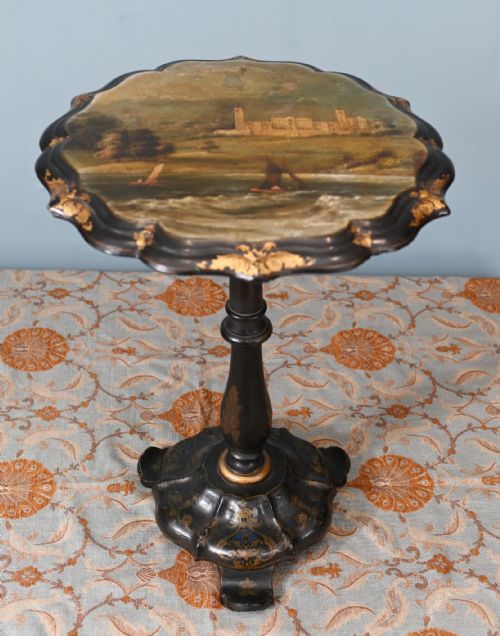
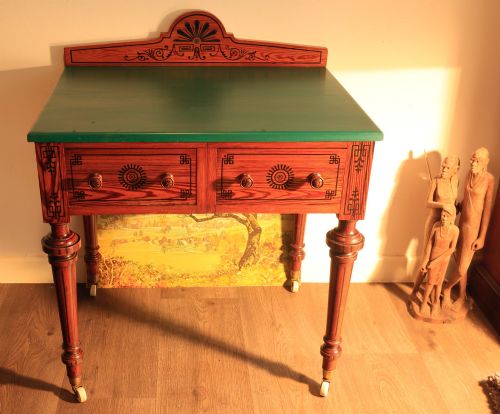


Ebonised Top Table
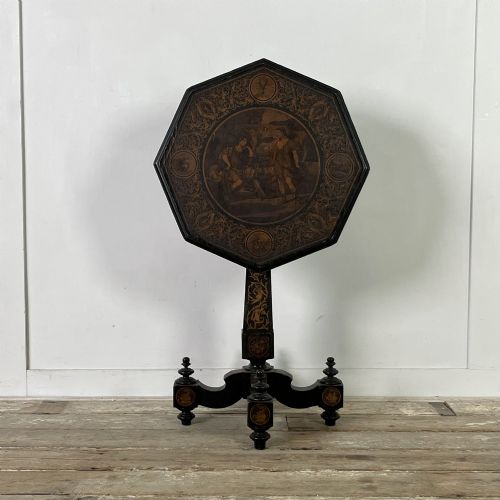
An ebonised top table brings rich dark polish and contrasting grain into a room, spanning Victorian and earlier European cabinetwork.
Ebonised Top Table
An ebonised top table surfaces through centuries of dark-finished woodwork, appearing in Victorian, Regency, and seventeenth-century forms.
Buyers seeking an ebonised top table encounter occasional, tilt-top, console, and centre pieces finished with simulated ebony or genuine dark timber.
These items draw on diverse stylistic roots, from Aesthetic Movement designs to French guéridons and Anglo-Indian craftsmanship.
Materials and Technique
Woodworkers utilised native and exotic timbers, applying ebonising stains or finishes to achieve deep black surfaces alongside contrasting brass, mother-of-pearl, or ivory inlay.
Many surfaces integrate heavy inset marble, leather writing inserts, or gilt bronze mounts supported on turned, bobbin-twist, or pedestal bases.
Listings feature ebonised top tables incorporating marble, leather, glass, and brass across seventeenth, eighteenth, and nineteenth-century periods.
Judging the Standard
Quality rests in the crispness of carved details, the stability of inlaid brass or marquetry, and the depth of the dark polish across the timber surface.
Finer examples maintain original mounts, unblemished marble or leather inserts, and structurally sound joinery that withstands heavy daily placement.
Edwards and Roberts·Desbois and Wheeler·Jonathon Lowndes·Henry Jones·Phillips Brothers·Paul Sormani·Joseph Norris·Lamb of Manchester
The Ebonised Top Table Glossary
- Ebonised
- Wood finished with a dark stain or paint to imitate costly solid ebony. It became popular during the nineteenth century for dramatic contrast.
- Guéridon
- A small French table supported by one or more columns, often featuring a circular marble top. These frequently incorporate ebonised frames.
- Tilt-top
- A table mechanism allowing the surface to pivot vertically when not in use. This clever design saved space in period rooms.
- Ormolu
- Gilded bronze mounts applied to furniture edges and legs. French workshops utilised these for decorative emphasis.
Ebonised Top Table: Frequently Asked Questions
How do I care for an ebonised surface?
Maintain the deep dark finish by dusting regularly with a soft, dry cloth. Avoid harsh chemical cleaners that can dull the historical polish.
Keep wooden tables away from direct heat sources and strong sunlight to prevent the timber and finish from drying out or cracking over time.
Where were these tables used?
Period homes utilised these tables in drawing rooms, libraries, and hallways as display surfaces, games tables, or writing desks. Smaller wine and occasional tables moved easily around rooms for tea or reading.
Console and centre tables anchored grander interior schemes, often positioned against walls or in the middle of reception spaces.
How do I distinguish nineteenth-century examples?
Examine the underside construction, timber movement, and hand-cut joinery typical of nineteenth-century cabinetmaking. Victorian and Regency pieces often combine ebonised frames with walnut, mahogany, or papier-mâché.
Look for period specific hardware, such as brass castors or subtle hand-applied patination within the grain.