
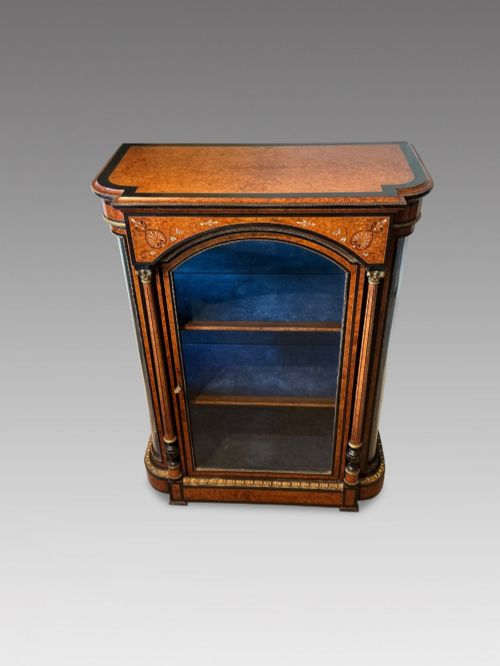
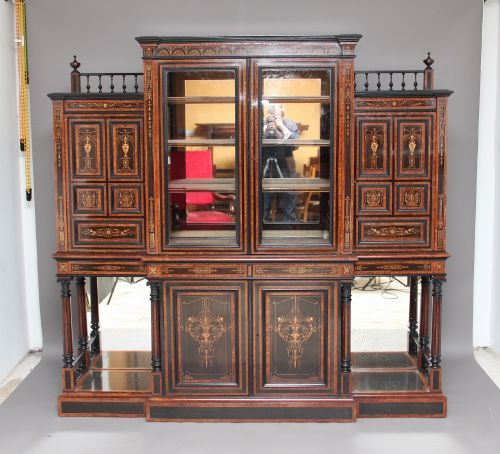
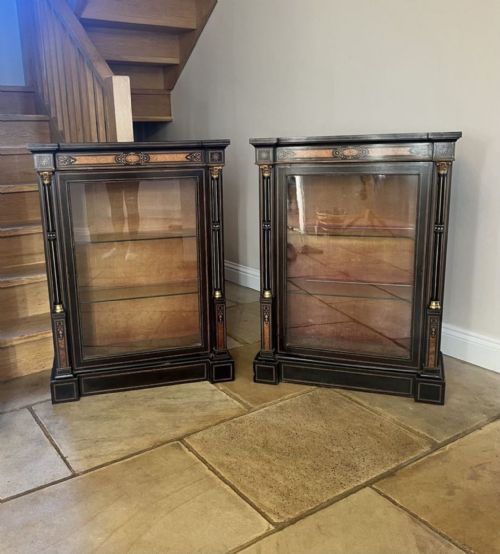
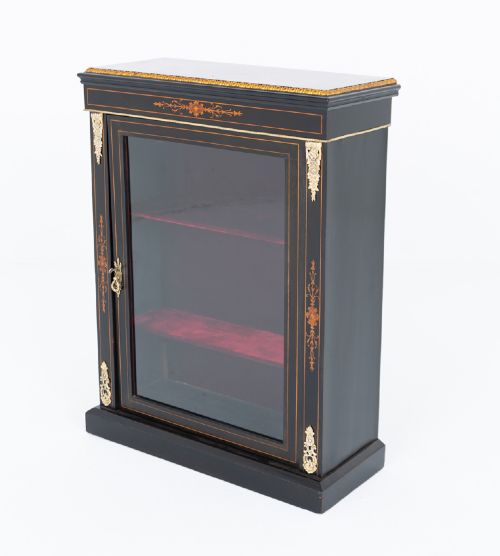


Ebonised Side Bookcase
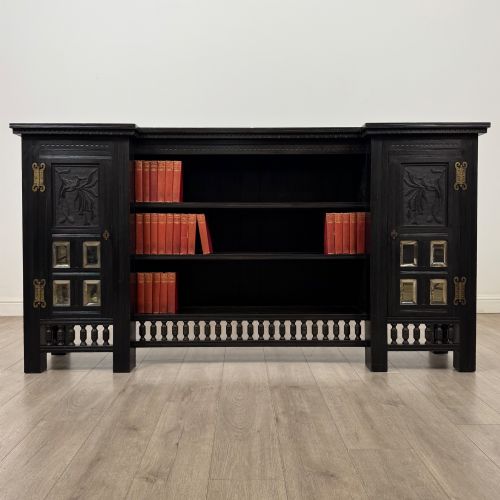
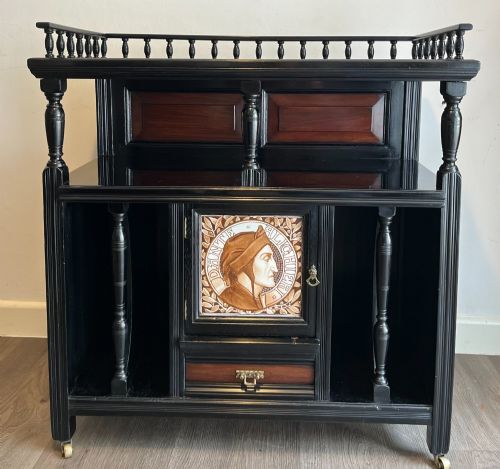
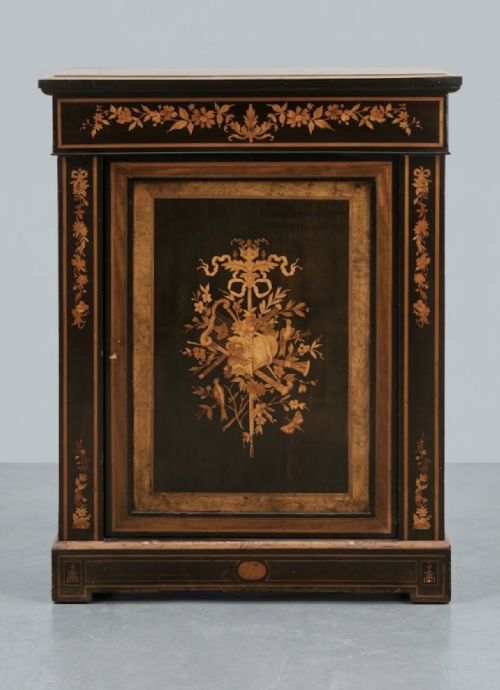
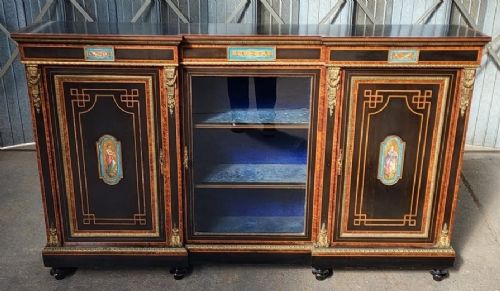
These ebonised side bookcase pieces are striking Victorian display furniture combining dark wood and fine metalwork.
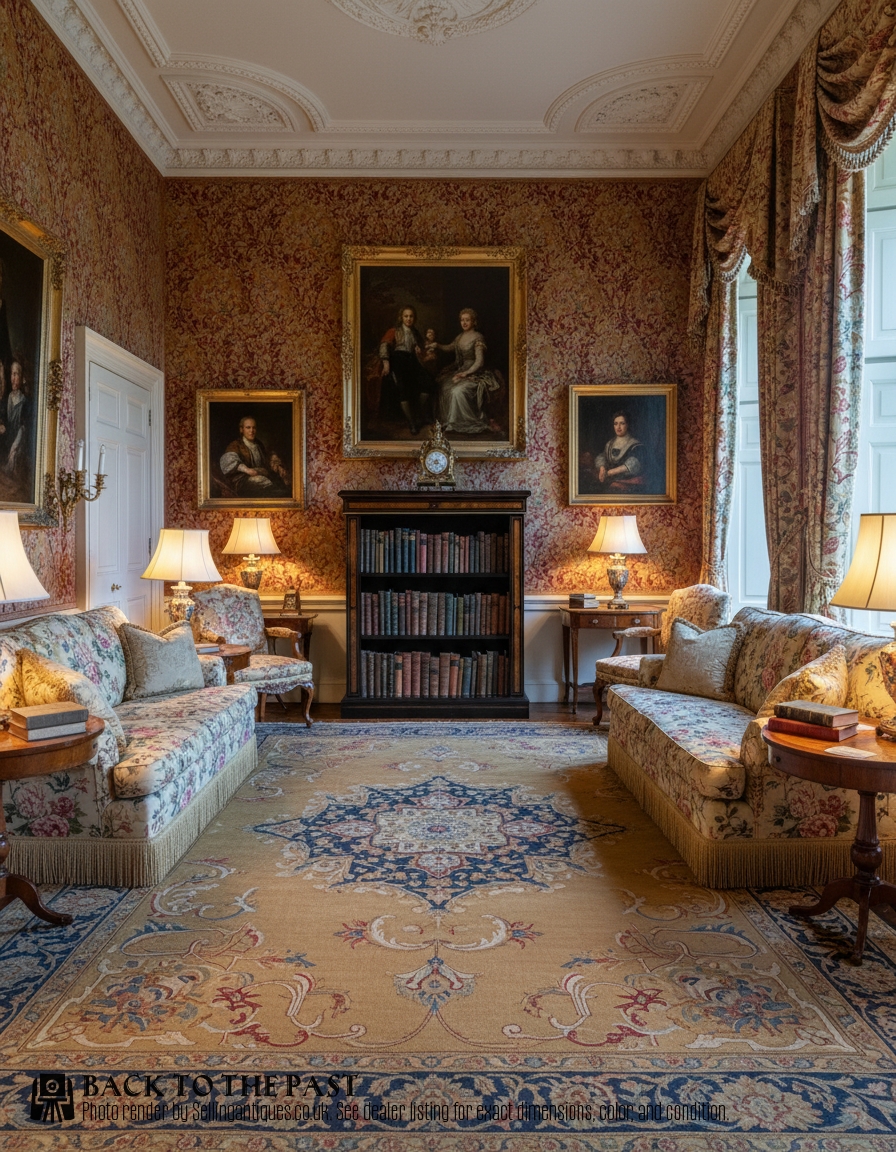
Ebonised Side Bookcase
The ebonised side bookcase category covers nineteenth-century display and pier cabinets designed for formal reception rooms. Buyers encounter Victorian pieces featuring glazed doors and timber finished in imitation of ebony.
Most examples hail from the Victorian era and the nineteenth century, spanning decades from eighteen-fifty to eighteen-ninety. Formats range from narrow pier cabinets to three-door credenzas and open bookcases.
Stylistic influences draw heavily on French Napoleon III taste alongside the domestic Aesthetic Movement. These diverse forms share a dark, polished carcase tailored for displaying ceramics and small volumes.
How they were made
Construction relies upon ebonised wood as the primary ground, frequently paired with walnut, coromandel, or amboyna for contrasting panels. Timber frames support glass panels designed to showcase the interior contents.
Decorative detailing employs brass and ormolu mounts, intricate marquetry inlay, and occasionally inset porcelain plaques or boulle work. Cabinetmakers utilised gilt highlights and velvet linings to finish the interior display spaces.
Listings feature Victorian and nineteenth-century pieces incorporating glass, brass, ormolu, porcelain, walnut, and velvet alongside ebonised wood.
What varies in quality
The refinement of the ormolu mounts and the precision of the brass inlay distinguish standard production from masterwork output. Superior examples display crisp chasing on metal elements and perfectly fitted glazed doors.
Choice of secondary timbers and the depth of the ebonised finish affect the overall presence of the cabinet. Finer pieces incorporate costly materials like coromandel and Sevres plaques rather than simpler marquetry.
Lamb of Manchester
The Ebonised Side Bookcase Glossary
- Ebonised wood
- Timber stained or painted to resemble genuine ebony. This finish gained immense popularity during the Victorian period for formal display furniture.
- Ormolu
- Gilded bronze used for decorative mounts and furniture trim. Makers applied it lavishly to highlight corners and door frames.
- Pier cabinet
- A narrow cabinet designed to stand against the wall between windows. These pieces often feature glass doors to protect fragile ceramics.
- Boulle
- Marquetry technique utilising brass and tortoiseshell inlaid in intricate patterns. It derives from the seventeenth-century French tradition revived under Napoleon III.
- Sevres plaques
- Painted porcelain panels inset into cabinet doors. They add distinct colour and prestige to nineteenth-century display pieces.
Ebonised Side Bookcase: Frequently Asked Questions
Where did these cabinets go in the house?
These pieces sat in formal reception rooms and parlours where guests gathered. Their glass doors protected prized books and decorative ceramics from dust.
In Victorian interiors, pier cabinets occupied narrow wall spaces between large windows. Larger three-door cabinets served as focal points along main walls.
How do I spot a Napoleon III piece?
Napoleon III pieces often feature rich boullework or elaborate ormolu mounts on dark ebonised surfaces. French influence guided the ornate decoration seen on these specific cabinets.
Maker attribution also points to continental workshops that exported luxury furniture to Britain. The aesthetic prioritises visual drama and sumptuous surface contrast.
What is the difference between a pier cabinet and a bookcase?
Pier cabinets feature glazed doors and narrower proportions built to fit specific architectural wall spaces. Open bookcases provide accessible shelving for working libraries.
Many examples blend both functions by offering enclosed display space alongside book storage. The ebonised finish unites these varied formats under Victorian taste.
How do I care for ebonised wood?
Keep ebonised furniture away from direct sunlight and steady heat sources to protect the dark finish. Dust regularly with a soft cloth and avoid modern aerosol polishes.
Maintain stable humidity levels in the room to prevent timber movement. Gentle care preserves the delicate ormolu mounts and inlaid brass details.