


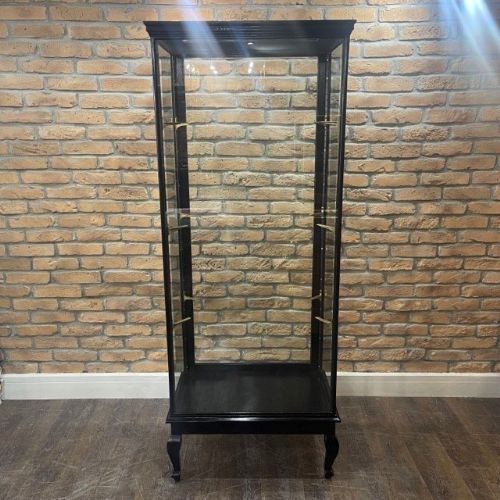


Ebonised Shop Display Case
An ebonised shop display case brings dark timber frames and clear glass together to showcase small wares with sharp period distinction.
Ebonised Shop Display Case
An ebonised shop display case is a commercial cabinet designed to present retail stock behind glass, utilising dark blackened wood surfaces to draw the eye toward the contents. These display cabinets date from the nineteenth century through the early twentieth century, spanning Victorian, Edwardian, and Art Deco periods.
You are most likely to encounter countertop versions and vertical tower cabinets from the 1920s on this page. These forms originate from commercial spaces and retail environments, constructed to sit upon counters or stand independently within a shop.
Commercial makers such as Quincy Showcase Works and Sage & Co produced specialised shop fittings during this era. The selection includes glazed show cases and brass mounted examples built for robust display use.
How they were made
Makers constructed these cabinets using wood finished with an ebonising process to simulate expensive ebony timber. Glass panels and mirrors were fitted into the frames to maximise light reflection around the displayed items.
Brass fittings and metal hardware secured the doors and structural joints, providing both reinforcement and decorative contrast against the dark timber. Some interiors featured fabric or velvet linings to cushion merchandise.
Listings feature items from the 1900s, 1910s, and 1920s, incorporating glass, brass, mirror, and velvet.
What varies in quality
Quality rests in the architectural proportion of the timber frame and the refinement of the brass mounting. Cabinets bearing maker plates or originating from notable commercial workshops hold greater documentary interest.
The integrity of the original ebonised finish and the clarity of the large glass panes dictate the visual impact of the piece. Purpose-built commercial pieces show heavier joinery compared to lighter domestic adaptations.
Quincy Showcase Works·Sage & Co
The Ebonised Shop Display Case Glossary
- Ebonised wood
- Timber treated with stain, dye, or paint to achieve the dense black appearance of ebony. This finish became popular during the nineteenth and early twentieth centuries for furniture and shop fittings.
- Countertop display cabinet
- A low commercial cabinet designed to rest upon a shop counter for customer browsing. These units place small merchandise at eye level.
- Tower cabinet
- A tall, vertical display case maximising vertical floor space in a retail environment. They incorporate multiple glass sides and shelves for comprehensive viewing.
- Brass mounting
- Decorative or structural metalwork cast in brass and applied to cabinet exteriors. This hardware provides mechanical strength and visual contrast.
Ebonised Shop Display Case: Frequently Asked Questions
What is an ebonised shop display case?
An ebonised shop display case is a glazed commercial cabinet featuring dark blackened wood framing designed for retail merchandise. These pieces date from the nineteenth and early twentieth centuries.
They were built by firms like Quincy Showcase Works and Sage & Co to showcase stock securely while offering maximum visibility through glass panels.
How were these cabinets used?
Retailers utilised these cabinets on countertops or as tower units on the shop floor to exhibit small wares and valuable goods. The glass and mirror elements protected stock from dust and handling while keeping items in plain view.
Interior velvet or fabric linings often cushioned delicate goods placed inside the display compartments.
How do I date an ebonised display case?
Dating relies on stylistic markers associated with periods such as Victorian, Edwardian, and Art Deco from the nineteenth century up to the 1920s. Construction techniques, brass hardware styles, and maker marks assist in establishing the age.
Commercial pieces from the early twentieth century often display functional joinery characteristic of retail fittings of that decade.
Where should I place a tower cabinet?
A tower cabinet requires stable floor space and sufficient clearance to open its glazed doors safely. Because these vertical cases feature glass on multiple sides, positioning them near natural light sources enhances internal visibility.
Ensure the surrounding floor level is even to support the height and weight of the timber and glass structure.