



Ebonised Pier Glass Cabinet
An ebonised pier glass cabinet brings dramatic dark timber, gilt mounts and mirror glass to a drawing room.
Ebonised Pier Glass Cabinet
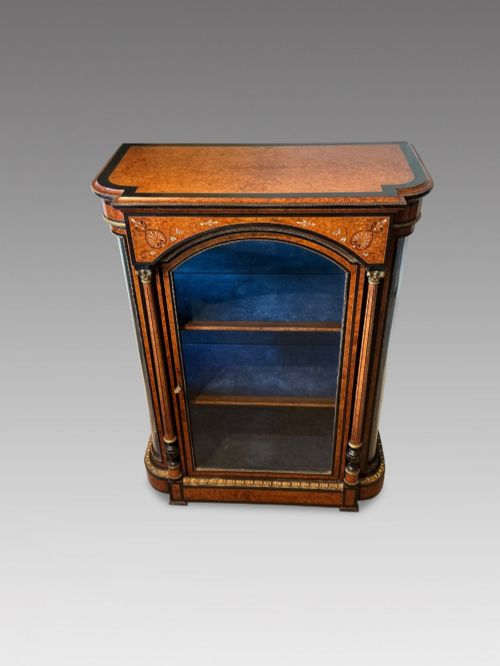
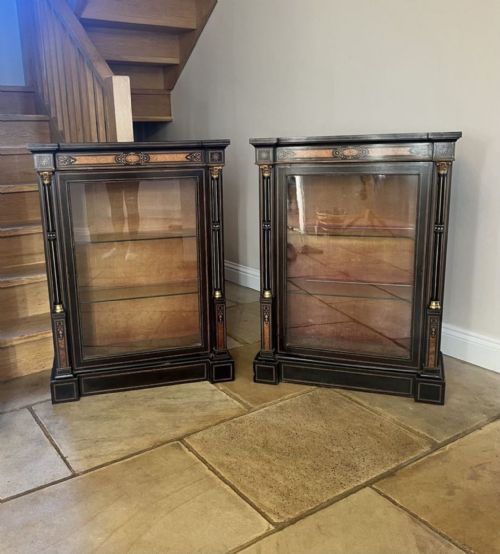
An ebonised pier glass cabinet is a display piece designed to sit against the wall between windows, uniting dark wood with glazed doors and mirrored elements. These pieces date principally from the Victorian era, spanning the mid to late nineteenth century.
Most examples encountered here belong to the Victorian period, frequently incorporating French Napoleon III influences or the refined lines of the Aesthetic Movement. They typically function as display cabinets or side cabinets for precious objects.
The form combines rich timbers with glass panels to showcase ceramics and porcelain. Surviving pieces demonstrate the varied tastes of nineteenth-century cabinet makers working with blackened finishes.
How they were made
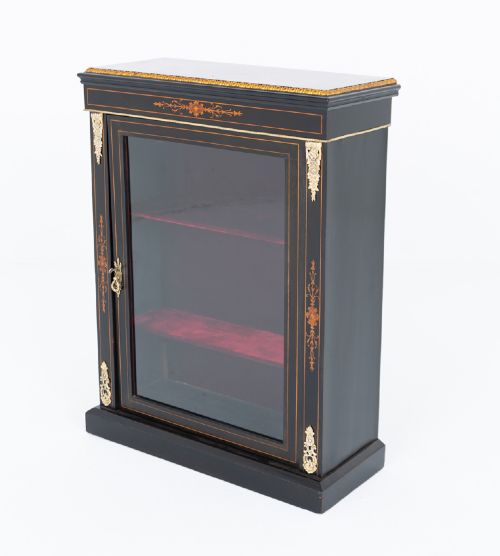
The construction relies upon ebonised wood, often paired with contrasting exotic veneers such as amboyna and burr walnut. Cabinet makers achieved the dark, dense finish through staining and polishing fruitwood or other timbers.
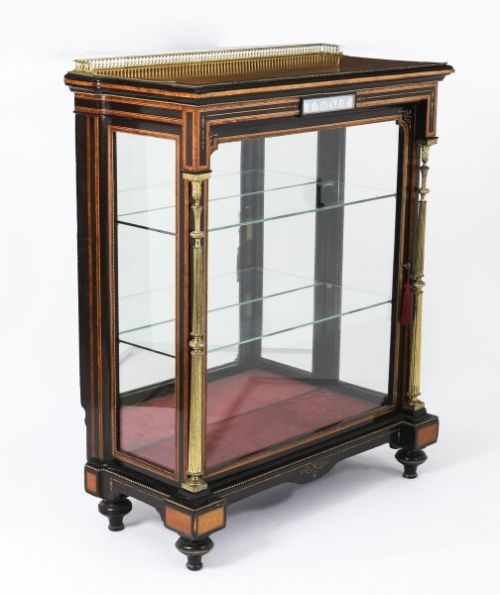
Ornaments of cast or chased ormolu and brass provide metallic contrast against the black surfaces. Glazed doors protect the interior, sometimes complemented by inlaid stringing and porcelain plaques.
Victorian cabinet makers occasionally hid secret compartments behind porcelain plaques to amuse suspicious owners.
What varies in quality
Quality rests upon the precision of the timber inlay and the crispness of the ormolu mounts rather than the mere presence of decoration. Finer pieces employ superior amboyna or burr walnut veneers alongside carefully executed stringing.
The integration of bespoke elements like hand-painted porcelain plaques or specific Sevres plaques elevates certain cabinets. Structural refinement in the glazed doors and the depth of the ebonising distinguish the best work from standard production.
The Ebonised Pier Glass Cabinet Glossary
- Ebonised wood
- Timber stained and polished to resemble expensive ebony. This finish became especially popular during the Victorian period for display furniture.
- Ormolu
- Gilt-bronze mounts applied for decorative effect. The metal is cast and chased before being gilded.
- Pier glass
- A tall mirror designed to hang on the wall space between windows. It often pairs with a matching low cabinet beneath.
- Aesthetic Movement
- A late nineteenth-century design style emphasising visual beauty. It favoured refined lines and artistic craftsmanship over heavy historicism.
Ebonised Pier Glass Cabinet: Frequently Asked Questions
What is a pier glass cabinet?
A pier glass cabinet is a nineteenth-century display piece designed for the narrow wall space between windows. It combines shelving behind glass doors with polished timber surfaces.
These cabinets served to display porcelain, small sculptures and curiosities in Victorian drawing rooms. Their reflective glass and metallic mounts helped to bounce natural light around the room.
How do I date an ebonised cabinet?
Dating relies on stylistic markers such as Victorian proportions, Aesthetic Movement linearity or French Napoleon III influences. The use of specific secondary timbers and veneer combinations also helps narrow the decade.
Most surviving examples date from the mid to late nineteenth century, specifically between eighteen fifty and eighteen eighty. Construction methods and hinge types offer further clues to their exact age.
Where should I place one?
These cabinets suit reception rooms, libraries or hallways where their dark timber and glass panels can be appreciated. They work particularly well against plain walls that highlight the ebonised finish.
Keep them away from direct sunlight and strong heat sources to protect the delicate amboyna veneers and polish. Ensure the floor is level so the glazed doors hang and close correctly.
How do I clean ebonised wood?
Dust the surface regularly with a soft, dry cloth to prevent dirt accumulation. Avoid harsh chemical sprays or silicone polishes that can damage the historical polish.
For occasional maintenance, use a minimal amount of high-quality wax suitable for antique furniture. Apply it sparingly and buff gently with a clean cloth.