




Ebonised Inlaid Vitrine
An ebonised inlaid vitrine brings French and Victorian display to a room, offering glazed cabinets and tables to show off collections.
Ebonised Inlaid Vitrine
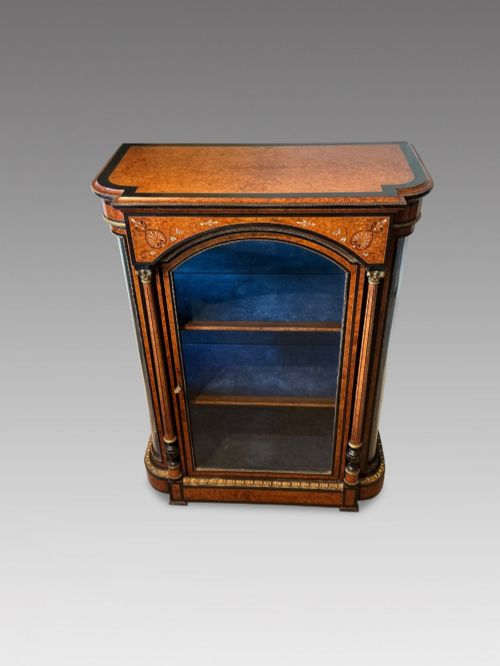
An ebonised inlaid vitrine is a glazed display piece, commonly found as a pier cabinet or bijouterie table from the nineteenth century. These cabinets house small treasures behind glass panels, set within dark polished wooden frames.
The pieces on this page span the Victorian and Napoleon III periods, encompassing French Boulle work and Aesthetic Movement designs. Buyers encounter display cabinets alongside low pier cabinets and glazed tables intended for drawing rooms.
How they were made
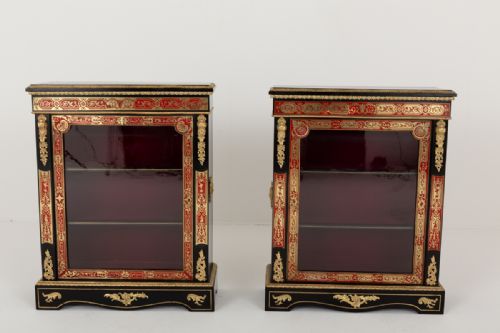
Cabinet makers constructed these pieces using ebonised wood as a dark ground, applied to bases of walnut or other timbers. Surfaces received elaborate brass and tortoiseshell inlays arranged in floral or geometric motifs.
Mounts in cast or chased ormolu frame the glass doors and accent the corners, while interiors are frequently lined with velvet. Amboyna veneer and burr walnut appear alongside the primary dark surfaces to provide textural contrast.
What varies in quality
Quality rests in the precision of the brass inlay and the depth of the ebonised finish. Finer examples display crisp, intricate metalwork set flush into the timber without gaps.
The choice of secondary woods and the weight of the ormolu mounts dictate the tier of the piece. Heavy, detailed mounts and refined internal velvet linings separate standard production from exceptional examples.
The Ebonised Inlaid Vitrine Glossary
- Ebonised wood
- Timber treated to imitate ebony, producing a dense black finish popular in nineteenth century furniture. This dark ground highlights metallic inlays.
- Boulle work
- A technique of marquetry using brass and tortoiseshell, developed in France. It creates elaborate patterned surfaces across cabinet doors.
- Vitrine
- A glass cabinet designed for displaying porcelain, curiosities, or medals. The glazed sides and front maximise visibility.
- Pier cabinet
- A low display cabinet designed to fit against the wall space between windows. These pieces often feature a single glazed door.
- Ormolu
- Gilded bronze used for decorative mounts and feet on nineteenth century furniture. It adds a bright metallic accent to dark timbers.
- Bijouterie table
- A glass-topped table used for displaying small ornaments and jewellery. These tables elevate the collection to eye level.
Ebonised Inlaid Vitrine: Frequently Asked Questions
What is an ebonised inlaid vitrine?
An ebonised inlaid vitrine is a nineteenth century display cabinet featuring a blackened wood finish and decorative metal or tortoiseshell inlays. These glazed pieces were designed for parlours and drawing rooms to exhibit small decorative items.
Cabinets range from low pier units to large display pieces and table vitrines. The style draws heavily on French Napoleon III and English Victorian tastes.
How do I date a vitrine?
Dating relies on stylistic markers such as the presence of Aesthetic Movement motifs, French Boulle work, or specific Victorian proportions. The materials, including amboyna veneer and ormolu mounts, help narrow the period.
Most examples date from the mid to late nineteenth century, specifically between eighteen fifty and eighteen eighty. Construction methods inside the cabinet also provide clues to the decade of manufacture.
How do I care for ebonised wood?
Care involves dusting gently with a soft, dry cloth to prevent scratching the polished dark surface. Avoid modern spray polishes that can build up a residue over time.
Keep the room at a stable humidity level to protect the timber and prevent the brass inlays from lifting. Wax can be applied sparingly if the ebonised finish loses its deep sheen.