
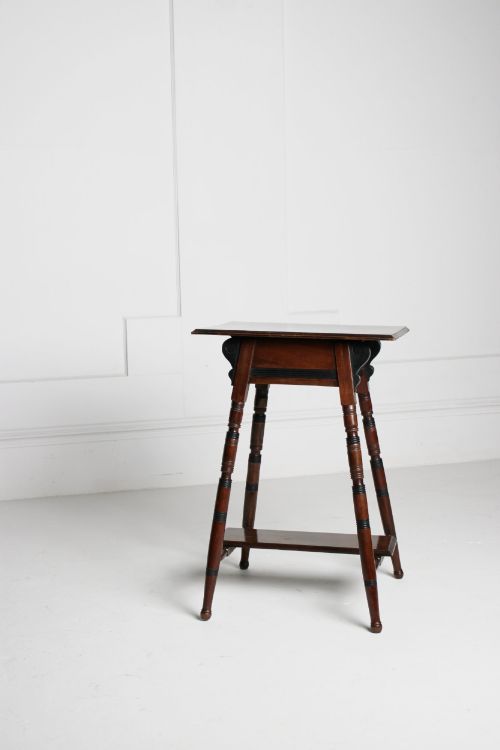
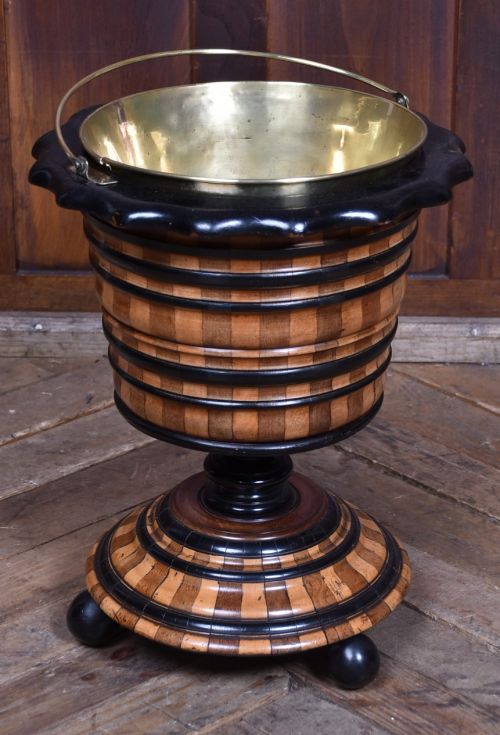


Ebonised Pedestal Urn
These ebonised pedestal urn pieces range from Victorian neoclassical plant stands to Chinese export jardiniere tables, offering a dark and dramatic display for interiors.
Ebonised Pedestal Urn
When you search for an ebonised pedestal urn, you encounter various decorative supports and containers designed to elevate plants, vases, or decorative objects within a room. The selections include plant stands, occasional tables, lamp tables, and jardiniere stands rather than strictly single-form vessels.
The versions most frequently met on this page span the nineteenth century and the Victorian era, alongside early twentieth-century examples. These pieces combine darkened wood surfaces with contrasting materials such as marble inserts and brass liners.
Origins stretch across English, French, Dutch, and Asian workshops, encompassing styles from Victorian neoclassical to Chinese export and Arts and Crafts. Such variety reflects how makers across different traditions utilised darkened wood to create formal display furniture.
How they were made
Makers utilised various timbers, including walnut, mahogany, and mixed hardwoods, frequently applying an ebonised finish to imitate more costly exotic woods like ebony. This black surface treatment often pairs with carved hardwood details or smooth turned columns.
Inlay and inset panels of rouge marble provide durable, contrasting top surfaces designed to withstand moisture from plants and vases. Metal elements such as brass liners and bronze mounts add functional structure and decorative weight to the timber forms.
Available forms span the nineteenth century and early twentieth century, including Dutch teestoofs and Japanese plant stands.
What varies in quality
Quality reveals itself in the precision of the hand-carved ornamentation and the selection of secondary materials, such as heavy rouge marble tops or cast brass components. Pieces from established makers or distinct retail houses exhibit tighter joinery and more ambitious turnings.
The integrity of the ebonised surface and the choice of underlying timber determine the visual depth of the piece. Superior examples maintain crisp architectural details and solid structural proportions across pedestals and columns.
Druce & Co London·Liberty of London
The Ebonised Pedestal Urn Glossary
- Ebonised wood
- Timber treated with stain, paint, or chemical processes to simulate the dark, dense appearance of ebony. This finish became particularly popular during the Victorian period for formal display pieces.
- Jardiniere stand
- A tall piece of furniture designed specifically to hold a plant container or flower bowl. These stands often feature waterproof liners or inset marble tops to protect the wood.
- Neoclassical
- A style drawing inspiration from classical antiquity, characterised by formal symmetry, columns, and restrained ornamentation. It appears frequently in nineteenth-century pedestals and urn displays.
- Chinese export
- Goods manufactured in China specifically for Western markets, often combining traditional Asian woodworking techniques with European furniture forms. These pieces frequently incorporate carved hardwood and marble.
Ebonised Pedestal Urn: Frequently Asked Questions
What is an ebonised pedestal urn?
It is a decorative furniture piece or vessel finished in a dark, ebony-like stain, designed to display plants, lamps, or objects.
Such items serve as architectural accents within a room, lifting decorative items to eye level.
How do I clean an ebonised surface?
Dust gently with a dry, soft cloth to prevent scratching the dark finish. Avoid chemical polishes that can dull or damage the ebonised treatment over time.
Keep these wooden items away from direct sunlight and excessive moisture.
Where were these pieces used?
They stood in nineteenth-century drawing rooms, halls, and parlours to display imported plants, bronze urns, or table lamps. Their elevated design brought greenery and decorative arts into the main living spaces.
Today, they function similarly as sculptural plant stands or lamp tables.
How do I identify Victorian pieces?
Victorian examples often display dense hardwood construction, hand-turned columns, and detailed carving influenced by neoclassical or oriental styles. They frequently incorporate marble inserts or brass liners.
Construction methods typically show period-specific joinery and materials consistent with nineteenth-century British and European cabinetmaking.