


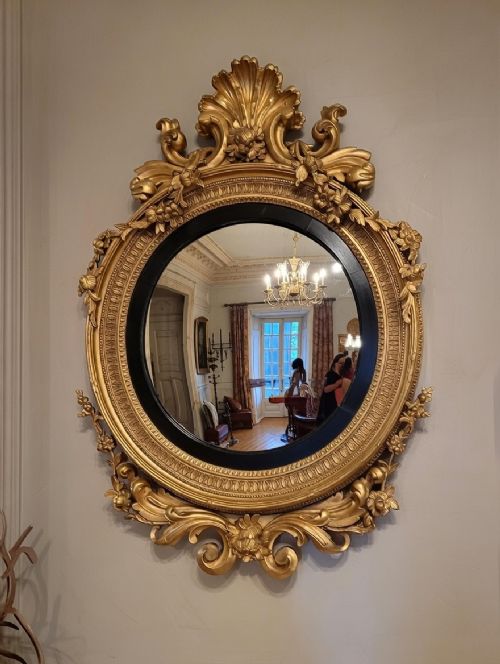
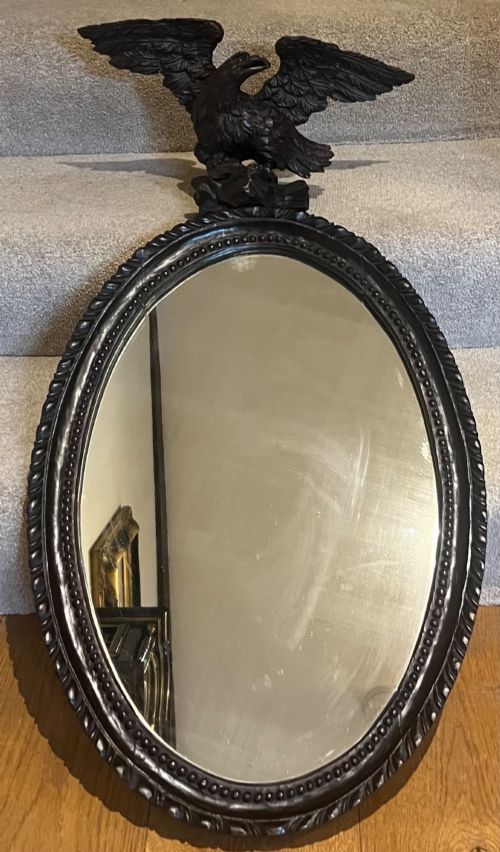
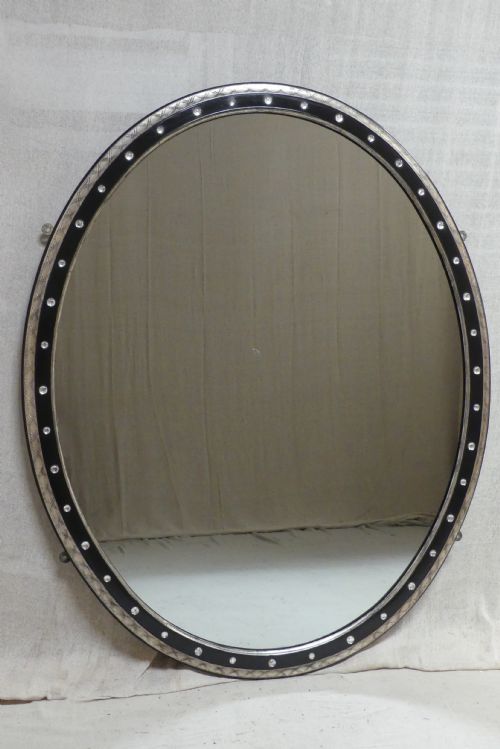


Ebonised Oval Mirror
These ebonised oval mirrors combine deep dark frames with gleaming glass, bringing a striking focal point to any wall.
Ebonised Oval Mirror
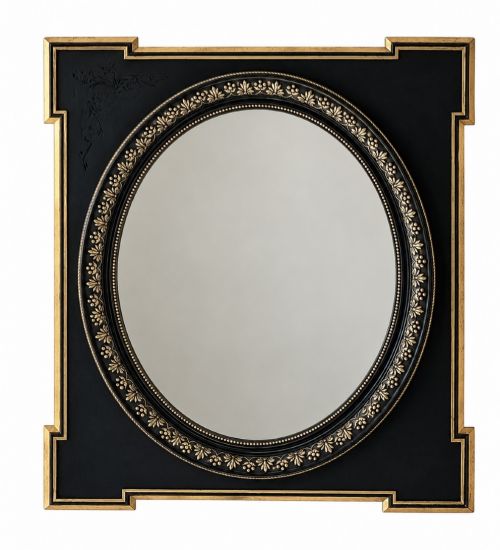
An ebonised oval mirror is a wall or dressing table glass framed in dark, treated timber, often highlighted with parcel-gilt or silver details. When you search for an ebonised oval mirror, you encounter pieces spanning the nineteenth century, including Regency, Victorian, and French Napoleon III designs.
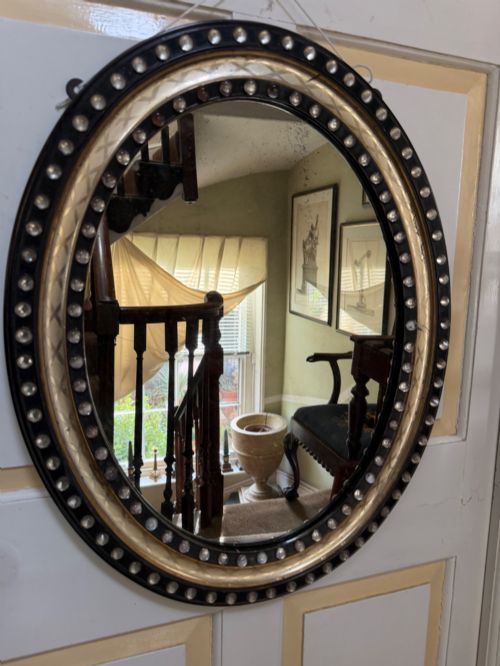
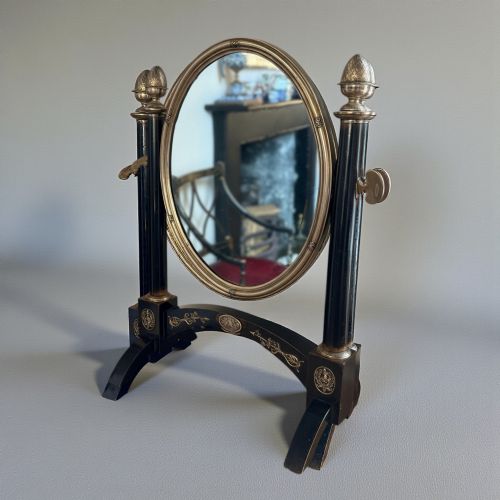
Most pieces on this page lean towards the nineteenth century, particularly the 1870s and 1880s, alongside earlier Regency influences. The forms range from large-scale wall mirrors with faceted glass jewels to smaller toilet glasses intended for daily use.
How they were made
The makers of these pieces typically used wood treated to achieve a dense, black ebonised finish, often layered over gesso carved into decorative motifs. Artisans then applied parcel-gilt, silver leaf, or parcel silver-gilt to highlight specific carved areas, creating a sharp contrast against the dark background.
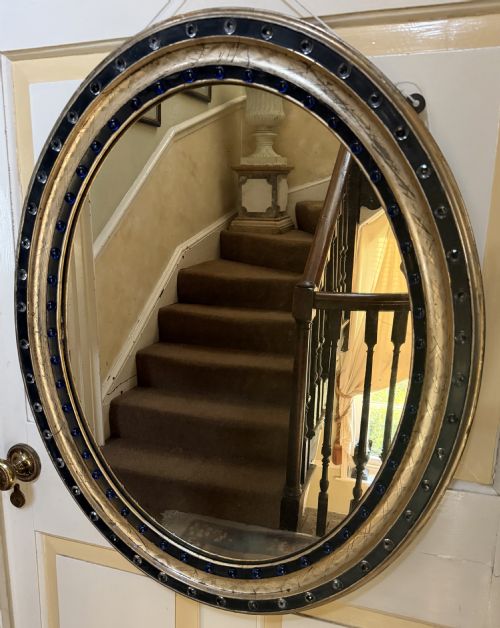
Many frames incorporate applied glass decoration, such as clear faceted glass jewels and cobalt blue glass cabochons, set directly into the moulded timber. The mirror plates themselves are fitted within these ornate surrounds, supported by traditional backing construction suitable for wall hanging or table stands.
Ebonised Oval Mirror Retail Price Guide 2026
Typical asking prices for ebonised oval mirror among the pieces listed under this phrase on Sellingantiques today, from the lower quarter to the upper quarter. They describe what is for sale here now, not the wider market.
Listings feature pieces from the nineteenth century, including the 1870s and 1880s, alongside Regency and French Empire styles.
What varies in quality
Quality in these mirrors rests on the crispness of the carved gesso work and the depth of the ebonised finish. Finer examples display meticulous application of parcel-gilt or silver leaf, where the metallic highlights catch the light precisely against the darkened wood without bleeding into the dark ground.
The inclusion of specialist decorative elements, such as faceted glass jewels and cobalt blue cabochons, elevates the ambition of the piece. The overall balance of the oval frame and the preservation of the original mirror plate further distinguish the more accomplished items in the range.
The Ebonised Oval Mirror Glossary
- Ebonised wood
- Timber stained or painted to imitate expensive ebony. This dark finish became popular in nineteenth-century revival styles.
- Parcel-gilt
- A decorative technique where only certain parts of an object are gilded with gold or silver leaf. It creates a striking contrast against a dark ebonised background.
- Gesso
- A plaster-like mixture applied to wood frames and carved into intricate patterns before gilding or painting. It provides a smooth base for fine detail work.
- Cabochon
- A gemstone or piece of coloured glass shaped and polished rather than faceted. In these mirrors, cobalt blue cabochons add spots of intense colour to the frame.
- Toilet mirror
- A smaller mirror designed to sit on a dressing table or chest of drawers. These pieces often feature pivoting frames supported by upright arms.
Ebonised Oval Mirror: Frequently Asked Questions
Where should I hang an ebonised oval mirror?
These mirrors work well in entrance halls, above mantelpieces, or in bedrooms where the dark frame can anchor a lighter wall colour. The vertical sweep of the oval shape helps balance rooms with high ceilings.
Ensure the wall fixings match the weight of the frame, particularly for larger nineteenth-century examples that incorporate heavy glass and gesso decorations.
How do I care for ebonised wood?
Dust the frame gently with a dry, soft cloth to prevent particle buildup. Avoid using modern chemical polishes, which can damage the historic ebonised finish and any parcel-gilt details.
Keep the mirror away from direct sunlight and damp environments to protect the wood and the silvering on the glass plate.
What is the difference between Regency and Victorian pieces?
Regency mirrors often display classical restraint with clean lines and balanced proportions inspired by ancient Greece and Rome. They frequently utilise bright gilding alongside dark accents.
Victorian and later revival pieces tend towards heavier ornamentation, drawing on French Rococo or Neoclassical styles with elaborate carved gesso and applied glass jewels.
Are these mirrors suitable for daily use?
Most pieces function well as everyday mirrors, though antique glass may show minor foxing or age spots. These natural signs of age do not hinder reflection and often add character to the piece.
Ensure that dressing table models are placed on stable surfaces and that wall-mounted versions are secured with appropriate professional hardware.