






Ebonised Inlaid Desk
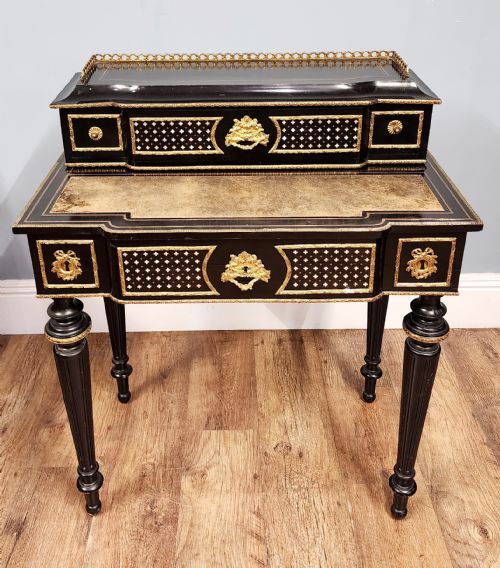
An ebonised inlaid desk brings a striking dark finish and intricate metallic or timber decoration to a study, drawing room or library.
Ebonised Inlaid Desk
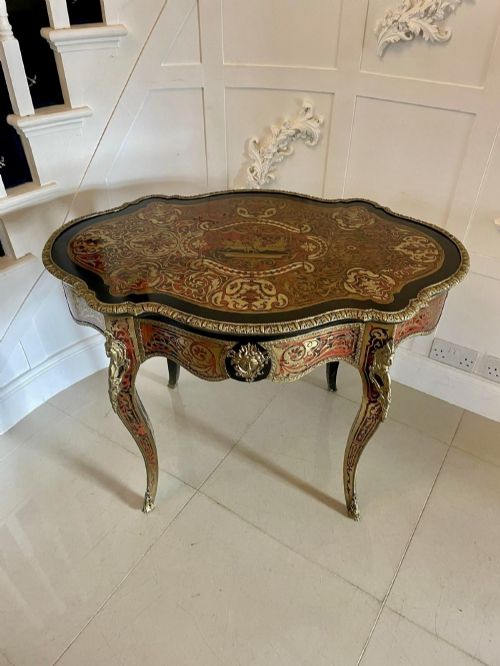
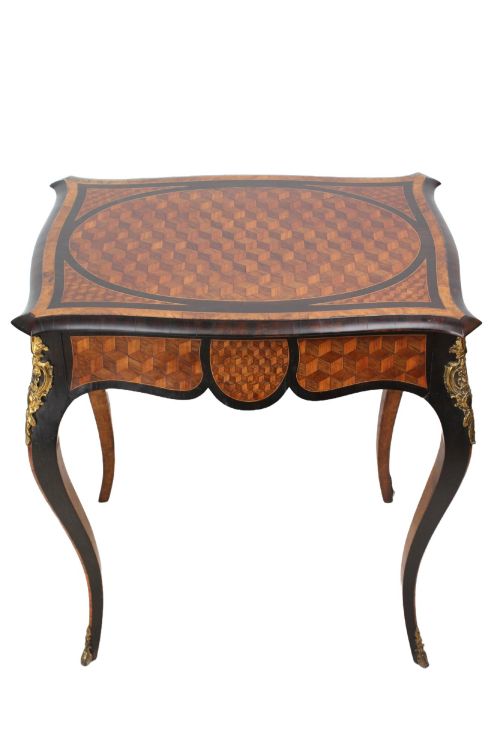
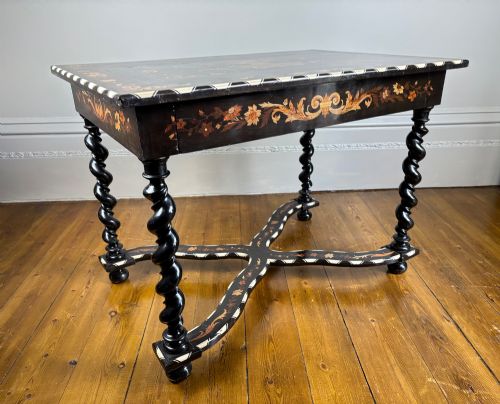
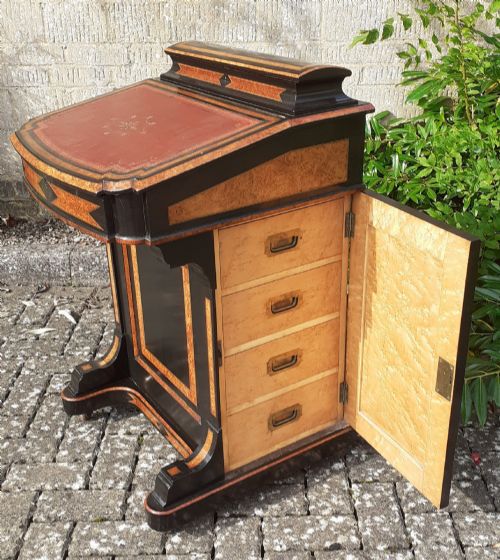
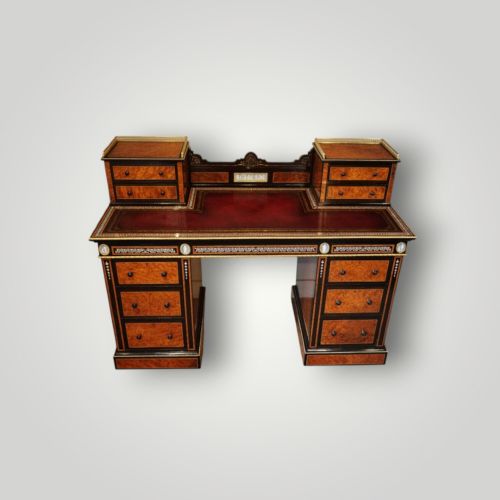
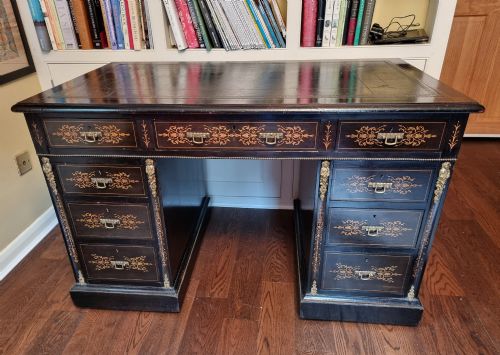
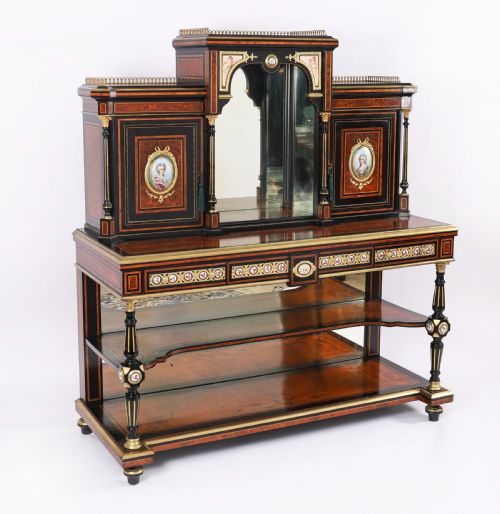
An ebonised inlaid desk combines a blackened timber surface with contrasting marquetry, brass or mother of pearl ornamentation. Buyers searching this phrase meet nineteenth-century examples, including Victorian and Napoleon III pieces alongside French and English writing tables.
The forms range from compact writing cabinets and bonheur-du-jours to pedestal desks and freestanding writing tables. Many of these surfaces incorporate tooled leather inserts and compartments suited for traditional correspondence.
How they were made
Craftsmen built these pieces using timber frames finished with ebonisation to mimic costly ebony, pairing the dark surfaces with burr walnut, amboyna or mahogany. Artisans embedded brass, ormolu mounts, ivory, bone and tortoiseshell into the wood using precise marquetry and boulle techniques.
Structural elements such as cabriole legs and drawers often received gilt bronze fittings or chased ormolu mounts to accent the dark ground. Secondary woods and fitted interiors demonstrate period cabinet-making standards of construction.
Ebonised Inlaid Desk Retail Price Guide 2026
Typical asking prices for ebonised inlaid desk among the pieces listed under this phrase on Sellingantiques today, from the lower quarter to the upper quarter. They describe what is for sale here now, not the wider market.
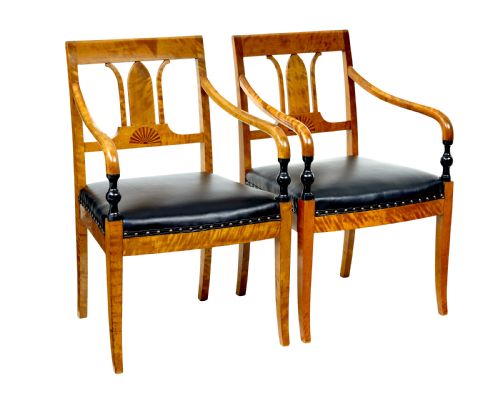
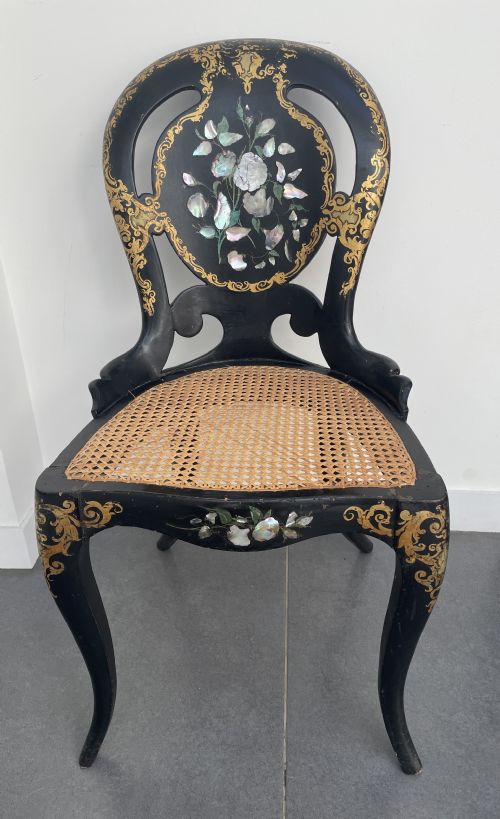
Mother of pearl chairs occasionally turn up alongside these desks, proving Victorians loved an iridescent glint with their morning correspondence.
What varies in quality
Quality rests upon the crispness of the inlay work and the depth of the ebonised finish applied to the primary wood. Pieces attributed to notable makers display superior precision in the brass and tortoiseshell boullework, alongside refined casting in the ormolu mounts.
The integrity of the internal drawers, the choice of secondary veneers such as amboyna or burr walnut, and the survival of original tooled leather writing surfaces distinguish the finer examples from standard production.
JAS Shoolbred·Jackson and Graham·Edwards and Roberts·Maison Millet·Paul Sormani
The Ebonised Inlaid Desk Glossary
- Ebonised
- Wood treated to resemble dense, dark ebony through staining or painting. This finish defines the characteristic dark appearance of these desks.
- Boulle
- An elaborate form of marquetry utilising brass and tortoiseshell inlaid in counterchange patterns. Named after the royal cabinet-maker André-Charles Boulle, it appears frequently on French nineteenth-century writing furniture.
- Bonheur-du-jour
- A light ladies' writing desk featuring a small cabinet or set of pigeonholes and drawers upon the upper surface. These pieces emerged in the eighteenth century and remained popular through the Victorian and Napoleon III periods.
- Ormolu
- Gilded bronze used for decorative mounts and feet on fine furniture. The metal is cast and chased before receiving its gold finish.
- Marquetry
- Decorative patterns formed by fitting together thin slices of various woods, shells or ivories into a wooden veneer. This technique creates pictorial or geometric designs across the desk top.
Ebonised Inlaid Desk: Frequently Asked Questions
Where should I place an ebonised desk?
These dark writing tables suit studies, drawing rooms or bedrooms where the contrasting metal or wood inlay catches the light. They function effectively as freestanding centrepieces or placed against lighter walls.
Keep them away from direct sunlight and heat sources to protect the sensitive veneers, brass work and leather inserts from drying out.
How do I care for ebonised wood?
Dust the surfaces regularly with a soft, dry cloth and avoid modern aerosol polishes that leave residues on the dark finish. A micro-layer of quality wax applied occasionally maintains the lustre of the ebonised timber.
Protect the inlay and mounts from moisture, wiping up any spills immediately with a damp cloth followed by thorough drying.
What is a bonheur-du-jour?
A bonheur-du-jour is a compact writing desk featuring a small superstructure of drawers, shelves or a cabinet above the main writing surface. Originating in France, these pieces were designed for ladies' private correspondence and morning rooms.
They offer useful storage space without the heavy footprint of a traditional pedestal desk.
How do I identify a Victorian piece?
Victorian desks often display eclectic revival styles, combining French Louis XV or XVI motifs with English cabinet-making construction. Look for characteristic secondary timbers and construction methods typical of nineteenth-century workshops.
Makers' stamps, brass locks and registration marks frequently provide clues to the exact decade of manufacture.