


Ebonised Glass Cloche Dome
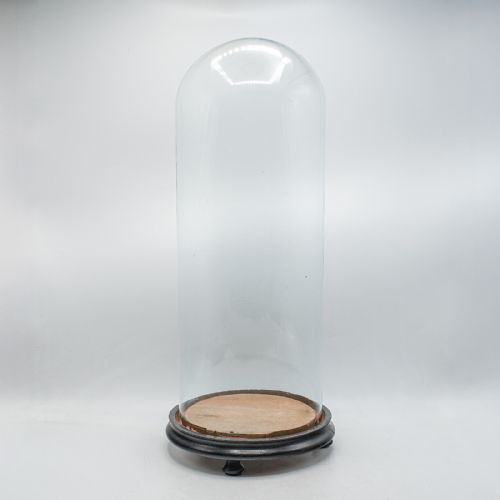
An ebonised glass cloche dome offers a dark timber base to frame delicate taxidermy and decorative specimens under curved glass.
Ebonised Glass Cloche Dome
When you search for an ebonised glass cloche dome, you encounter protective display housings designed to showcase Victorian and Edwardian curiosities, birds, and botanical arrangements. These pieces combine a blown glass cover with a dark wood base, creating a formal presentation suitable for a collector's cabinet or mantelpiece.
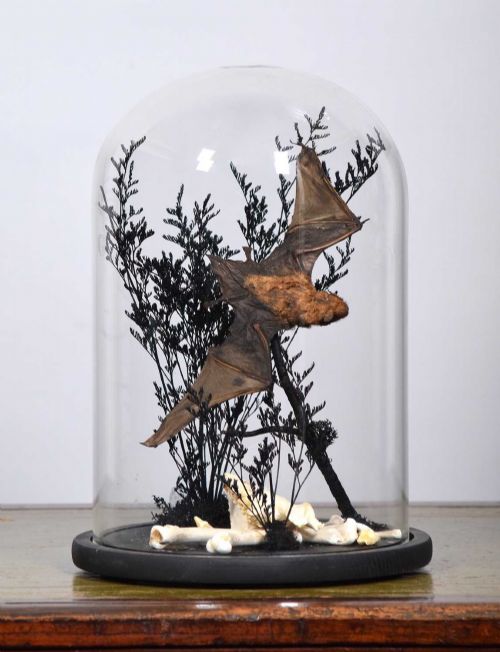
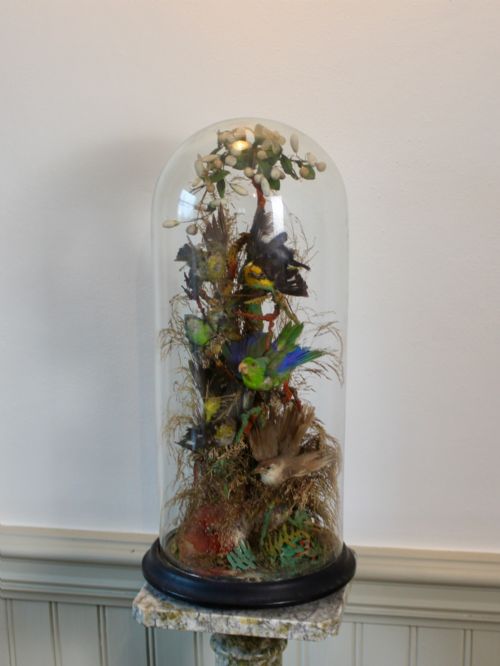
The version you are most likely to meet on this page is a tall or oval Victorian display case resting on an ebonised wooden stand, often containing taxidermy specimens such as birds or bats. English examples from the nineteenth and early twentieth centuries dominate the selection, showing standard forms used to preserve fragile objects from dust.
How they were made
The glass covers are mouth-blown, resulting in slight bubbles and variations in thickness that catch the light differently across each dome. Artisans formed the wooden bases from turned timber, applying an ebonising finish to achieve the deep black appearance associated with ebony.
Interiors often utilise baize, felt, fabric, or velvet as a lining for the base board, providing a textured ground to anchor taxidermy compositions, fruit models, or clock movements.
Listings feature Victorian, Edwardian, and nineteenth-century pieces utilising glass, ebonised wood, velvet, felt, feathers, and fabric.
What varies in quality
Quality rests in the clarity and weight of the blown glass cover, where superior examples maintain an even thickness without excessive distortion. The turning of the wooden base also distinguishes finer pieces, showing crisp mouldings and a deep, polished ebonised surface rather than a flat, painted finish.
The internal arrangement contributes significantly to the character of the object, as complex taxidermy compositions or botanical specimens require skilled mounting to maintain their structural integrity over time.
A Pollard·James Gardner
The Ebonised Glass Cloche Dome Glossary
- Ebonised
- Wood treated with a stain or finish to imitate the dark, dense grain of ebony wood. This technique was popular in Victorian cabinet making.
- Cloche
- A bell-shaped glass cover used to protect delicate items or plants. The term derives from the French word for bell.
- Taxidermy
- The art of preparing, stuffing, and mounting the skins of animals for display. Victorian domes frequently housed birds and small mammals.
- Baize
- A coarse woolen material resembling felt, often used to line the interior base of display domes. It provides a soft surface for resting specimens.
- Diorama
- A three-dimensional scene depicting animals or objects in a simulated natural setting. These arrangements were constructed inside glass domes for protection.
Ebonised Glass Cloche Dome: Frequently Asked Questions
What fits inside an ebonised glass cloche dome?
These domes house taxidermy specimens, botanical displays, fruit models, and clock movements. The enclosed space protects delicate items from dust and handling.
Collectors historically used them to display preserved birds, butterflies, and scientific specimens gathered during the nineteenth century.
How do I clean the glass dome?
Lift the glass carefully from its wooden base using both hands and clean it with a mild glass cleaner and a soft cloth. Ensure the glass is completely dry before placing it back onto the base.
Avoid using harsh chemical abrasives that might damage the antique glass surface or the seal around the rim.
How do I date these domes?
Dating relies on the thickness and clarity of the glass, the turning style of the wooden base, and the nature of the internal contents. Victorian and Edwardian examples often feature hand-blown glass with subtle imperfections.
Examine the base construction and any lining materials such as baize or velvet for clues to the period of manufacture.