
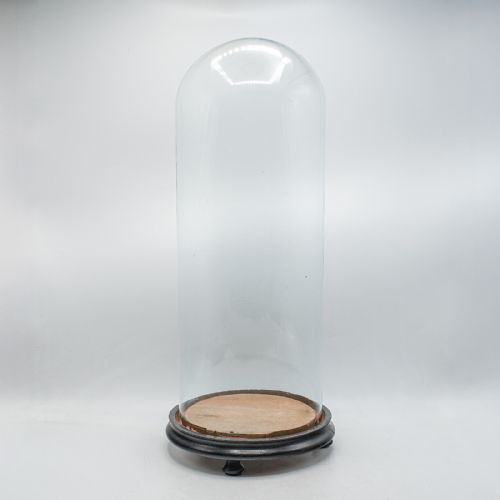


Tall Victorian Bell Glass
A tall victorian bell glass is a clear glass cover raised on a timber base, designed to protect delicate specimens and ornaments.
Tall Victorian Bell Glass
A tall victorian bell glass sits upon a wooden base, typically made from ebonised timber or other wood, sometimes lined with velvet, felt, or baize. These display domes and cloches serve as protective showcases for collectors.
The pieces on this page span the Victorian and Edwardian periods, stretching towards nineteen hundred. They appear as oval or tall glass domes housing taxidermy, specimens, and curiosities.
How they were made
Makers formed the transparent covers from blown glass, shaping them into tall bell and oval profiles. These domes rest securely upon timber bases, which occasionally feature fabric linings such as velvet, felt, or baize.
The wooden bases frequently utilise ebonised wood to provide a dark, contrasting foundation for the glass shade above.
Listings span the Victorian, Late Victorian, and Edwardian periods, including pieces dated to nineteen hundred.
What varies in quality
Quality rests in the clarity and weight of the glass, alongside the finish of the timber base. Thicker glass with fewer bubbles indicates superior output.
The precision with which the glass dome fits its wooden groove dictates the overall integrity of the showcase.
The Tall Victorian Bell Glass Glossary
- Bell glass
- A transparent glass cover shaped like a bell, used to protect delicate objects. It sits directly upon a matching base.
- Taxidermy showcase
- A glass dome and base combination intended for exhibiting preserved birds, animals, or insects. These enclosures protected fragile specimens from dust.
- Ebonised wood
- Timber treated to resemble ebony, providing a deep black finish. This material frequently forms the base of the dome.
- Baize
- A coarse woolen material resembling felt, often used to line the interior base of the display case. It cushions the items placed inside.
Tall Victorian Bell Glass: Frequently Asked Questions
What is a tall victorian bell glass used for?
These glass covers protect and display delicate items like taxidermy, specimens, and ornaments.
Collectors utilise them to keep dust away from fragile displays.
How do I tell Victorian from Edwardian domes?
Victorian examples date from the nineteenth century, while Edwardian pieces stretch into the early twentieth century around nineteen hundred.
Listing details and stylistic traits help distinguish the exact period.
What are the bases usually made of?
Bases consist of timber, frequently finished in ebonised wood to create a dark surface.
Many bases feature linings made of fabric, velvet, felt, or baize.
Are all these domes tall?
The selection includes tall showcases designed for vertical specimens and taller taxidermy.
Form shapes vary from standard display domes to elongated collector cases.