


Glass Display Cloche Base
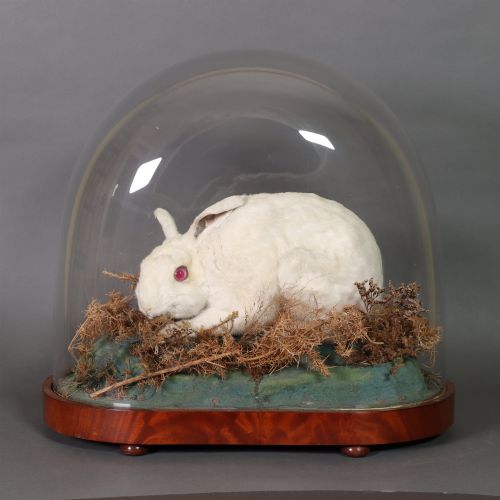
Glass display cloche base units protect fragile taxidermy, botanical specimens and timepieces beneath blown covers from the Victorian and Edwardian eras.
Materials and construction
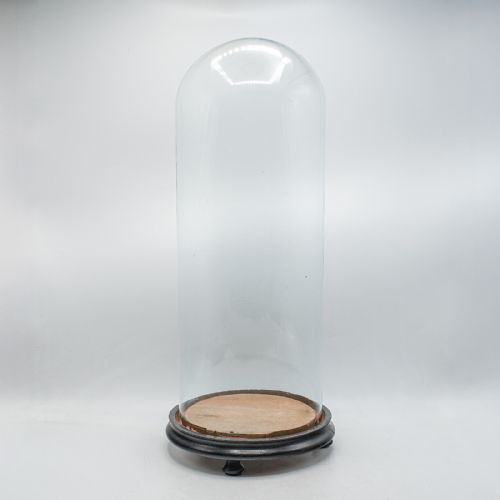
Bases are constructed from timbers such as beech, oak, pine, and ebonised wood, often fitted with fabric, velvet, felt, or wire elements to support the interior display.
The protective covers consist of heavy blown glass formed into tall, oval, or round domes designed to fit securely onto the wooden foundation.
Assessing quality and proportion
Quality rests in the clarity and thickness of the blown glass cover, where uniform walls and minimal bubbling distinguish finer examples from standard production.
The joinery and timber selection of the wooden base, alongside the proportion between the glass height and the supporting plinth, define the visual balance of the piece.
Listings feature items from the Victorian, Edwardian, and nineteenth-century periods, utilising glass, wood, ebonised wood, velvet, and feathers.
James Gardner·A Pollard
The Glass Display Cloche Base Glossary
- Cloche
- A bell-shaped glass cover used to protect delicate items from dust. The term derives from the French word for bell.
- Ebonised wood
- Timber treated with a finish to imitate ebony. This dark surface creates a sharp contrast against bright taxidermy specimens and glass.
- Taxidermy dome
- A glass cover and matching base housing stuffed birds or animals. These enclosures preserved fragile specimens in domestic interiors.
- Clock dome
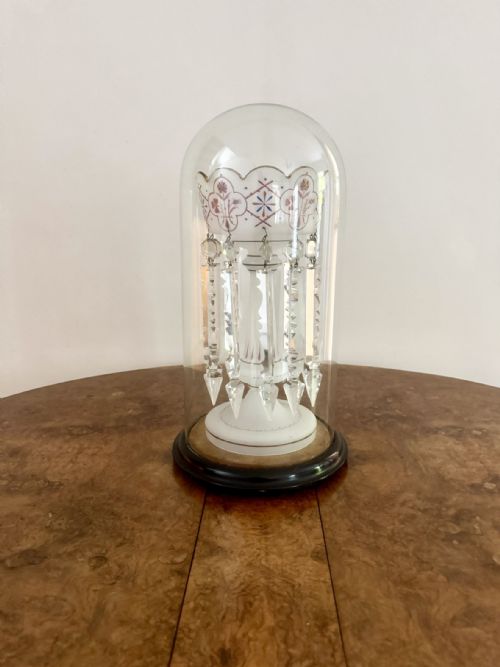
- A blown glass cover originally made to shield delicate clock movements from dust and atmospheric changes. Many now serve to display decorative objects.
Glass Display Cloche Base: Frequently Asked Questions
What fits inside a glass display cloche base?
These enclosures accommodate a variety of fragile items including taxidermy birds, botanical specimens, clock movements, and beadwork bouquets.
They also house still life arrangements of fruit and delicate ornaments requiring protection from dust.
How do I tell Victorian bases from Edwardian ones?
Victorian examples often employ ebonised wood and deep plinths, reflecting mid to late nineteenth-century tastes for dark, formal display furniture.
Edwardian versions frequently utilise lighter timbers such as oak and beech with simpler profiles suited to turn-of-the-century interiors.
Were these bases always used for taxidermy?
While many housed stuffed birds and animals, a significant number served as clock cases protecting delicate carriage or mantel clock movements.
Others protected intricate botanical specimens, French beadwork bouquets, and still life compositions under glass.
How should I clean the glass cover?
Lift the glass dome carefully from its wooden base and wash it using lukewarm water and mild soap.
Dry the glass thoroughly with a lint-free cloth before placing it back onto the fabric or velvet-lined plinth.