

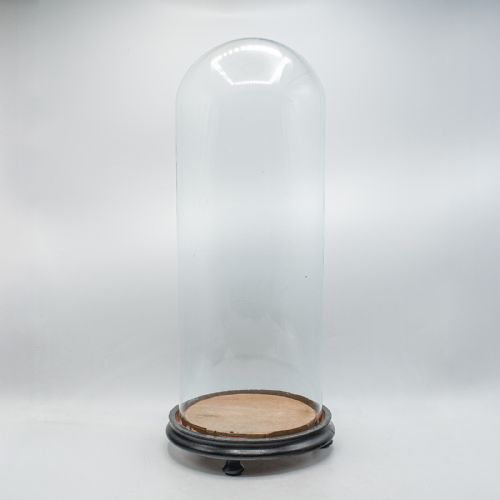


Ebonised Wood Base Dome
These ebonised wood base dome pieces are glass covers paired with dark timber plinths designed to protect and display Victorian and Edwardian curiosities.
Ebonised Wood Base Dome
When you search for ebonised wood base dome, you look for glass display vessels raised upon dark wooden plinths. These enclosures served homes and museums across the Victorian and Edwardian eras.
The versions you meet most frequently on this page take the form of tall or wide glass shades fitted to timber bases. Many house taxidermy specimens, birds, botany or clock movements.
English makers shaped these display cases in oval and round formats during the late nineteenth and early twentieth centuries. Each ebonised wood base dome protects fragile interior displays from dust and handling.
How they were made
Glassblowers formed clear covers by hand, leaving subtle bubbles and variances within the material. These transparent shades sat snugly upon turned timber foundations.
Woodworkers shaped the plinths from timber, finishing them with a dark ebonised coating to resemble ebony. Interior surfaces often featured fabric, felt or moss to cushion and frame the displayed items.
Ebonised Wood Base Dome Retail Price Guide 2026
Typical asking prices for ebonised wood base dome among the pieces listed under this phrase on Sellingantiques today, from the lower quarter to the upper quarter. They describe what is for sale here now, not the wider market.
Listings feature Victorian and Edwardian pieces incorporating glass, ebonised wood, fabric, felt and taxidermy specimens.
What varies in quality
The clarity and weight of the glass distinguish finer examples from standard production. Thicker blown covers display fewer optical distortions when viewing specimens inside.
Plinth construction reveals the care taken by the maker, particularly in the turning of the timber profile and the depth of the ebonised finish. Superior bases remain stable and retain their original felt or fabric linings without moth damage.
James Gardner
The Ebonised Wood Base Dome Glossary
- Ebonised wood
- Timber treated with stain or polish to imitate the deep black tone of genuine ebony. This dark finish provides a formal border for interior displays.
- Display dome
- A blown glass cover designed to protect decorative objects or natural history specimens. They sit upon fitted bases made of wood or ceramic.
- Taxidermy showcase
- An enclosed glass vessel configured to house preserved animals or birds. These arrangements protect delicate feathers and specimens from environmental damage.
- Specimen case
- A protective enclosure utilised by collectors to display botanical, geological or zoological items. They preserve fragile elements for study and admiration.
- Clock dome
- A glass shade intended to cover mantel or shelf timepieces from dust. These covers preserve delicate mechanical movements while permitting visibility.
Ebonised Wood Base Dome: Frequently Asked Questions
What fits under an ebonised wood base dome?
These glass covers house taxidermy specimens, Victorian birds, botanical arrangements and clock movements. Collectors traditionally used them to exhibit natural history curiosities and ornaments safely in the home.
The interior space dictates the scale of the object placed within. Felt or fabric linings upon the wooden base cushion these delicate interior displays.
How do I date an ebonised wood base dome?
Dating relies upon the characteristics of the glass and the style of the wooden plinth. Victorian examples often display heavier blown glass with minor bubbles, whilst Edwardian versions show greater standardisation.
Examining the base construction and interior fabric linings provides further clues. Makers utilised specific turning profiles and materials during the nineteenth and early twentieth centuries.
Are the glass covers original to the bases?
Many surviving pieces retain their matched glass shades and ebonised wood plinths. Handblown glass was fitted specifically to individual timber bases during production.
Slight variations in the fit or thickness can indicate the handmade nature of these Victorian and Edwardian objects. Inspecting the seating groove on the timber reveals how the glass rests.