



Ebonised Gaming Table
An ebonised gaming table brings dark elegance and flexible design to a room, offering a foldover top for cards or chess when evening falls.
Ebonised Gaming Table
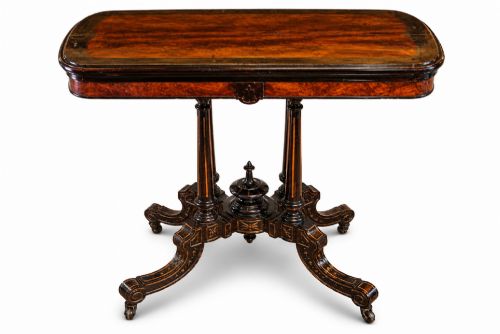
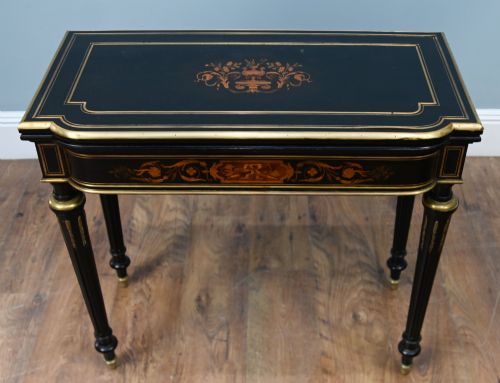
An ebonised gaming table combines dark finished timber with specialised surfaces designed for card games, chess and roulette. The examples found here span the Regency, Victorian and Edwardian periods, stretching from the early nineteenth century into the late eighteen-nineties. Buyers frequently encounter French Napoleon III models alongside British Aesthetic Movement and Victorian interpretations.
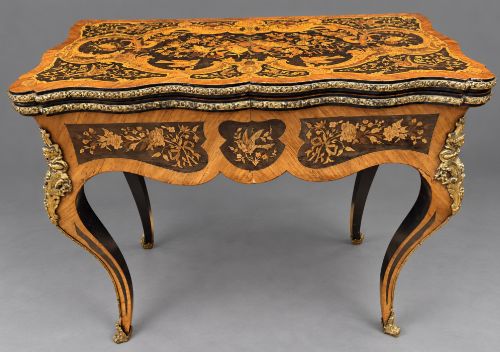
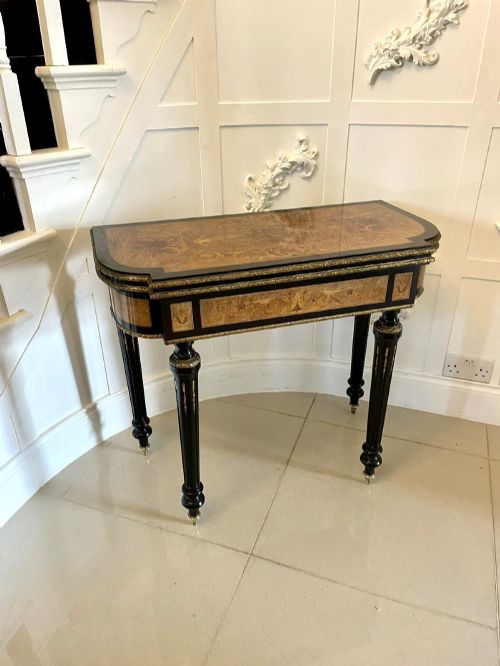
Forms range from simple foldover card tables to sophisticated envelope tables, console combinations and tripod chess tables. Many pieces integrate secondary timbers like walnut, mahogany and oak beneath the ebonised finish, often paired with contrasting marquetry. These tables served social functions in drawing rooms, adapting swiftly from occasional display surfaces to active gaming hubs.
Materials and Construction
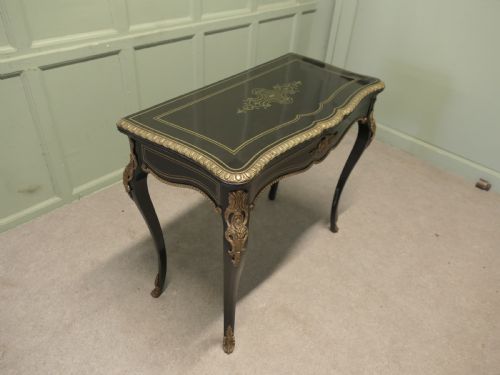
Cabinetmakers constructed these pieces using solid timbers and secondary woods, applying an ebonised finish to mimic costly ebony. Surface enrichment relied heavily on brass inlay, ormolu mounts, mother-of-pearl detail and intricate floral marquetry executed in contrasting exotic woods like amboyna and kingwood.
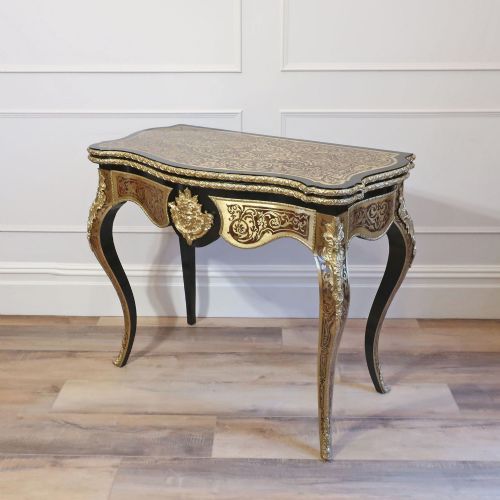
Specialised decorative techniques defined certain regional outputs, notably penwork decoration on Regency chess tables and tortoiseshell or brass Boulle work on French variants. Structural ingenuity appeared in pivoting foldover tops, rotating leaves and trifold drop-leaf handkerchief mechanisms that concealed internal storage for counters and cards.
Ebonised Gaming Table Retail Price Guide 2026
Typical asking prices for ebonised gaming table among the pieces listed under this phrase on Sellingantiques today, from the lower quarter to the upper quarter. They describe what is for sale here now, not the wider market.
Certain tables arrive complete with a nineteenth-century roulette wheel and the original felt cloth, ready for high stakes in the parlour.
Markers of Quality and Craftsmanship
Excellence in these pieces rests upon the precision of the cabinetwork and the intricacy of the surface decoration. Superior examples demonstrate crisp marquetry, tightly fitted brass stringing and smooth swivel actions for foldover leaves without structural wobble in the legs or pedestal base.
Maker attribution and documented origin elevate certain pieces, distinguishing standard nineteenth-century production from exhibition-grade work. The integration of high-status materials like porcelain plaques, fine ormolu mounts and preserved original felt or leather playing surfaces separates ordinary domestic examples from master-workshop creations.
Maison Millet·Edwards & Roberts·Lamb of Manchester·S&H Jewell·George Merrifield
The Ebonised Gaming Table Glossary
- Ebonised wood
- Timber treated with stain or paint to achieve the dense black appearance of ebony. This finish gained immense popularity during the Victorian and Aesthetic Movement periods.
- Boulle
- A style of marquetry utilising brass and tortoiseshell inlaid in counterpoint patterns. Named after the French cabinetmaker André-Charles Boulle, it frequently defines nineteenth-century Napoleon III tables.
- Marquetry
- Decorative patterns formed by fitting veneer pieces into a prepared background. Makers utilised various exotic woods to create floral and geometric motifs across table tops.
- Penwork
- Surface decoration executed in ink using a fine pen to draw intricate motifs. Regency chess and occasional tables often display this detailed illustrative technique.
- Envelope table
- A card table featuring four triangular flaps that rotate and fold open together like an envelope. Edwardian makers produced these clever space-saving designs.
Ebonised Gaming Table: Frequently Asked Questions
What is an ebonised gaming table used for?
These tables functioned primarily as social furniture in nineteenth-century drawing rooms for card games, chess and entertaining guests. Their folding or rotating tops allowed them to serve as decorative console tables when not in use.
Today, they suit modern living rooms as versatile accent pieces that provide a usable surface for drinks or games while adding historical character to an interior.
How do I identify a Regency gaming table?
Regency pieces often feature distinct neoclassical lines, pedestal tripod bases and delicate penwork decoration illustrating chess boards or geometric borders. The timbers tend to include kingwood and finely turned mahogany alongside specialised ink work.
Checking the leg construction and decorative motifs helps separate these earlier nineteenth-century examples from later Victorian or Edwardian revivals.
What is an Aesthetic Movement card table?
Aesthetic Movement tables, emerging in the late nineteenth century, reject heavy Victorian ornamentation in favour of simpler structural forms and Japanese-inspired design motifs. They frequently combine oak and ebony with understated lines.
These pieces reflect a distinct shift in interior taste toward artistic craftsmanship and restrained ornamentation during the eighteen-eighties and nineties.
How do French Napoleon III tables differ from British ones?
French Napoleon III tables frequently incorporate elaborate Boulle marquetry, ormolu mounts, tortoiseshell and mother-of-pearl details within Louis XV revival shapes. They emphasise ornate visual drama and rich surface contrast.
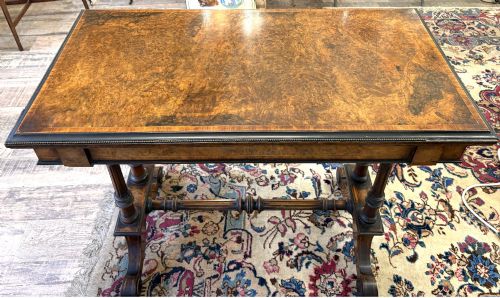
British equivalents tend to focus on structural timber variations such as burr walnut, amboyna and straightforward foldover mechanisms suited to domestic Victorian parlours.