




Ebonised Etagere Stand
An ebonised etagere stand brings tiered display space to a room, offering dark surfaces that highlight porcelain, silver and small curiosities.
Ebonised Etagere Stand
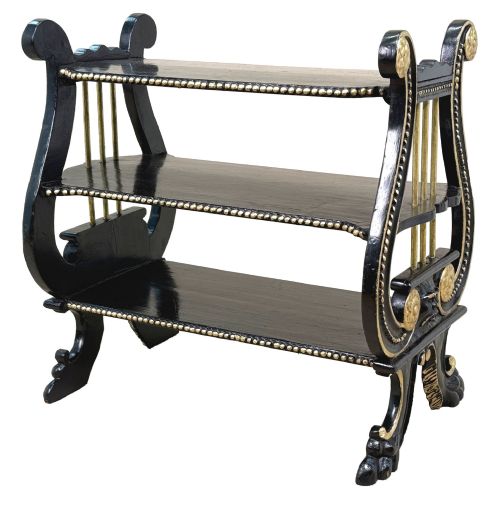
An ebonised etagere stand serves primarily as a tiered platform for display and storage, appearing across this selection in forms ranging from corner units to multi-tiered dumb waiters and side tables. Buyers seeking an ebonised etagere stand will encounter pieces originating from Victorian, Edwardian, and Georgian periods, alongside continental examples influenced by French Napoleon III and Belle Epoque styles.
The objects combine upright supports with multiple open shelves designed to hold decorative objects without cluttering the floor space of a drawing room or parlour. Many pieces integrate diverse timber foundations beneath their dark finishes, while others incorporate specialised cabinetry such as Japanese shodana designs or traditional corner shelving.
Makers and manufacturers utilised these tiered formats to maximise vertical display potential in nineteenth and early twentieth-century interiors. The surviving examples demonstrate how functional shelving evolved into sophisticated furniture designed to catch the eye through tiered silhouettes and contrasting decorative highlights.
How they were made
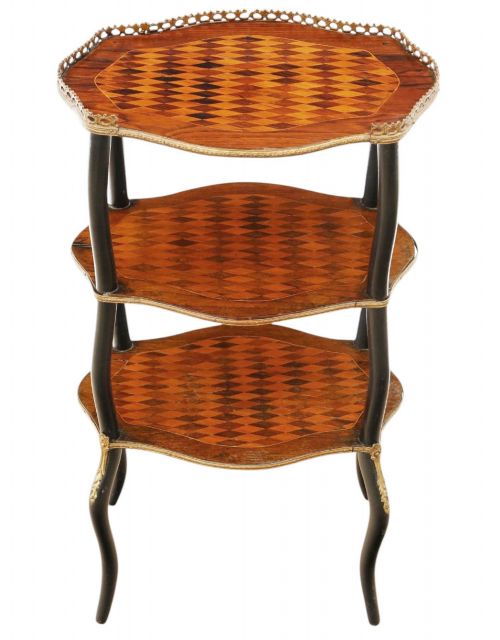
The construction relies heavily on timber frameworks finished with dark ebonising to imitate expensive ebony, frequently complemented by parcel gilding or brass mounts. Artisans applied veneers of burr walnut, amboyna, or incorporated parquetry and marquetry inlay to enrich the surface texture of the shelves and panels.
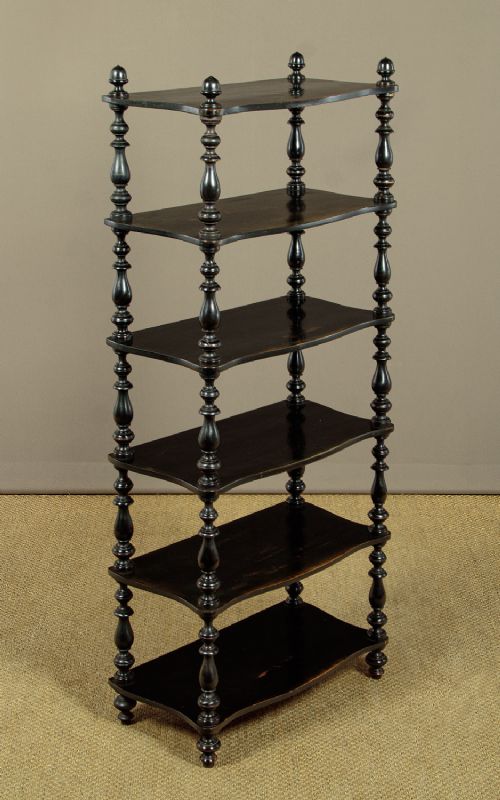
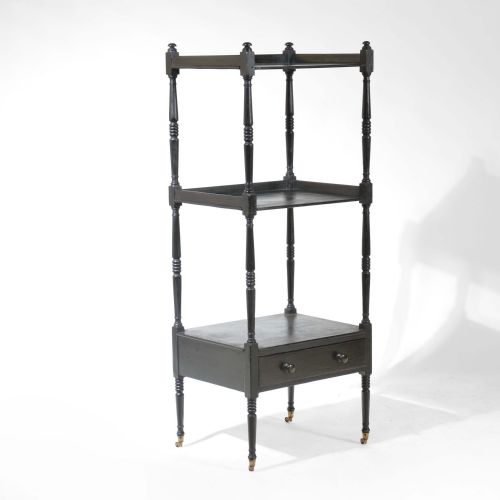
Structural integrity depended on turned or carved upright supports holding multiple graduating tiers, sometimes secured with ormolu mounts or gilt brass details. Cabinetmakers utilised mixed timber foundations and precise joinery to ensure stability across three, four, or six stacked levels.
Some resilient stands have quietly outlived several generations of ornaments while simply holding their ground in the corner.
What varies in quality
Quality differentiates itself through the precision of the parquetry and marquetry inlay work, alongside the depth and durability of the original ebonised finish. Superior pieces exhibit refined carving on the upright supports and crisp metal mounts rather than cast elements lacking definition.
The choice of secondary timbers and the complexity of the tier arrangement also dictate the standing of an individual piece. Better examples maintain structural rigidity across numerous shelves without wobble, utilising well-seasoned woods that resist warping over time.
The Ebonised Etagere Stand Glossary
- Ebonised
- Wood treated with a stain, dye, or paint process to resemble solid ebony. This dark finish gained immense popularity during the Victorian era for decorative furniture.
- Etagere
- A piece of furniture consisting of a set of open shelves for displaying small articles. The French origin reflects its widespread use in nineteenth-century drawing rooms.
- Whatnot
- A tiered set of open shelves used for displaying ornaments or books. It developed during the eighteenth century and remained a household staple through the Victorian period.
- Parquetry
- Geometric mosaic woodwork used for adorning floors or furniture surfaces. Craftsmen arrange contrasting timber veneers in repeating patterns.
- Ormolu
- Gilded bronze applications used for furniture mounts and decorative accents. Makers cast and mercury-gilded these metal elements to add ornamental brilliance.
Ebonised Etagere Stand: Frequently Asked Questions
What is an ebonised etagere stand used for?
These stands serve as decorative display furniture designed to hold small ornaments, porcelain figures, and treasured curiosities across multiple open tiers. They make efficient use of vertical space in reception rooms and hallways.
Historically, homeowners placed them strategically in parlours to showcase items collected during travels or fashionable decorative arts of the period.
How do I date a Victorian ebonised etagere?
Dating relies on examining the construction methods, timber choices, and decorative motifs present on the piece. Victorian examples often combine ebonised surfaces with parcel gilding or burr walnut panels.
Comparison with related pieces from the same era helps establish whether a stand belongs to the mid-nineteenth century or the later aesthetic movement period.
Where should I place an etagere in my home?
An etagere fits well in corners, against plain walls, or beside seating areas where its tiered shelves can be viewed from multiple angles. Corner units make use of awkward architectural junctions.
Ensure the location avoids direct sunlight to protect delicate wood veneers and ebonised finishes from fading over time.
What is the difference between an etagere and a whatnot?
The terms often overlap significantly, though etagere historically implies a French influence with lighter, decorative tiered shelving. Whatnot is a traditional British term for a similar multi-shelved stand.
Both forms prioritize open display over enclosed storage, functioning primarily as ornamental furniture.