




Ebonised Column Lamp
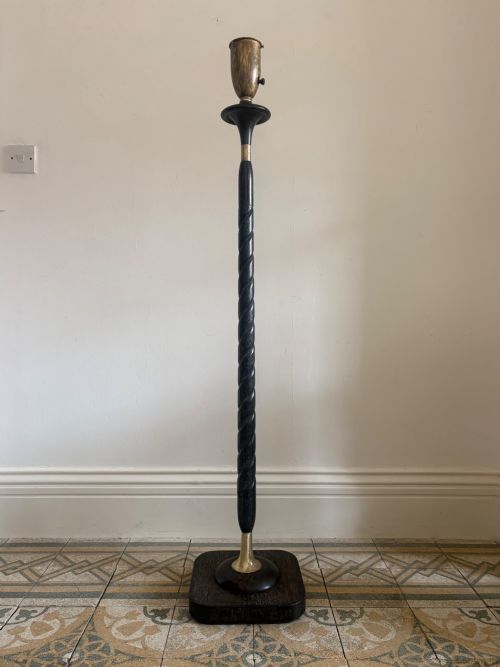
An ebonised column lamp brings structural presence and dark wood contrast to a room, offering both classical form and functional illumination.
Ebonised Column Lamp
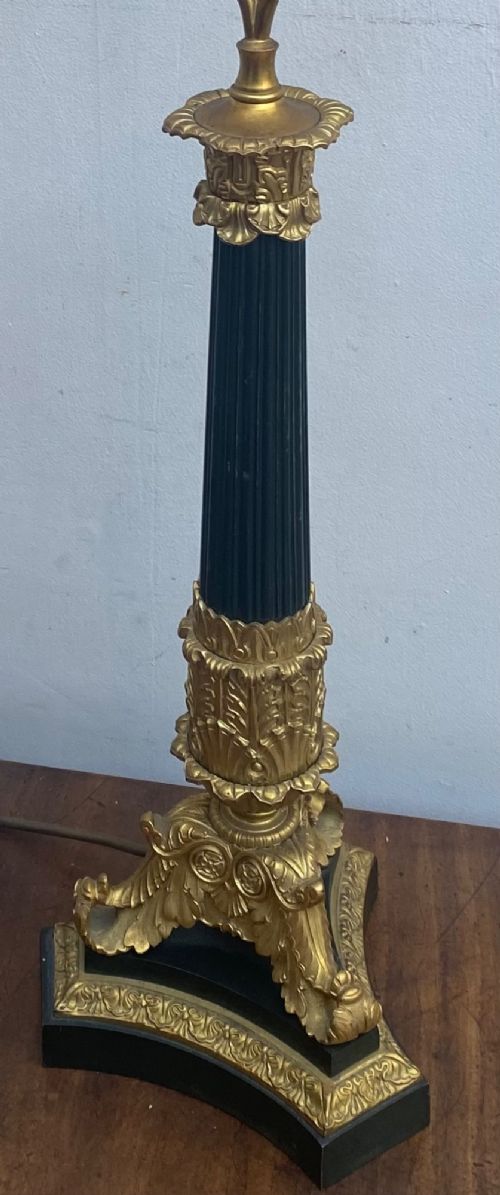
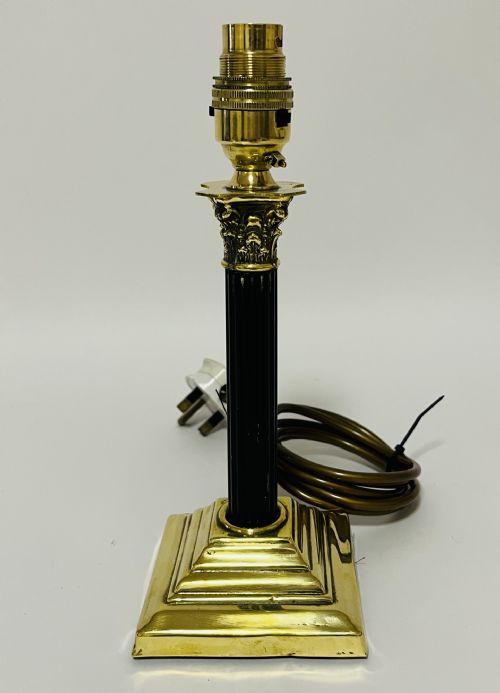
When you search for an ebonised column lamp, you are looking at tall, vertical light fittings fashioned from dark timber or finished to mimic ebony, often drawing upon classical architectural orders. These pieces derive their character from upright shafts that mimic stone columns, translated into domestic lighting through periods ranging from the Regency era into the early twentieth century.
On this page, you are most likely to meet examples that incorporate brass details, gilt bronze mounts, or twisted barley profiles alongside the darkened wood. The selection spans Victorian interpretations and Neoclassical revivals, occasionally appearing in floor standing formats or as table models adorned with Corinthian capitals.
The form bridges the gap between furniture and lighting, serving as a sculptural element even when unlit. Makers applied the dark finish to various timbers, creating a dense, light-absorbing surface that contrasts sharply with polished metal components.
How they were made
Makers constructed these columns using timber treated with dark stain or paint to achieve an ebony appearance, frequently pairing the wood with cast brass or gilt bronze elements. Turning lathes shaped the central shafts into smooth cylinders or spiral twists, whilst metal capitals and bases provided structural reinforcement and decorative detail.
Surface preparation involved meticulous smoothing of the wood before applying the dark finish, ensuring a uniform matte or semi-gloss sheen. Metal fittings were secured with traditional joinery and fixings appropriate to the Regency, Victorian, and early twentieth-century periods represented.
Ebonised Column Lamp Retail Price Guide 2026
Typical asking prices for ebonised column lamp among the pieces listed under this phrase on Sellingantiques today, from the lower quarter to the upper quarter. They describe what is for sale here now, not the wider market.
Listings feature items spanning the Regency period, Victorian era, and the 1920s, utilising ebonised wood alongside brass and gilt bronze.
What varies in quality
The distinction between standard examples and finer pieces lies in the crispness of the turning and the substance of the mounted metalwork. Heavy cast brass or gilt bronze capitals demonstrate superior craftsmanship compared to lighter, stamped metal alternatives.
The depth and durability of the ebonised surface finish also set pieces apart, with superior examples retaining an even, rich tone across complex mouldings and barley twists. Integration between the timber column and the metal base reveals the maker's precision in balancing tall, slender forms.
Humphrey Hopper
The Ebonised Column Lamp Glossary
- Ebonised wood
- Timber treated with stain, paint, or chemical processes to imitate costly ebony. This dark finish became widely used in European furniture and decorative arts during the nineteenth century.
- Corinthian column
- An architectural order featuring an ornate capital decorated with acanthus leaves. This classical motif frequently adorns the top of tall table lamps and torcheres.
- Torchere
- A tall stand or lamp originally designed to hold a light source. These vertical pieces elevate the illumination above standard table height.
- Barley twist
- A spiral carving resembling the twists of barley sugar. This decorative technique adds dynamic movement to wooden lamp shafts and floor standards.
- Gilt bronze
- Metal cast and coated with a thin layer of gold. Also known as ormolu, it provides bright metallic contrast against dark ebonised timber surfaces.
Ebonised Column Lamp: Frequently Asked Questions
What is an ebonised column lamp?
An ebonised column lamp is a vertical lighting fixture made from dark-finished wood, designed to resemble classical stone architecture. These pieces incorporate elements from the Regency, Victorian, and early twentieth-century periods.
They combine wooden shafts with metal mounts, functioning as both sculptural objects and sources of illumination within a room.
How do I date an ebonised column lamp?
Dating relies on observing the combination of materials, turning styles, and metal mounts characteristic of specific eras like the Regency period or the early twentieth century. Neoclassical revival designs often draw on earlier architectural forms while utilising manufacturing techniques of their own time.
Examining the construction of the base and the application of the dark finish provides further clues to the period of origin.
Where should I place a floor lamp?
Tall floor standards and torcheres suit corners or beside seating areas where their vertical height can fill empty wall space. Their dark wooden columns anchor room layouts while providing ambient illumination.
Ensure the placement allows stable footing on level flooring, as these tall structures benefit from solid placement.
How do I care for ebonised wood?
Maintain the dark wooden surface by dusting gently with a soft cloth and avoiding harsh chemical cleaning agents. Preserving the finish protects the underlying timber from moisture and excessive dryness.
Keep metal mounts clean with dry methods to prevent tarnishing the brass or gilt bronze details.