



Ebonised Base Lamp
These ebonised base lamp options combine dark wood finishes with metal and glass, offering a distinctive focal point for period and traditional interiors.
Ebonised Base Lamp
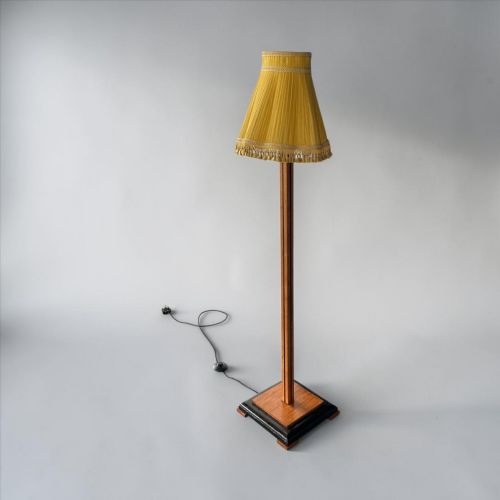
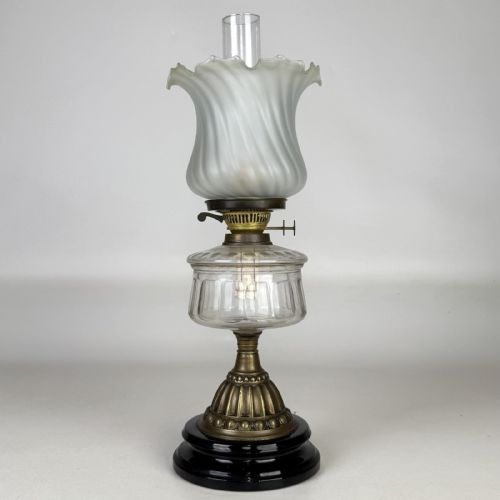
An ebonised base lamp brings together dark wood stands and various lighting configurations, spanning floor lamps, table lamps, and adapted oil lamps. Buyers searching for an ebonised base lamp encounter pieces originating from the nineteenth century through to the Art Deco period, alongside revival styles like Regency and Neoclassical.
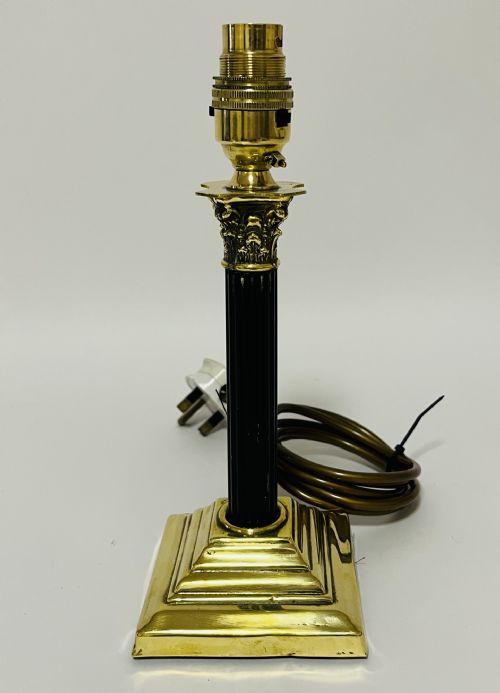
The most common forms on this page include tall standard lamps designed for floor placement and compact table models that suit sideboard or desk display. These objects frequently pair their dark wooden supports with contrasting metallic components or fabric shades.
Materials and construction methods
The construction relies heavily on ebonised wood and timber, often combined with cast brass or other metals to provide structural stability and decorative contrast. Woodturners shaped the primary supports on lathes, applying dark finishes to simulate ebony before assembling the components.
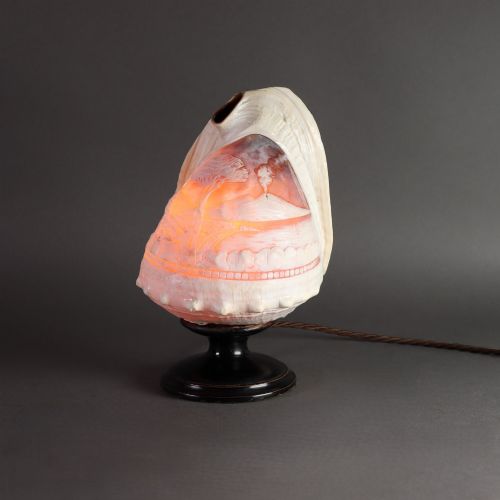
Metal fittings such as brass collars, burners, and adjustable stems were integrated using traditional threading and soldering techniques. Glass elements, including oil fonts and shades, were blown or pressed, while secondary materials like fabric and shell cameos appeared in specific decorative variants.
Ebonised Base Lamp Retail Price Guide 2026
Typical asking prices for ebonised base lamp among the pieces listed under this phrase on Sellingantiques today, from the lower quarter to the upper quarter. They describe what is for sale here now, not the wider market.
Current listings feature periods spanning the nineteenth century, 1900, 1920, and 1930, alongside materials such as ebonised wood, brass, and glass.
Assessing quality and craftsmanship
Quality separates pieces through the precision of the woodturning and the durability of the ebonised finish applied to the timber base. Superior examples maintain crisp architectural details and secure joinery without excessive wear to the dark surface coat.
The integration of metal components also dictates overall standard, with heavy cast brass fittings indicating superior execution compared to lighter stamped alternatives. Harmony between the timber base and any accompanying metalwork or glass elements defines the better class of item.
The Ebonised Base Lamp Glossary
- Ebonised wood
- Timber treated with a dark stain or finish to imitate ebony. This technique was popular in nineteenth-century and revival furniture production.
- Standard lamp
- A tall floor-standing lamp designed to illuminate a room from a vertical post. These pieces often feature heavy weighted bases for stability.
- Grand Tour
- A nineteenth-century cultural practice where affluent travellers collected souvenirs across Europe. Items from this tradition frequently incorporate classical motifs or carved shell panels.
Ebonised Base Lamp: Frequently Asked Questions
What periods do these lamps come from?
The pieces span the late nineteenth century, the Edwardian era, and the 1920s and 1930s Art Deco period. Various revival styles also influence their design.
Production methods shifted across these decades, moving from ornate Victorian oil lamps towards cleaner twentieth-century lighting formats.
How do I place an ebonised lamp in a room?
Table models suit sideboards, desks, and lamp tables, providing targeted illumination. Floor-standing standard lamps fit well beside armchairs or in room corners.
The dark wooden base allows these items to anchor neutral colour schemes or complement traditional dark wood furniture.
Are these lamps converted from older lighting?
Many standard and table lamps began as oil lamps or were adapted from furniture components like wine tables and columns. This adaptive reuse was common across different decades.
Inspecting the base and stem reveals how original mounts or fonts were modified to house modern electrical fittings.
What materials make up the bases?
Bases primarily consist of ebonised wood or timber, frequently accented with brass, metal, or glass components. Some examples incorporate tripartite or weighted supports for balance.
Decorative variations include carved details, brass columns, and occasional shell or fabric additions on associated shades.