
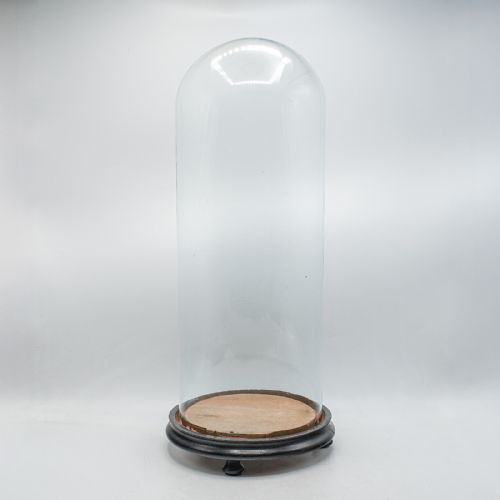


Ebonised Base Display Dome
These ebonised base display dome pieces combine blown glass covers with darkened wooden stands to house delicate specimens, birds, clocks and ornaments.
Ebonised Base Display Dome
When you search for an ebonised base display dome, you are looking at nineteenth and early twentieth-century protective vessels designed to safeguard fragile items from dust and damage in the home. These items typically comprise a blown glass cover resting upon a turned timber base finished in a dark, ebonised coating to imitate ebony wood.
The pieces appearing on this page span the Victorian and Edwardian eras, including tall, oval, and wide formats. You will find them configured as taxidermy showcases, clock cases, and botanical specimens, originating from English workshops between eighteen sixty and nineteen hundred and five.
Materials and construction
The glass covers are mouth-blown, resulting in characteristic thickness variations, small air bubbles, and subtle ripples across the transparent surface. These domes sit within a grooved recess cut into a solid timber base, which is stained or painted black to achieve the ebonised finish.
Internal elements often include a fabric covering such as velvet, baize, or felt laid over a wooden or cork platform to support the display items. Bases frequently feature turned feet or stepped mouldings characteristic of Victorian and Edwardian cabinetry.
Listings feature Victorian and Edwardian pieces utilising glass, ebonised wood, timber, fabric, velvet, felt, and baize.
Assessing quality in display domes
Quality rests upon the clarity and integrity of the blown glass cover, where older examples display natural imperfections from the manufacturing process without modern mechanical uniformity. A heavier, distortion-free dome demonstrates superior glasshouse production.
The execution of the ebonised base and the stability of the timber platform dictate the overall standard of the piece. Well-turned mouldings, sound joints, and original interior fabric linings indicate higher craftsmanship.
A Pollard·James Gardner
The Ebonised Base Display Dome Glossary
- Ebonised
- Timber treated with stain, polish or paint to simulate expensive ebony wood. This dark finish was popular during the Victorian period for display bases and picture frames.
- Cloche
- A bell-shaped glass cover used to protect plants, food or decorative objects. The term derives from the French word for bell.
- Taxidermy showcase
- A glass dome arrangement housing preserved animals, birds or insects. These enclosures protected delicate plumage and specimens from dust and handling.
- Turned
- Shaped on a lathe by a craftsman using cutting tools against rotating timber. This method produced the circular stepped profiles found on display bases.
- Specimen dome
- A protective glass cover used by collectors to display botanical, geological or anatomical items. They served both scientific and decorative purposes in nineteenth-century interiors.
Ebonised Base Display Dome: Frequently Asked Questions
How do I clean the inside of the dome?
Lift the glass cover very carefully using both hands and place it on a stable, flat surface away from edges.
Clean the glass with a mild detergent and dry it thoroughly before replacing it over your display.
What periods do these domes come from?
The examples available span the Victorian and Edwardian eras, with dates ranging from eighteen sixty to nineteen hundred and five.
Earlier nineteenth-century pieces often feature heavier glass and simpler timber turnings compared to later Edwardian variants.
Can I display modern items under these domes?
You can place any object that fits beneath the glass cover, provided its weight does not damage the wooden base.
Ensure the items are completely dry and free from moisture before enclosing them.
How do I know if the glass is antique?
Antique glass domes show minor irregularities such as tiny bubbles, surface waviness, and slight thickness variations.
These traits stem from traditional mouth-blowing techniques used before modern industrial manufacturing.