
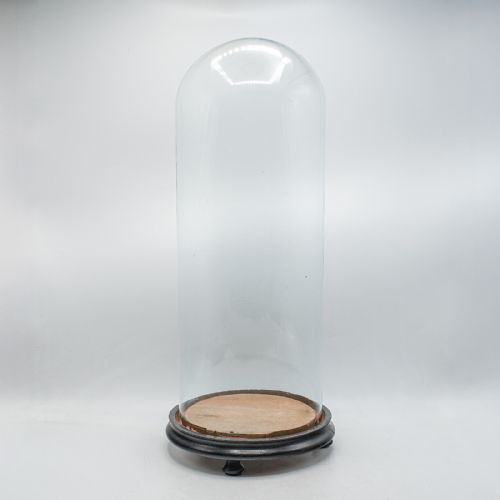


Clock Display Dome
A clock display dome protects a delicate timepiece beneath clear glass while keeping it visible from every angle.
Clock Display Dome
A clock display dome provides a clear glass cover designed to shield mantel clocks, carriage clocks, and delicate timepieces from dust and damage. These protective covers appear frequently in Victorian and Edwardian iterations, reflecting the period's domestic interior habits.
The pieces listed here include large, tall, and wide formats shaped to accommodate various clock dimensions. Many sit upon wooden bases made from timber, walnut, or ebonised wood.
Examples span the Victorian era, the Edwardian period, and around 1900, showing how households preserved their timekeeping investments. Buyers find round, ovoid, and oval profiles designed specifically to frame the clock within.
How they were made
Makers formed the transparent covers using blown glass, creating smooth, curved bell shapes that rested upon prepared timber plinths. These wooden bases often utilised ebonised wood, walnut, or plain pine to anchor the glass securely.
Interiors frequently incorporated fabric elements such as velvet, felt, or other textiles to cushion the base where the clock stood. The combination of glass and wood required careful carpentry to ensure a stable fit between the dome and its stand.
Many a Victorian household kept a clock safely encased in glass, wondering if anyone would notice the dust beneath.
What varies in quality
The clarity and thickness of the blown glass distinguish finer examples from standard production, alongside the absence of distortion within the dome. Thicker glass offers better protection and greater weight.
The construction of the wooden base dictates the overall character of the piece, with carefully turned mouldings and select timber grades separating standard stands from more elaborate Victorian mounts.
The Clock Display Dome Glossary
- Dome
- A rounded glass cover used to protect objects such as clocks and taxidermy. It sits atop a fitted base.
- Ebonised wood
- Timber treated to imitate the dark appearance of ebony. This finish is common on Victorian bases.
- Ovoid
- Egg-shaped in form. Some glass covers adopt this profile rather than a standard circular shape.
- Plinth
- The base upon which the glass dome rests. It often includes a lined surface of velvet or felt.
Clock Display Dome: Frequently Asked Questions
What is a clock display dome?
A clock display dome is a blown glass cover placed over a timepiece to keep dust away while allowing an unobstructed view.
These pieces typically feature a wooden base and date from the Victorian and Edwardian periods.
How do I date a glass dome?
Dating relies on examining the characteristics of the wooden base, the thickness of the glass, and any associated labels or provenance.
Victorian and Edwardian examples show distinct turning styles on their timber plinths.
Were these domes only for clocks?
While used extensively for mantel and carriage clocks, similar glass domes also housed taxidermy specimens, botanical displays, and ornaments.
Interior fabric linings in velvet or felt accommodated various delicate objects.
How do I clean an antique dome?
The glass requires gentle cleaning with standard glass cleaner applied to a cloth rather than sprayed directly onto the surface.
Wooden bases need dry dusting to preserve ebonised or polished finishes without moisture damage.