
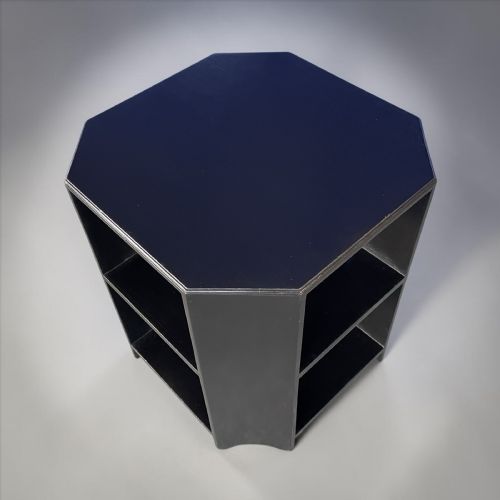


Ebonised Art Deco Table
An ebonised art deco table brings dark, striking geometry to a room, offering the sharp silhouettes that define the interwar period.
Ebonised Art Deco Table
An ebonised art deco table combines the dark, uniform finish of blackened wood with the clean lines typical of the 1920s and 1930s. These pieces include occasional tables, coffee tables, and console tables designed to anchor a modern interior.
Most examples originate from the 1920s and 1930s, though earlier nineteenth-century precursors and George V pieces also appear. You will frequently encounter compact occasional forms alongside console and coffee tables.
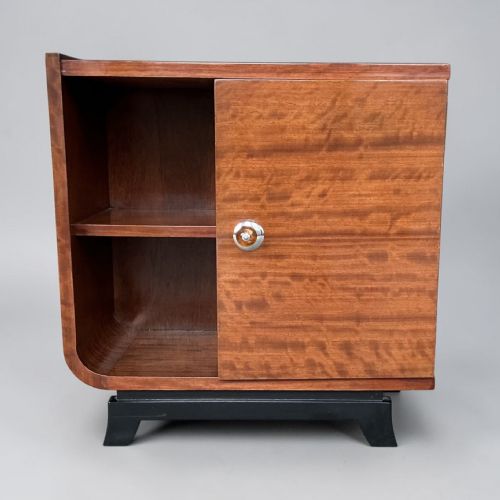
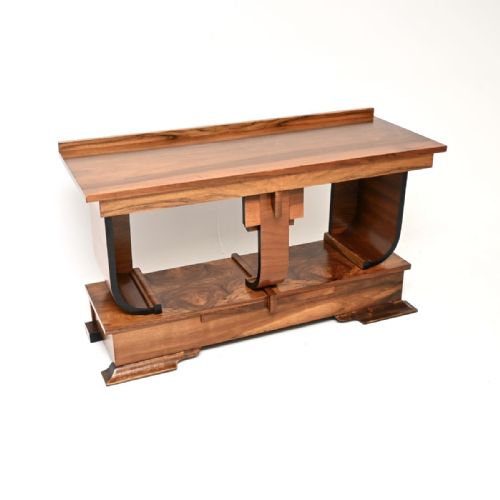
The aesthetic relies on contrasting tones, often pairing the deep black ebonised surface with warmer timbers like walnut, maple, or oak. This duality gives the furniture its characteristic visual punch.
How they were made
Cabinet makers utilised solid hardwoods such as oak and mahogany, or applied fine veneers like burr walnut and birds-eye maple over a stable secondary wood. Surfaces intended to be dark received an ebonising treatment to imitate costly ebony.
Metal elements in brass and chrome frequently appeared as mounts, handles, or casters, introducing a bright industrial contrast to the dark timber. Joinery was executed to maintain smooth, uninterrupted planes and geometric silhouettes.
Listings feature pieces spanning the nineteenth century through to the 1930s, incorporating walnut, oak, brass, and chrome.
What varies in quality
The distinction between standard production and superior craftsmanship lies in the selection and book-matching of wood veneers. Grain patterns that mirror each other symmetrically across a tabletop indicate deliberate, high-level workshop practice.
Heals
The Ebonised Art Deco Table Glossary
- Ebonised wood
- Timber treated with stain, dye, or polish to simulate solid ebony. This dark finish provides a high-contrast foundation for decorative veneers.
- Console table
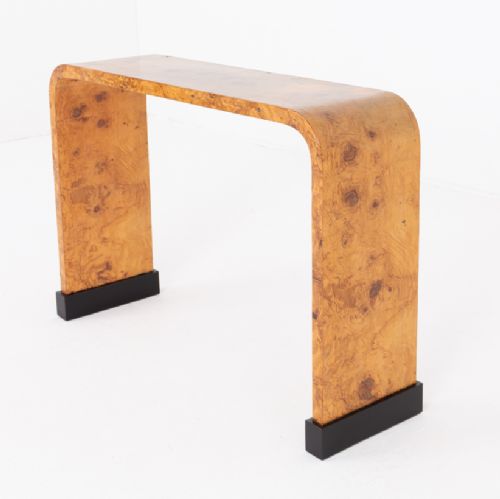
- A wall-mounted or freestanding table designed for placement against a vertical surface. These forms often feature in hallways and living rooms.
- Birdseye maple
- A figured timber exhibiting small, swirling dots that resemble eyes in the grain. It provides a pale, decorative contrast to ebonised elements.
- Occasional table
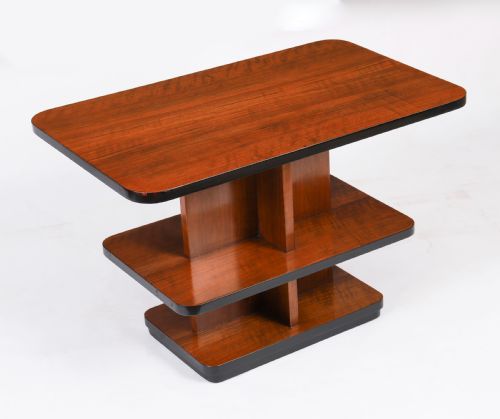
- A small, movable table intended for versatile use around a room. They appear frequently in tiered configurations.
- Veneer
- A thin slice of ornamental wood applied over a structural carcass. Figured walnut and maple are typical examples found on these surfaces.
Ebonised Art Deco Table: Frequently Asked Questions
Where should I place an ebonised art deco table?
These pieces suit living rooms, hallways, or reception spaces where their dark finishes can anchor lighter surrounding decor. A console version works well against a neutral wall.
Smaller occasional or coffee variants fit centrally before seating, providing a functional surface that also acts as a visual focal point.
What is the difference between occasional and console tables?
Occasional tables are freestanding and compact, designed to be moved easily around a room for specific tasks. Tiered variants offer multiple display surfaces.
Console tables are typically narrower and shallower, intended to stand directly against a wall rather than sit in the open floor space.
How can I tell a 1930s piece from earlier periods?
Interwar pieces from the nineteen-thirties lean heavily into streamlined geometry, chrome accents, and blonde veneers paired with black ebonising. Nineteenth-century examples carry heavier ornamentation.
Construction methods and timber choices also offer clues, with later pieces favouring specific combinations like walnut and maple.