



Eastern Anatolian Rug
An eastern anatolian rug brings deep wool pile and village symbolism straight from the high plateaus into your room.
Eastern Anatolian Rug
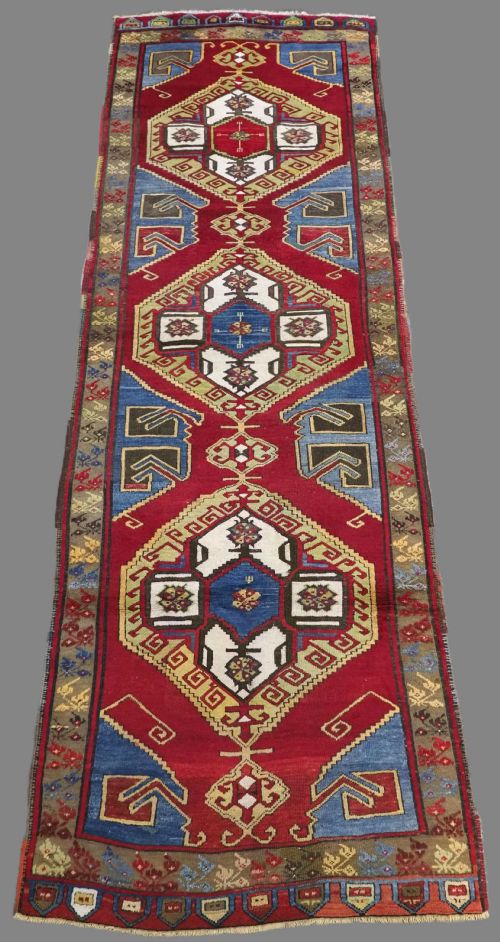
An eastern anatolian rug represents the woven heritage of village and tribal workshops across the high plateaus of Turkey. When you search for an eastern anatolian rug, you encounter hand-knotted pieces created by Kurdish, Yuruk, and village weavers utilising traditional motifs. These floor coverings bridge nomadic expression and settled Ottoman village life.
The pieces appearing on this page span the nineteenth century through the early twentieth century, including the Edwardian period and nineteen-twenty. You meet formats ranging from small area rugs and long runners to complete nomadic saddlebags known as heybe. Prayer rugs with specific architectural mihrab designs also emerge frequently from this region.
How they were made
Weavers constructed an eastern anatolian rug predominantly from wool, utilising wool for both the thick pile and the foundational warps and wefts. Cotton occasionally appears in the foundation structures of later twentieth-century pieces, whilst durable leather sometimes reinforces the edges of utilitarian bags.
Village workshops relied on hand-spinning techniques and natural dyestuffs to build deep, saturated fields of colour. Artisans knotted the wool by hand onto upright looms, leaving behind dense, resilient pile designed to withstand generations of daily domestic use.
Eastern Anatolian Rug Retail Price Guide 2026
Typical asking prices for eastern anatolian rug among the pieces listed under this phrase on Sellingantiques today, from the lower quarter to the upper quarter. They describe what is for sale here now, not the wider market.
Recorded periods span the nineteenth century, nineteen-hundred, nineteen-ten, nineteen-twenty, nineteen-thirty, and the Edwardian era.
What varies in quality
The calibre of an eastern anatolian rug rests upon the density of the knotting and the integrity of the wool pile. Finer examples display precise geometric control within tribal designs and retain a thick, heavy pile across the entire field.
Chemical balance in the dyestuffs and the preservation of original selvedges and ends further separate standard village pieces from exceptional specimens. Superior items demonstrate harmonious colour saturation without significant fading or clumsy historical repairs.
The Eastern Anatolian Rug Glossary
- Mihrab
- The arched niche design depicted on prayer rugs, which points the worshipper toward Mecca. You see this architectural motif clearly rendered in Ghiordes and Ladik examples.
- Heybe
- The traditional Turkish term for a paired nomadic saddlebag. Complete sets survive with their original bridging web intact.
- Kilim
- A flat-woven textile produced without a pile by tightly interweaving warp and weft threads. Malatya examples demonstrate this lighter technique.
- Selvedge
- The finished side edges of a rug formed by wrapping the outermost warps. Original selvedges indicate a well-preserved textile.
Eastern Anatolian Rug: Frequently Asked Questions
How do I clean an old wool rug?
Gently vacuum your textile using low suction without a rotating brush head to protect the vintage wool fibres. Avoid harsh chemical cleaners and consult a specialist in antique oriental textiles for professional washing.
Keep the piece out of direct, blazing sunlight to prevent natural dyes from fading over time. Rotate the floor covering periodically so that foot traffic and light exposure remain evenly distributed.
Are these rugs suitable for heavy hallways?
Traditional village weavings from nineteenth-century Anatolia were engineered for demanding nomadic and domestic conditions. The dense wool pile handles moderate walking traffic quite capably.
Place a breathable, non-slip underlay beneath the floor covering to cushion the wool against hard flooring and prevent sliding. This simple addition significantly extends the working life of the vintage textile.
How do I identify a Kurdish village rug?
Kurdish pieces from eastern regions typically showcase bold, geometric tribal patterns executed in saturated, deep colour palettes. Look for robust wool structures and characteristic village border designs.
Regional attributions often rely on specific structural traits, such as knot types and warps, combined with traditional tribal iconography passed down through generations of weavers.