

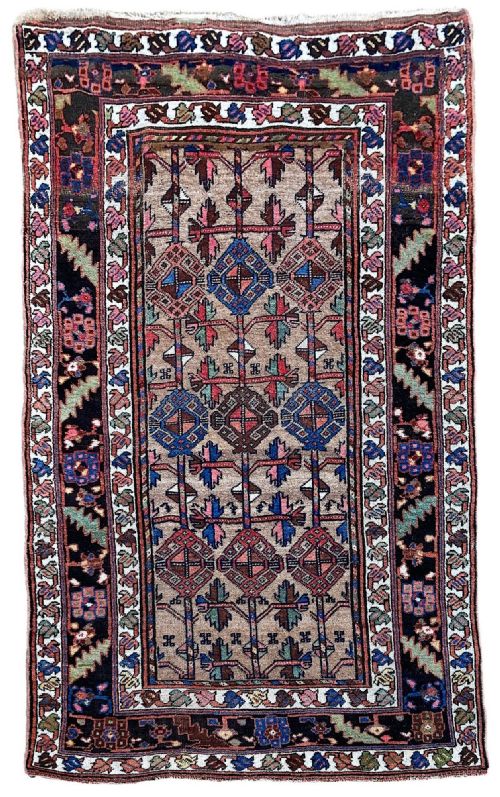
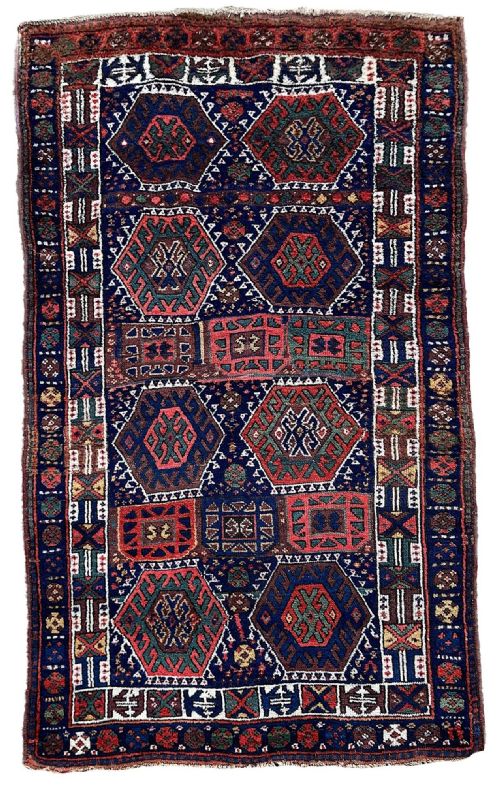


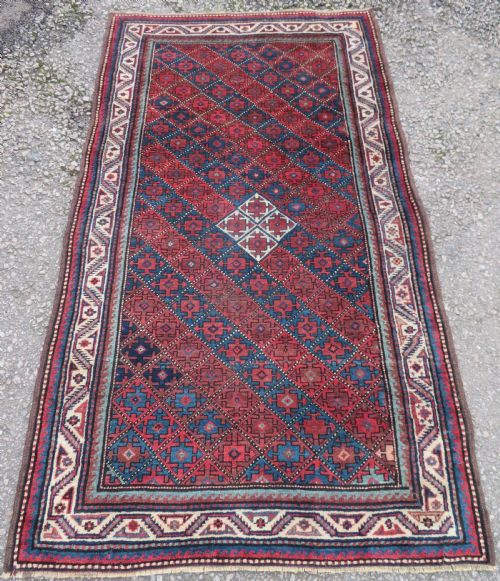


Authentic Kurdish Carpet
An authentic kurdish carpet brings dense tribal geometry and rich wool pile into a room, offering durability and heritage.
Authentic Kurdish Carpet
An authentic kurdish carpet spans tribal rugs, runners and bag faces originating from regions such as Persia, Anatolia and the Caucasus. These textile pieces showcase distinct geometric motifs and tribal patterns handed down through generations of weavers.
The pieces on this page primarily date from the middle of the nineteenth century through the early decades of the twentieth century. Buyers encounter formats ranging from square area rugs and narrow corridor runners to larger kelleh carpet formats.
Tribal styles dominate the selection, including Kurdish, Persian, Anatolian, and Caucasian attributions. Each region contributes specific colour palettes and structural traits that define the regional weaving traditions.
How they were made
Weavers constructed these carpets using hand-spun wool for the dense pile and foundation yarns. Natural dyes provided the deep blue grounds and contrasting hues seen across the surviving examples.
The construction typically incorporates sturdy wool or cotton foundations to support the heavy pile. Artisans knotted the wool by hand, producing robust surfaces designed to withstand heavy daily use.
Authentic Kurdish Carpet Retail Price Guide 2026
Typical asking prices for authentic kurdish carpet among the pieces listed under this phrase on Sellingantiques today, from the lower quarter to the upper quarter. They describe what is for sale here now, not the wider market.
What varies in quality
The refinement of the wool and the consistency of the hand-spun yarn distinguish the execution of each piece. Tighter knotting and precise geometric layout elevate certain tribal runners and rugs above simpler domestic examples.
The depth and preservation of the natural dye colours influence the visual impact of the weaving. Intricate pictorial details, such as the inclusion of human figures, demonstrate greater artistic ambition from the weaver.
The Authentic Kurdish Carpet Glossary
- Pile
- The upright yarn loops that form the soft upper surface of the carpet. This dense layer absorbs wear and displays the woven design.
- Runner
- A long, narrow carpet format designed for corridors, hallways or staircases. These pieces balance linear geometry with extended proportions.
- Natural dye
- Colourants derived from plant and mineral sources rather than synthetic chemicals. These dyes yield rich, complex tones that age with subtlety.
- Bag face
- The decorative front panel of a nomadic storage bag, removed and preserved as a small rug. These square formats often feature concentrated tribal motifs.
- Kelleh
- A large format carpet traditionally utilised as a central room covering. These substantial pieces display expanded field designs and wider borders.
Authentic Kurdish Carpet: Frequently Asked Questions
Where were these carpets made?
These carpets originate from traditional weaving communities across regions of Persia, Anatolia and the Caucasus.
Nomadic and village weavers produced these textiles using local materials and distinctive regional patterns.
How do I care for my rug?
Vacuum the pile gently without using a rotating brush bar to protect the hand-spun wool fibres.
Keep the carpet away from direct sunlight to preserve the natural dyes over time.
What size options are available?
The selection includes compact bag faces, standard area rugs and long narrow corridor runners.
Larger formats such as kelleh carpets also appear for spacious interior placement.
How old are these pieces?
The surviving examples date from the mid-nineteenth century through the early twentieth century.
Most pieces originate from the decades between eighteen fifty and nineteen twenty.