


Earthenware Chinoiserie Urn
These earthenware chinoiserie urn pieces offer hand-painted decorative schemes spanning several centuries of ceramic production.
Earthenware Chinoiserie Urn
An earthenware chinoiserie urn brings together European potting traditions and imported Asian decorative motifs. When searching for an earthenware chinoiserie urn, collectors encounter forms ranging from lidded baluster vessels to converted lamp bases.
The pieces on this page draw from the seventeenth, eighteenth, and nineteenth centuries, alongside later twentieth-century interpretations. Dutch Delftware and Continental maiolica feature prominently among the styles recorded.
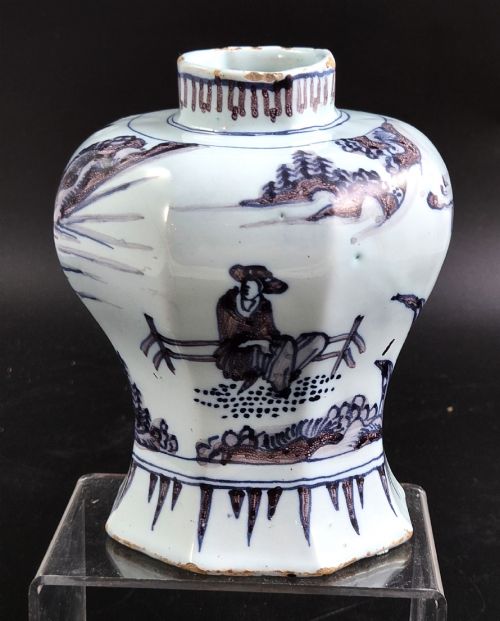
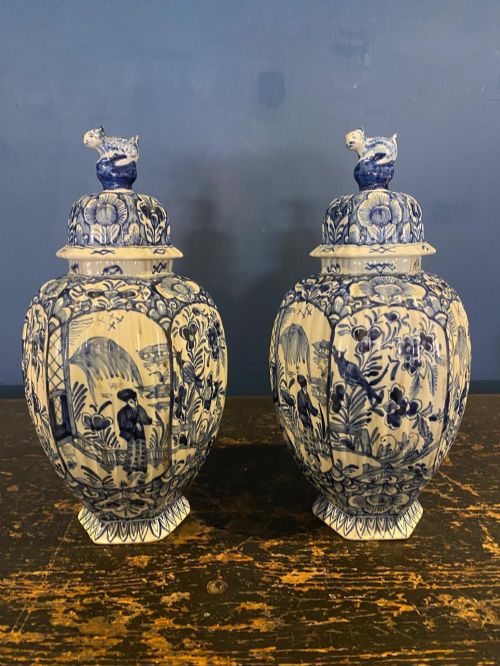
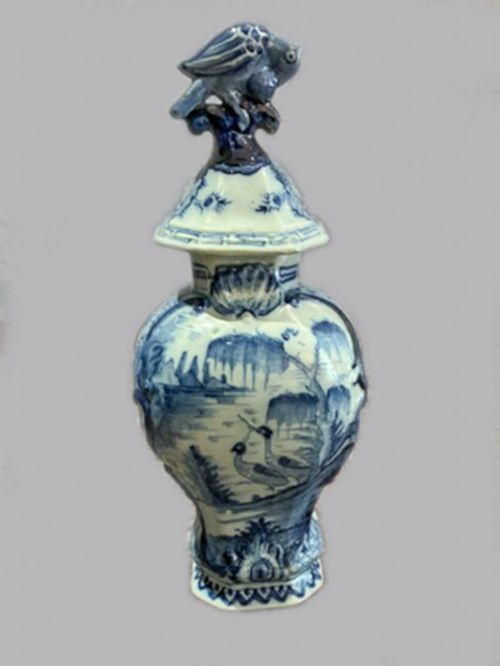
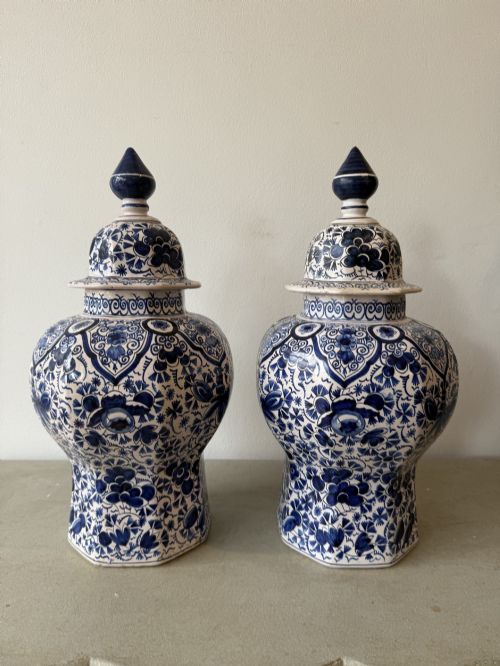
Vessels appear individually or as matched pairs, often incorporating covers. Forms include ribbed beaker vases and large baluster shapes decorated with birds, flowers, and figures.
How they were made
Potters shaped earthenware bodies on the wheel or in moulds before applying tin glaze or enamel coatings. Artisans then painted oriental scenes by hand using blue pigments or polychrome palettes.
Firing techniques varied across periods, with earthenware bodies requiring lower kiln temperatures than porcelain. Selected examples incorporate fitted hardwood stands and brass mounts to complete the composition.
Several vases manage to depict distinctly European birds perched comfortably among thoroughly imaginary oriental foliage.
What varies in quality
Purity of the tin glaze and crispness of the hand-painted brushwork distinguish finer examples from standard production. The confidence of the chinoiserie drawing dictates visual success.
Age and survival rate influence standing, particularly given the fragility of earthenware bodies and matching lids. Original covers matching the exact glaze and period add significant merit.
Royal Doulton Mandarin Ware·Miles Mason Ironstone
The Earthenware Chinoiserie Urn Glossary
- Tin-Glazed Earthenware
- Earthenware covered with an opaque white glaze containing tin oxide. This surface provided a smooth ground for painting blue and white designs.
- Baluster
- A vase shape with a rounded body that tapers toward the neck and base. This form is common in traditional ceramic production.
- Chinoiserie
- European artistic interpretation of Chinese and East Asian artistic traditions. The style gained popularity during the seventeenth and eighteenth centuries.
- Maiolica
- European tin-glazed earthenware decorated with metal oxide colours. This technique flourished across Italy and the Continent.
- Ironstone
- A heavy, durable type of earthenware patented in the nineteenth century. It bridges the gap between traditional earthenware and true porcelain.
Earthenware Chinoiserie Urn: Frequently Asked Questions
What is an earthenware chinoiserie urn?
These items are ceramic vessels shaped from earthenware clay and decorated with European interpretations of Asian motifs. They range from seventeenth-century Dutch Delftware to later nineteenth-century Continental pieces.
Most examples employ tin glaze surfaces painted with blue and white pigments depicting garden scenes, birds, and flowers.
How were these urns used historically?
Historically, such vessels served as decorative ornaments displayed on mantelpieces, side tables, and cabinets in prosperous homes. Lidded variants often held dry potpourri or simply displayed fine painted scenes.
Over subsequent generations, certain examples were adapted for domestic utility, including conversion into table lamps during the nineteenth and twentieth centuries.
How do I care for an antique earthenware urn?
Keep these fragile ceramic pieces away from direct sunlight and areas subject to sudden temperature fluctuations. Dust gently with a soft, dry brush without applying abrasive cleaning agents.
If the piece incorporates fitted hardwood bases or brass mounts, clean those elements separately using appropriate non-liquid methods.
How can I tell the period of a vase?
Dating relies on examining the clay body, glaze characteristics, and painting style alongside recorded manufacturing traits. Seventeenth and eighteenth-century pieces often display characteristic tin-glaze crazing and hand-mixed pigments.
Nineteenth-century examples frequently utilise refined ironstone bodies or heavier Continental maiolica techniques, while twentieth-century pieces show distinct factory marks.